















 The cyclone uprooted trees and power poles, causing outages, while more than 1.8 lakh people were evacuated in Andhra Pradesh and Odisha ahead of its arrival.
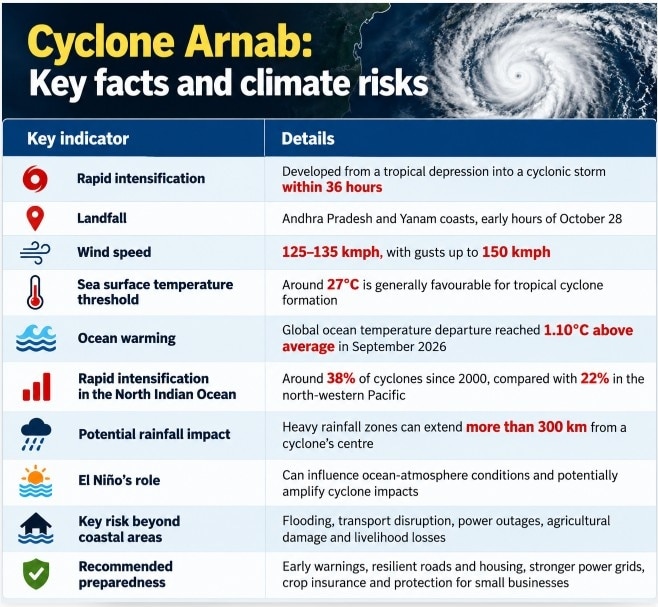
Cyclone Arnab strengthened from a tropical depression into a cyclonic storm within 36 hours before intensifying into a very severe cyclonic storm, highlighting concerns over how warmer oceans and changing climate conditions can amplify extreme weather risks. The storm made landfall along the Andhra Pradesh and Yanam coasts in the early hours of October 28, with sustained wind speeds of 125-135 kmph and gusts reaching 150 kmph.
Meteorologists say warmer-than-normal sea surface temperatures and the possible influence of El Niño may have contributed to Arnab’s rapid intensification. The interaction between natural climate variability and long-term global warming is becoming increasingly important in understanding cyclone behaviour and associated rainfall risks.

 Foreign airlines resist Navi Mumbai shift, Adani Airports seeks transition plans by Nov 3
 Info Edge CEO Hitesh Oberoi resigns, founder Sanjeev Bikhchandani to take charge
 Goodbye LCD, hello touchscreen: Apple unveils OLED MacBook Pro with touch display
 India's industrial growth slows to 6.7% in September from 8% in August; manufacturing rises 7.6%
 Sebi to review foreign investor rules: What could change for FPIs in Indian markets?
 Theatre Releases This Week: 4 New Films To Watch, Ramayana Buzz Builds
 Yamuna River Pollution EXPOSED: Toxic Froth Vs Delhi's Cruise Safari Dream!
 BJP's 4-0 Sweep In Karnataka MLC Polls: Congress Gets ZERO Seats Amid 'Vote Chori' Row!
 Akash Ambani Reveals How Jio Transformed India’s Telecom Sector As IPO Draws ₹7.5 Lakh Crore Demand
 Piramal Pharma Q2 Profit At ₹5 Crore After Year-Ago Loss; FY27 Growth Outlook Raised
 Sebi to review foreign investor rules: What could change for FPIs in Indian markets?
 How to trade Bharti Airtel stock: Analyst's advice amid Jio Platform's market debut
 Jio Platforms becomes world's sixth-most valuable telecom firm on debut
 Bandhan Bank Q2 earnings: Net profit rises five times, NPAs fall
 TVS Motor shares rise 4% as Q2 revenue hits record, profit jumps 52%
 Gurugram’s southern peripheral road gets luxury boost as Tonino Lamborghini phase 1 sells outInfo Edge CEO Hitesh Oberoi resigns, founder Sanjeev Bikhchandani to take chargeGoodbye LCD, hello touchscreen: Apple unveils OLED MacBook Pro with touch display
 Mumbai Man waited 10 years for ₹50 lakh flat; Now developer told to pay ₹86 lakh with 9% interestForeign airlines resist Navi Mumbai shift, Adani Airports seeks transition plans by Nov 3


