














 Nearly 800 kg of premium Iranian saffron corms, around 90,000 in number, were planted across 4,000 square metres of land.
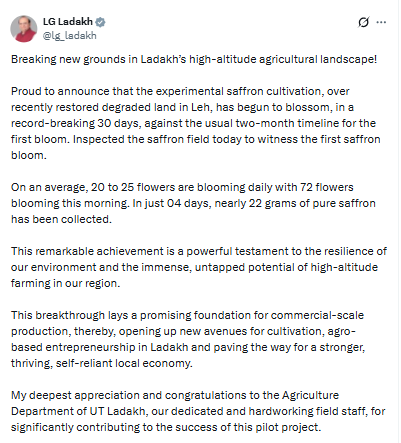
Ladakh has seen its first saffron flowers bloom within 30 days of planting, much earlier than the usual two-month period. The early bloom in a pilot project in Leh has raised hopes of growing the high-value crop in the region and creating another source of income for local farmers.
The project was started by Lieutenant Governor VK Saxena under Project Him Sarovar. Nearly 800 kg of premium Iranian saffron corms, around 90,000 in number, were planted across 4,000 square metres of land on October 1. The land was earlier barren and has recently been restored.

 Sebi backs removal of long-term capital gains tax for foreign investors: Report
 Suzlon shares may rally 100%, say Centrum; check key reasons, ratings, targets and more
 ‘US stuck in an ideology of 1950’: American economist Jeffrey Sachs says Washington mistakenly thinks it is the boss
 50% YoY growth: Nissan rides high on SUV demand with 3,600 units sold in October
 BT BIG STORY: How women are moving Indian logistics forward
 Gyanesh Kumar Under Fire: INDIA Bloc's Public Impeachment Move, BJP Launches Counter Protest
 What Is An FTA? Commerce Minister Piyush Goyal Explains How Trade Deals Give India An Edge
 AI Selloff Triggers I.T. Stock Rally: What Lies Ahead For Infosys, TCS And Other I.T. Firms?
 Maruti, M&M & TVS Motors: Which Auto Stocks Look Best After Strong October Sales Numbers?
 Reliance Shares In Focus After Record Q2 Profit | Goldman Sachs Sets ₹1,840 Target

 Coal India arm South Eastern Coalfields files DRHP with SEBI to launch IPO; check key details
 ZEEL shares hit 52-week low; brokerages cut target prices after Q2 results
 LTCG tax removal for FPIs! Will Sensex, Nifty get a lift after $64 billion outflows?Suzlon shares may rally 100%, say Centrum; check key reasons, ratings, targets and moreSebi backs removal of long-term capital gains tax for foreign investors: Report
 PV Sindhu calls Deepinder Goyal’s Temple wearable a ‘game changer’, says she has been using it herselfGyanesh Kumar Under Fire: INDIA Bloc's Public Impeachment Move, BJP Launches Counter Protest
 Embracing AI advantage: 7 in 10 Indian businesses plan increased investment, finds studyWhat Is An FTA? Commerce Minister Piyush Goyal Explains How Trade Deals Give India An EdgeCoal India arm South Eastern Coalfields files DRHP with SEBI to launch IPO; check key details


