












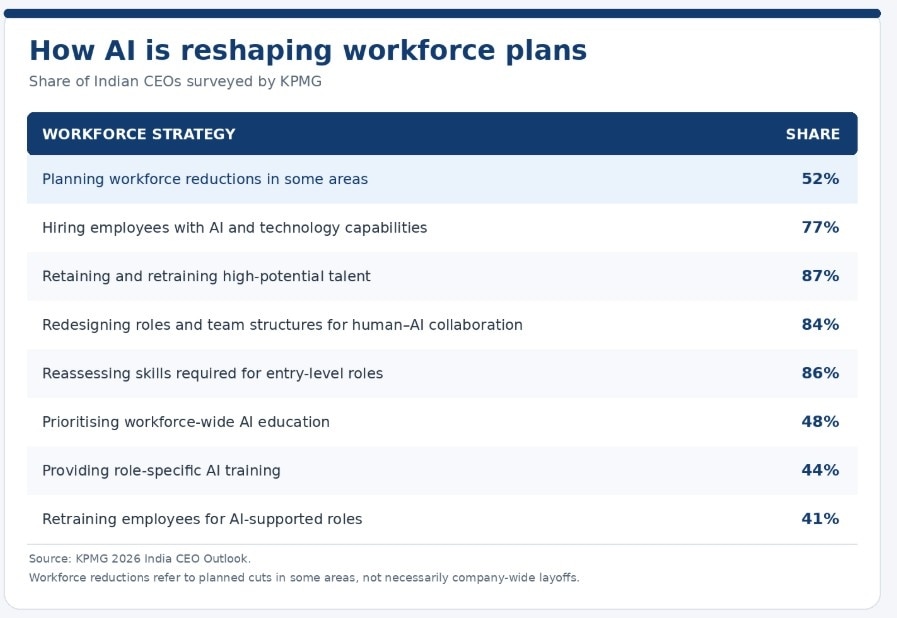



 KPMG found that 86% of Indian CEOs are reassessing the skills required for entry-level roles, while 79% said AI is changing how they train and develop employees.
Indian companies are preparing for a workforce transition as artificial intelligence (AI) reshapes job roles, skills and organisational structures, with more than half of chief executive officers (CEOs) planning workforce reductions in some areas even as businesses hire technology talent.
According to KPMG’s 2026 India CEO Outlook, 52% of Indian CEOs are planning workforce reductions in some areas, while 77% are hiring people with AI and technology capabilities. The findings highlight how companies are reassessing their workforce requirements as they move from experimenting with AI to integrating it into business operations.

 India's industrial growth slows to 6.7% in September from 8% in August; manufacturing rises 7.6%
 Sebi to review foreign investor rules: What could change for FPIs in Indian markets?
 'PLI has been a huge success': Korean economist says critics are reluctant to acknowledge progress
 Noel Tata to exit six Tata Group boards on November 12
 Diwali gift: Cabinet approves 3% DA hike for central government employees, pensioners
 Theatre Releases This Week: 4 New Films To Watch, Ramayana Buzz Builds
 Yamuna River Pollution EXPOSED: Toxic Froth Vs Delhi's Cruise Safari Dream!
 BJP's 4-0 Sweep In Karnataka MLC Polls: Congress Gets ZERO Seats Amid 'Vote Chori' Row!
 Akash Ambani Reveals How Jio Transformed India’s Telecom Sector As IPO Draws ₹7.5 Lakh Crore Demand
 Piramal Pharma Q2 Profit At ₹5 Crore After Year-Ago Loss; FY27 Growth Outlook Raised
 Sebi to review foreign investor rules: What could change for FPIs in Indian markets?
 How to trade Bharti Airtel stock: Analyst's advice amid Jio Platform's market debut
 Jio Platforms becomes world's sixth-most valuable telecom firm on debut
 Bandhan Bank Q2 earnings: Net profit rises five times, NPAs fall
 TVS Motor shares rise 4% as Q2 revenue hits record, profit jumps 52%
 Major action against Azam Khan: ED attaches Jauhar University assets worth Rs 1,170 crore
 India's New High-Altitude Defence Machine | L&T-BAE Begin BVS 10 Sindhu ProductionTheatre Releases This Week: 4 New Films To Watch, Ramayana Buzz BuildsYamuna River Pollution EXPOSED: Toxic Froth Vs Delhi's Cruise Safari Dream!Sebi to review foreign investor rules: What could change for FPIs in Indian markets?


