















 The monthly instalment is only one component of the cost of ownership. Fuel, insurance, servicing, maintenance and unexpected repairs can place additional pressure on household finances.
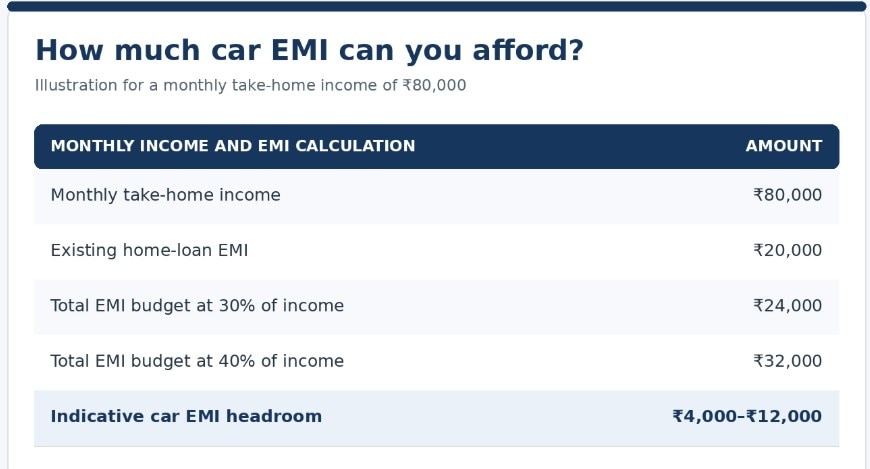
Buying a car should begin with an assessment of monthly cash flow, not the maximum loan amount a lender is willing to offer. For someone earning ₹80,000 a month and already paying a home-loan EMI of ₹20,000, the amount available for a car loan could be considerably lower than expected once household expenses, savings and running costs are factored in.
Amit Setia, Chief Business Officer at Capri Loans Car Platform Private Limited, says buyers should assess their overall financial commitments before deciding how much to borrow.

 Foreign airlines resist Navi Mumbai shift, Adani Airports seeks transition plans by Nov 3
 Info Edge CEO Hitesh Oberoi resigns, founder Sanjeev Bikhchandani to take charge
 Goodbye LCD, hello touchscreen: Apple unveils OLED MacBook Pro with touch display
 India's industrial growth slows to 6.7% in September from 8% in August; manufacturing rises 7.6%
 Sebi to review foreign investor rules: What could change for FPIs in Indian markets?
 Theatre Releases This Week: 4 New Films To Watch, Ramayana Buzz Builds
 Yamuna River Pollution EXPOSED: Toxic Froth Vs Delhi's Cruise Safari Dream!
 BJP's 4-0 Sweep In Karnataka MLC Polls: Congress Gets ZERO Seats Amid 'Vote Chori' Row!
 Akash Ambani Reveals How Jio Transformed India’s Telecom Sector As IPO Draws ₹7.5 Lakh Crore Demand
 Piramal Pharma Q2 Profit At ₹5 Crore After Year-Ago Loss; FY27 Growth Outlook Raised
 Sebi to review foreign investor rules: What could change for FPIs in Indian markets?
 How to trade Bharti Airtel stock: Analyst's advice amid Jio Platform's market debut
 Jio Platforms becomes world's sixth-most valuable telecom firm on debut
 Bandhan Bank Q2 earnings: Net profit rises five times, NPAs fall
 TVS Motor shares rise 4% as Q2 revenue hits record, profit jumps 52%
 UGC NET 2026: Registration deadline extended, application correction window from Nov 2
 Cyclone Arnab intensifies rapidly: How El Niño and global warming are changing storm risks
 Gurugram’s southern peripheral road gets luxury boost as Tonino Lamborghini phase 1 sells outInfo Edge CEO Hitesh Oberoi resigns, founder Sanjeev Bikhchandani to take chargeGoodbye LCD, hello touchscreen: Apple unveils OLED MacBook Pro with touch display


