











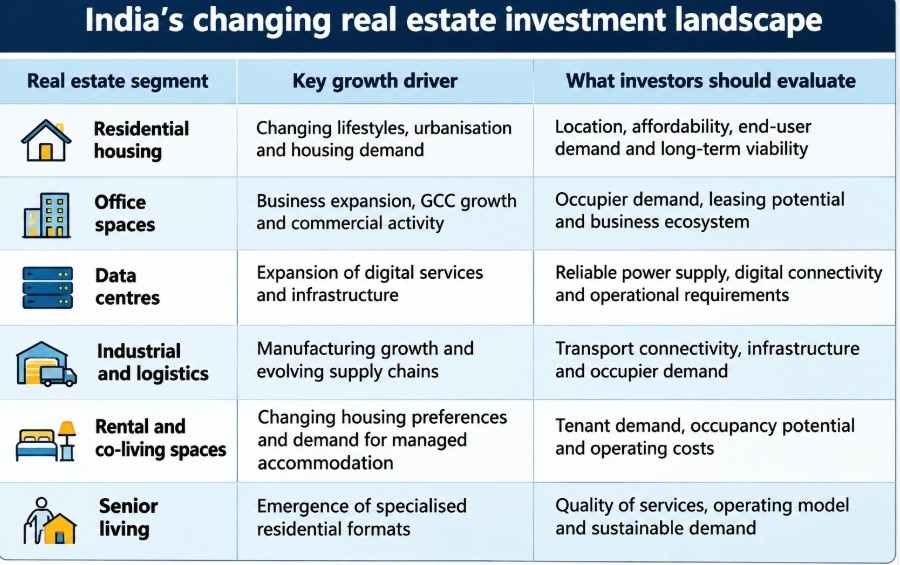



 The ANAROCK–FICCI report highlighted how real estate investment is moving towards specialised, operator-led formats, including data centres, logistics parks, rental housing and senior living.
India's real estate market is projected to reach $1 trillion by 2030, but investors looking to benefit from the sector's expansion may need to rethink how they evaluate property opportunities. According to Samujjal Ghosh, Associate Director, NK Realtors, the biggest investment risk may not necessarily be selecting the wrong property, but failing to recognise how changing economic priorities are reshaping real estate demand.
"The biggest risk in real estate investment may not be buying the wrong property, but failing to recognise how the market is changing," Ghosh said.

 BT BIG STORY: Car sales hit a high during the festive season. Will rising prices slam the brakes?
 'Oil prices DROPPING LIKE A ROCK': Trump ahead of midterms despite surge in global crude prices
 Goodbye LTCG tax? SBI says government can absorb ₹50,000 crore revenue loss as Budget 2027 hopes rise
 ‘Gave this a very strong shot’: Donald Trump says sitting president doesn’t win midterms in final campaign speech
 Cyclone Murasu landfall: Heavy downpour hits Andhra Pradesh, Puducherry; IMD issues warning for low-lying areas
 Why WhiteOak Capital Is Shifting From Small Caps To Large Caps Amid Changing Market Valuations
 Large Caps Set To Outperform As Market Rotation Begins, Expert Flags Global Risks For Indian Markets
 Sun Pharma Q2 Sales Rise 11.8% To ₹16,100 Crore; India Grows 17.3%, US Sales Decline 8.2%
 EXCLUSIVE | Market Masters | Diwali Special: Motilal Oswal's Raamdeo Agrawal On Samvat 2083 Outlook
 Daily Calls: Ask Your STOCK MARKET TODAY QUERIES | Market Update | Share Market News Today

 YES Bank: 38% price target cut by JPMorgan, what else brokerage says
 ITC share price: CLSA, Morgan Stanley, JPMorgan, Macquarie, UBS, Jefferies targets
 Engineers India, GAIL, Zensar, Motherson Sumi Wiring, Delhivery shares: Target prices
 Muthoot FinCorp looks beyond gold loans with ₹3,000 crore IPO
 Sensex soars 1,233 points; Nifty nears 23,450 as markets extend rally for third straight sessionYES Bank: 38% price target cut by JPMorgan, what else brokerage says ITC share price: CLSA, Morgan Stanley, JPMorgan, Macquarie, UBS, Jefferies targets'Oil prices DROPPING LIKE A ROCK': Trump ahead of midterms despite surge in global crude prices‘Gave this a very strong shot’: Donald Trump says sitting president doesn’t win midterms in final campaign speechEngineers India, GAIL, Zensar, Motherson Sumi Wiring, Delhivery shares: Target prices


