


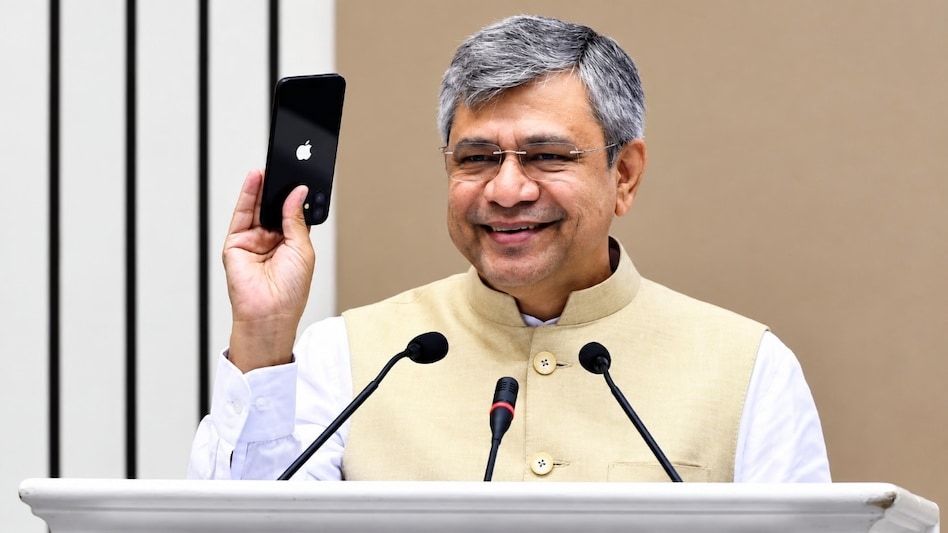
 Union Minister Ashwini Vaishnaw talkes about India's PLI scheme benefits with numbers.(Image: PTI)
Apple iPhone manufacturing expansion in India is being criticised over the use of taxpayer-funded subsidies, as questions are being raised about whether the incentives are building India’s domestic electronics ecosystem or just encouraging assembly of products. Amid speculation, India’s Union Electronics and IT Minister Ashwini Vaishnaw provided clarity, citing tax revenues and employment figures to highlight the economic benefits of the Production Linked Incentive (PLI) scheme.
Citing a Bloomberg video on X, Vaishnaw defended the incentives, saying that the government has collected Rs 25,000 crore in direct tax collections and Rs 3 lakh crore in GST revenue. But it has spent Rs 19,000 crore under the mobile manufacturing incentive programme.

 Noel Tata to exit six Tata Group boards on November 12
 Diwali gift: Cabinet approves 3% DA hike for central government employees, pensioners
 Jio IPO: Which mutual funds bet big, and where did your SIP money go?
 Gulf states plan multipronged peace deal to avert renewal of US-Iran war: Report
 Adani Enterprises Q2 profit declines 55% to Rs 1,492 crore YoY; revenue rises 74%
 PVR INOX Q2 Results Decoded | Sanjeev Kumar Bijli On Earnings, Recovery & Growth Outlook
 Syngene Q2 Profit Falls 52% To ₹32 Crore As Lower Zoetis Revenue, Forex Losses Hit Margins
 Jio Platforms Listing: 21% Gains, Mukesh Ambani In Tears As Family Celebrates At NSE
 Why Venezuela Oil Matters To The U.S: ONGC's Setback, Reliance & America's Diesel Security Strategy
 Jio Platforms Listing: Historic Market Debut | Listing Price, Share Price & Market Reaction

 How to trade Bharti Airtel stock: Analyst's advice amid Jio Platform's market debut
 Jio Platforms becomes world's sixth-most valuable telecom firm on debut
 Bandhan Bank Q2 earnings: Net profit rises five times, NPAs fall
 TVS Motor shares rise 4% as Q2 revenue hits record, profit jumps 52%
 AC stocks: Voltas, Blue Star, Amber, Symphony shares rise up to 7%; here's why How to trade Bharti Airtel stock: Analyst's advice amid Jio Platform's market debut
 Defender 110 now starts at ₹99 lakh as JLR begins local assembly in India: Which versions get the price cut?
 Kylian Mbappe apologises to China over Mao Zedong remark, Real Madrid issues official statement
 Honda CB350C vs Royal Enfield Classic 350: The engine, price and equipment differences behind the retro styling
 Noida Metro's big November 1 change! Aqua Line commuters get relief, but there's another twist













