


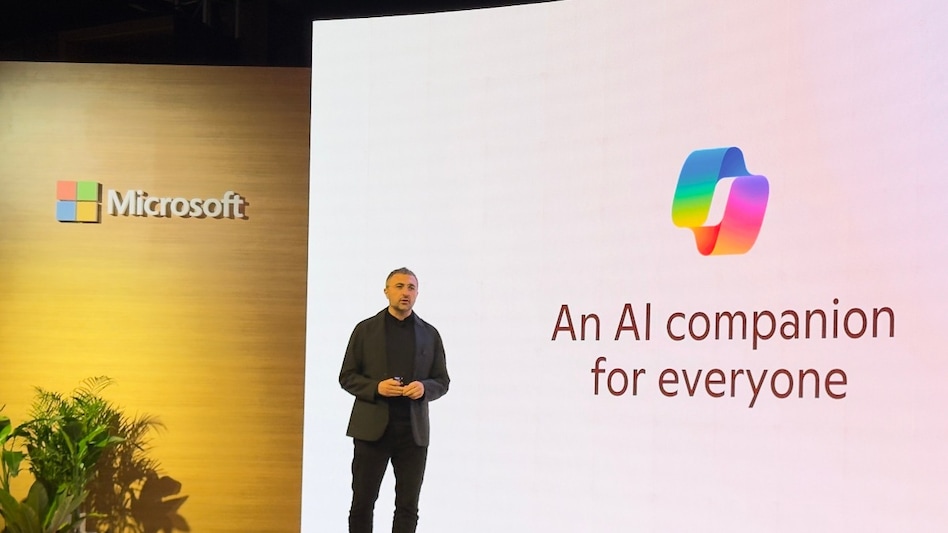
 Microsoft AI CEO Mustafa Suleyman
Artificial Intelligence (AI) has created fears about its advanced and autonomous behaviour, and now one of the industry’s most senior voices is asking whether machines could one day become conscious, and what the world should do if they do. Microsoft AI chief Mustafa Suleyman has shared an urgent message about AI and what could happen if it gains consciousness.
In September 2026, Suleyman shared an article titled "A warning about ‘model welfare,’” highlighting his stance artificial intelligence systems. However, according to him, the article gained much criticism, and that people misinterpreted his statement. In an X post, he clarified his stance about AI, saying, “AIs are not conscious. They do not feel, experience, or suffer.”

 RIL shares jump 6%, add Rs 86,400 crore in m-cap; Goldman Sachs sets highest target, sees 58% upside
 BT BIG STORY: How women are moving Indian logistics forward
 Sensex, Nifty extend gains: Four factors behind the rally
 Sky-high airfares: New regulations give government power to cap sudden spikes
 Delhi chokes on smog: Records season’s worst air as AQI slips into ‘very poor’ category
 China’s Mega Dam Vs India’s Siang Project: Why Arunachal Is Protesting
 'Revisit LTCG & STT' | A Balasubramanian's Big Pitch For Capital Market Reforms
 Helios Capital Cuts HDFC Bank Exposure, Bets On Kotak Mahindra Bank And RBL Bank
 Helios Capital’s Dinshaw Irani On India’s New-Age Companies And The Next Wave Of Growth
 India's Next Bull Market Cycle Will Come | Nischal Maheshwari On Staying Invested

 Dixon Tech shares: Why stock rallied 11% after Q2; CLSA, JPMorgan targets
 Cochin Shipyard, Wipro, Union Bank of India: Top stocks to buy; check targets & more
 Edelweiss Alternatives shares list with over 1% gain, cross Rs 1,700 mark
 Motherson Sumi Wiring shares soar; 12 brokers say 'Buy' for up to 71% upside
 EAAA India Alternatives shares make a muted market debut; stocks list on flat note
 IndiGo’s move to Navi Mumbai airport is part of the long term strategy, not just temporary: CEO William WalshDixon Tech shares: Why stock rallied 11% after Q2; CLSA, JPMorgan targets
 PM Modi announces 31 projects worth ₹426-crore tourism push for Statue of Unity in Gujarat
 Range Rover’s new SUV is inspired by Rajasthan. Check price, variants and features
 India’s first bullet train is almost here with 280 kmph speed, wi-fi & 557 seats. What to expect












