
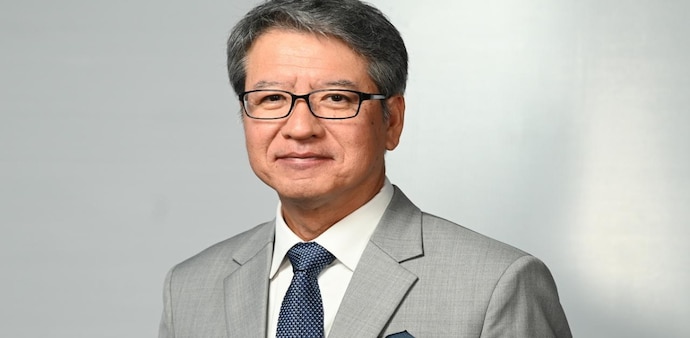
Automakers must have contingency plans for cybersecurity threats: Maruti Suzuki’s Hisashi Takeuchi
Hackers are evolving their technology and becoming more sophisticated with each passing day, says Maruti Suzuki MD & CEO Hisashi Takeuchi
- Sep 2, 2026,
- Updated Sep 2, 2026 2:51 PM IST
India’s auto industry must be prepared with a robust contingency plan that enables companies to resume business operations within the shortest possible time and minimise any potential disruption amid rising cybersecurity threats, according to Maruti Suzuki Managing Director and CEO Hisashi Takeuchi.
“As we embrace greater digitalisation, cybersecurity becomes equally important… Hackers are evolving their technology and becoming more sophisticated with each passing day. So, we have to ensure that we stay one step ahead of them,” Takeuchi said in his address at the 66th ACMA Annual Session.
Don't Miss: Shortage of ships hits India's auto exports in August
Takeuchi, however, added that it is encouraging to see that organisations are continuously strengthening their cybersecurity systems by investing in advanced technologies. “At the same time, we cannot rule out the chances of a cyber incident,” he cautioned.
These comments come a year after Tata Group’s British luxury arm Jaguar Land Rover (JLR) witnessed a debilitating cyberattack that brought production at its manufacturing plants to a grinding halt.
Maruti Suzuki said it is using geo-mapping and weather intelligence to predict supply-chain disruptions.
“By geo-mapping supplier locations and integrating localised weather intelligence, we are able to provide advance alerts about potential disruptions, giving suppliers and our teams more time to prepare,” said Takeuchi.
“The objective is not to predict every disruption. That is impossible. The objective is to identify risks early enough to take countermeasures,” he added.
Must Read: Maruti Suzuki’s SUV share rises to 32%. Read how
Over the last few years, India’s automotive industry has faced multiple disruptions, from semiconductor shortages to geopolitical conflicts and supply chain uncertainties.
“Yet, despite these challenges, we kept our production lines running and continued serving customers, demonstrating resilience,” said Takeuchi.
The Maruti Suzuki MD & CEO advocated for deeper localisation to reduce exposure to external disruptions by strengthening domestic capabilities and progressively owning a larger share of the value chain.
However, localisation alone is not enough. To truly strengthen the industry's competitiveness, products made in India must be able to compete with the best in the world, he added.
“It is important to understand that competitiveness is not an individual company phenomenon. It is an ecosystem phenomenon. Unless our Tier II and Tier III suppliers are capable, we can’t produce world-class quality,” said Takeuchi.
India’s auto industry must be prepared with a robust contingency plan that enables companies to resume business operations within the shortest possible time and minimise any potential disruption amid rising cybersecurity threats, according to Maruti Suzuki Managing Director and CEO Hisashi Takeuchi.
“As we embrace greater digitalisation, cybersecurity becomes equally important… Hackers are evolving their technology and becoming more sophisticated with each passing day. So, we have to ensure that we stay one step ahead of them,” Takeuchi said in his address at the 66th ACMA Annual Session.
Don't Miss: Shortage of ships hits India's auto exports in August
Takeuchi, however, added that it is encouraging to see that organisations are continuously strengthening their cybersecurity systems by investing in advanced technologies. “At the same time, we cannot rule out the chances of a cyber incident,” he cautioned.
These comments come a year after Tata Group’s British luxury arm Jaguar Land Rover (JLR) witnessed a debilitating cyberattack that brought production at its manufacturing plants to a grinding halt.
Maruti Suzuki said it is using geo-mapping and weather intelligence to predict supply-chain disruptions.
“By geo-mapping supplier locations and integrating localised weather intelligence, we are able to provide advance alerts about potential disruptions, giving suppliers and our teams more time to prepare,” said Takeuchi.
“The objective is not to predict every disruption. That is impossible. The objective is to identify risks early enough to take countermeasures,” he added.
Must Read: Maruti Suzuki’s SUV share rises to 32%. Read how
Over the last few years, India’s automotive industry has faced multiple disruptions, from semiconductor shortages to geopolitical conflicts and supply chain uncertainties.
“Yet, despite these challenges, we kept our production lines running and continued serving customers, demonstrating resilience,” said Takeuchi.
The Maruti Suzuki MD & CEO advocated for deeper localisation to reduce exposure to external disruptions by strengthening domestic capabilities and progressively owning a larger share of the value chain.
However, localisation alone is not enough. To truly strengthen the industry's competitiveness, products made in India must be able to compete with the best in the world, he added.
“It is important to understand that competitiveness is not an individual company phenomenon. It is an ecosystem phenomenon. Unless our Tier II and Tier III suppliers are capable, we can’t produce world-class quality,” said Takeuchi.