
E20 vs E85 vs E100: Key differences in ethanol blend, mileage & engine compatibility
By replacing a portion of petrol with domestically produced ethanol, the country aims to lower its fuel import bill, reduce greenhouse gas emissions and support the agricultural sector by creating additional demand for sugarcane and other ethanol feedstocks.
- Jul 6, 2026,
- Updated Jul 6, 2026 2:59 PM IST
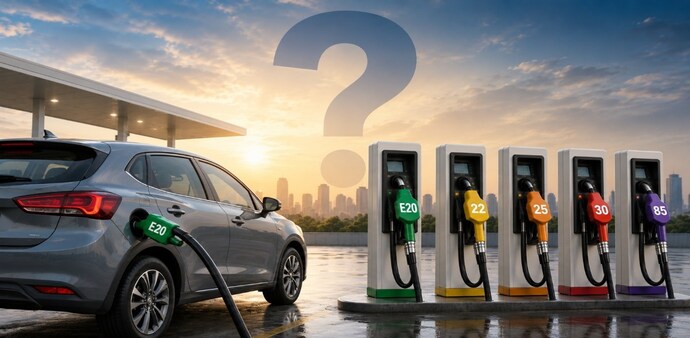
The key difference between E20, E85 and E100 lies in the amount of ethanol mixed with petrol, and that directly affects where the fuel can be used, how vehicles perform and what kind of engines are required.
E20 contains 20% ethanol and 80% petrol, making it the most widely adopted ethanol blend for everyday passenger vehicles. It has been introduced as a cleaner alternative to regular petrol without requiring a complete redesign of modern engines. Most new vehicles manufactured for the Indian market are now being made E20-compatible.
E85 contains between 51% and 85% ethanol, with the exact composition varying depending on climate and seasonal requirements. Because ethanol behaves differently from petrol during combustion, E85 can only be used in Flex-Fuel Vehicles (FFVs) that are equipped with sensors capable of detecting the ethanol content and automatically adjusting fuel injection and ignition timing.
E100 is essentially pure ethanol fuel, containing close to 100% ethanol. It is used primarily in countries such as Brazil, where dedicated ethanol-powered vehicles are common. Since ethanol absorbs moisture more readily and has different combustion characteristics than petrol, E100 requires specially designed fuel systems, corrosion-resistant components and engines calibrated specifically for ethanol operation.
Which vehicles can safely use E85 and E100?
Vehicle compatibility depends entirely on how the engine and fuel system have been designed.
- E20 can be safely used only in vehicles that have been certified as E20-compatible by their manufacturers. These vehicles use materials and engine calibrations that can withstand the higher ethanol content without affecting durability or performance.
- E85 requires a Flex-Fuel Vehicle (FFV). These vehicles feature electronic sensors that continuously monitor the ethanol-petrol ratio in the fuel tank and automatically adjust engine parameters to ensure efficient combustion. A standard petrol vehicle lacks these systems and is therefore not designed to operate safely on E85.
- E100 demands even greater engineering changes. Vehicles running on nearly pure ethanol require specialised fuel pumps, injectors, seals and fuel lines that can resist ethanol-induced corrosion.
They also need engine management software designed specifically for ethanol's lower energy density and different combustion behaviour. This is why E100 is generally limited to countries where dedicated ethanol infrastructure and compatible vehicle fleets already exist.
Does higher ethanol content reduce mileage?
In most cases, yes. As the proportion of ethanol increases, fuel economy generally decreases because ethanol contains less energy per litre than petrol.
For E20, the reduction in mileage is relatively small — typically around 3% to 7% compared with pure petrol. Many drivers may notice little difference in everyday use, especially in modern engines designed for E20.
With E85, the lower energy content becomes much more noticeable. Vehicles usually travel 20% to 30% fewer kilometres per litre than they would on petrol, although flex-fuel engines are specifically tuned to maximise efficiency with higher ethanol blends.
For E100, fuel consumption increases further, with mileage often falling by 30% to 35% compared with petrol. However, ethanol's naturally high octane rating allows dedicated engines to operate at higher compression ratios, which improves thermal efficiency and helps recover some of the lost performance. As a result, while vehicles may require more fuel by volume, well-designed ethanol engines can still deliver strong power output and smooth performance.
Can E85 or E100 damage a regular petrol engine?
Yes. Filling a conventional petrol vehicle with E85 or E100 can lead to a range of mechanical problems because the engine and fuel system are not designed to handle such high ethanol concentrations.
Ethanol can degrade rubber seals and plastic components, corrode metal fuel system parts, alter the air-fuel mixture and make cold starts more difficult. Over time, these issues can reduce engine performance, increase wear and potentially lead to expensive repairs. Unless a vehicle is explicitly certified as a Flex-Fuel Vehicle or an ethanol-compatible model, drivers should only use the fuel blend recommended by the manufacturer.
Why is India promoting higher ethanol blends?
India's ethanol blending programme is part of a broader strategy to strengthen energy security while reducing dependence on imported crude oil. By replacing a portion of petrol with domestically produced ethanol, the country aims to lower its fuel import bill, reduce greenhouse gas emissions and support the agricultural sector by creating additional demand for sugarcane and other ethanol feedstocks.
The nationwide rollout of E20 marks an important milestone in this transition, while future adoption of flex-fuel vehicles could pave the way for higher ethanol blends such as E85, helping India move towards cleaner and more sustainable transportation.
The key difference between E20, E85 and E100 lies in the amount of ethanol mixed with petrol, and that directly affects where the fuel can be used, how vehicles perform and what kind of engines are required.
E20 contains 20% ethanol and 80% petrol, making it the most widely adopted ethanol blend for everyday passenger vehicles. It has been introduced as a cleaner alternative to regular petrol without requiring a complete redesign of modern engines. Most new vehicles manufactured for the Indian market are now being made E20-compatible.
E85 contains between 51% and 85% ethanol, with the exact composition varying depending on climate and seasonal requirements. Because ethanol behaves differently from petrol during combustion, E85 can only be used in Flex-Fuel Vehicles (FFVs) that are equipped with sensors capable of detecting the ethanol content and automatically adjusting fuel injection and ignition timing.
E100 is essentially pure ethanol fuel, containing close to 100% ethanol. It is used primarily in countries such as Brazil, where dedicated ethanol-powered vehicles are common. Since ethanol absorbs moisture more readily and has different combustion characteristics than petrol, E100 requires specially designed fuel systems, corrosion-resistant components and engines calibrated specifically for ethanol operation.
Which vehicles can safely use E85 and E100?
Vehicle compatibility depends entirely on how the engine and fuel system have been designed.
- E20 can be safely used only in vehicles that have been certified as E20-compatible by their manufacturers. These vehicles use materials and engine calibrations that can withstand the higher ethanol content without affecting durability or performance.
- E85 requires a Flex-Fuel Vehicle (FFV). These vehicles feature electronic sensors that continuously monitor the ethanol-petrol ratio in the fuel tank and automatically adjust engine parameters to ensure efficient combustion. A standard petrol vehicle lacks these systems and is therefore not designed to operate safely on E85.
- E100 demands even greater engineering changes. Vehicles running on nearly pure ethanol require specialised fuel pumps, injectors, seals and fuel lines that can resist ethanol-induced corrosion.
They also need engine management software designed specifically for ethanol's lower energy density and different combustion behaviour. This is why E100 is generally limited to countries where dedicated ethanol infrastructure and compatible vehicle fleets already exist.
Does higher ethanol content reduce mileage?
In most cases, yes. As the proportion of ethanol increases, fuel economy generally decreases because ethanol contains less energy per litre than petrol.
For E20, the reduction in mileage is relatively small — typically around 3% to 7% compared with pure petrol. Many drivers may notice little difference in everyday use, especially in modern engines designed for E20.
With E85, the lower energy content becomes much more noticeable. Vehicles usually travel 20% to 30% fewer kilometres per litre than they would on petrol, although flex-fuel engines are specifically tuned to maximise efficiency with higher ethanol blends.
For E100, fuel consumption increases further, with mileage often falling by 30% to 35% compared with petrol. However, ethanol's naturally high octane rating allows dedicated engines to operate at higher compression ratios, which improves thermal efficiency and helps recover some of the lost performance. As a result, while vehicles may require more fuel by volume, well-designed ethanol engines can still deliver strong power output and smooth performance.
Can E85 or E100 damage a regular petrol engine?
Yes. Filling a conventional petrol vehicle with E85 or E100 can lead to a range of mechanical problems because the engine and fuel system are not designed to handle such high ethanol concentrations.
Ethanol can degrade rubber seals and plastic components, corrode metal fuel system parts, alter the air-fuel mixture and make cold starts more difficult. Over time, these issues can reduce engine performance, increase wear and potentially lead to expensive repairs. Unless a vehicle is explicitly certified as a Flex-Fuel Vehicle or an ethanol-compatible model, drivers should only use the fuel blend recommended by the manufacturer.
Why is India promoting higher ethanol blends?
India's ethanol blending programme is part of a broader strategy to strengthen energy security while reducing dependence on imported crude oil. By replacing a portion of petrol with domestically produced ethanol, the country aims to lower its fuel import bill, reduce greenhouse gas emissions and support the agricultural sector by creating additional demand for sugarcane and other ethanol feedstocks.
The nationwide rollout of E20 marks an important milestone in this transition, while future adoption of flex-fuel vehicles could pave the way for higher ethanol blends such as E85, helping India move towards cleaner and more sustainable transportation.