
End goal is to reduce CO2 emissions not to have more EVs: Maruti doyen Bhargava
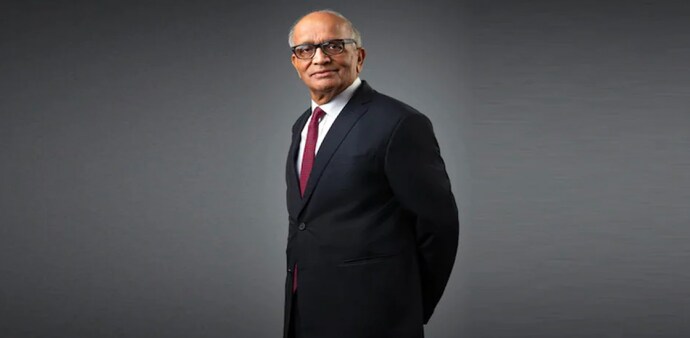
Talking to BT, Maruti's chairman RC Bhargava says that there is a long road ahead for EVs to become mass market in India.
- May 6, 2022,
- Updated May 6, 2022 9:41 PM IST
At a time when carmakers like Tata Motors and MG Motor India are aggressively eyeing India’s steadily-growing electric vehicle (EV) market share, the country’s largest carmaker Maruti Suzuki wants to take it slow and steady which is why it plans to launch its first EV only by 2025, making it one of the last entrants to get into e-mobility. Company’s chairman R C Bhargava told Business Today that India’s EV journey can’t be replicated based on what worked in foreign markets like Europe or the US.
“The market in India is very different from the market in Europe, America or Japan. India is the only big country which has such a huge dependence on motorcycles. More than 70 per cent cars here are still small, low-cost cars. Plus, 75 per cent of the energy which we consume in India is thermal energy still. EVs are actually not doing the job of reducing carbon dioxide like other developed countries that are dependent on hydro or nuclear power,” Bhargava said.
He added that another reason why EVs can’t become a mass-market product is small car buyers don’t have a garage or a house to charge their EVs every day.
Also Read: How Maruti is Pivoting for the New World
“What is clear to me is that the goal of reducing carbon dioxide in the air, we all agree, has to be done but it cannot be done by relying in the present circumstances on EVs alone. People forget that end goal of this whole exercise is not to have more electric cars on the roads. It is to reduce CO2 emission in the air. Lot of us forget what the end objective is,” he added.
“My view has always been that electric cars will have a limited and slowly increasing impact on the car market in India. It cannot have a significant improvement in the CO2 emissions in the short term which is next 5-8 years. There are alternatives available for reducing CO2 like hybrids, CNG, bio gas, etc. We’re urging the government to look at them,” he said.
Bhargava is critical of the fact that all attention from various state governments seems to be focussed on EVs.
“Nobody’s looking at other available technologies to reduce C02. Whether it's reduced through an EV or it's reduced through a hybrid car, the result is what one should be focussed on,” he said.
And it’s not enough to say that we should use other fuels, he adds, the government must also incentivise that.
“India is not a homogenised market. For the upwardly mobile, EV is a good option. But different technologies have to make more breakthroughs. For example, India has the largest population of cows. Bio mass can be for transportation purposes or to fulfil rural energy needs. It’s carbon negative, not even neutral,” he said.
At a time when carmakers like Tata Motors and MG Motor India are aggressively eyeing India’s steadily-growing electric vehicle (EV) market share, the country’s largest carmaker Maruti Suzuki wants to take it slow and steady which is why it plans to launch its first EV only by 2025, making it one of the last entrants to get into e-mobility. Company’s chairman R C Bhargava told Business Today that India’s EV journey can’t be replicated based on what worked in foreign markets like Europe or the US.
“The market in India is very different from the market in Europe, America or Japan. India is the only big country which has such a huge dependence on motorcycles. More than 70 per cent cars here are still small, low-cost cars. Plus, 75 per cent of the energy which we consume in India is thermal energy still. EVs are actually not doing the job of reducing carbon dioxide like other developed countries that are dependent on hydro or nuclear power,” Bhargava said.
He added that another reason why EVs can’t become a mass-market product is small car buyers don’t have a garage or a house to charge their EVs every day.
Also Read: How Maruti is Pivoting for the New World
“What is clear to me is that the goal of reducing carbon dioxide in the air, we all agree, has to be done but it cannot be done by relying in the present circumstances on EVs alone. People forget that end goal of this whole exercise is not to have more electric cars on the roads. It is to reduce CO2 emission in the air. Lot of us forget what the end objective is,” he added.
“My view has always been that electric cars will have a limited and slowly increasing impact on the car market in India. It cannot have a significant improvement in the CO2 emissions in the short term which is next 5-8 years. There are alternatives available for reducing CO2 like hybrids, CNG, bio gas, etc. We’re urging the government to look at them,” he said.
Bhargava is critical of the fact that all attention from various state governments seems to be focussed on EVs.
“Nobody’s looking at other available technologies to reduce C02. Whether it's reduced through an EV or it's reduced through a hybrid car, the result is what one should be focussed on,” he said.
And it’s not enough to say that we should use other fuels, he adds, the government must also incentivise that.
“India is not a homogenised market. For the upwardly mobile, EV is a good option. But different technologies have to make more breakthroughs. For example, India has the largest population of cows. Bio mass can be for transportation purposes or to fulfil rural energy needs. It’s carbon negative, not even neutral,” he said.