
Why Maruti Suzuki is suddenly sending more cars on trains than ever before
The company credited the Centre’s PM GatiShakti National Master Plan for enabling integrated multimodal logistics and supporting the industry’s shift towards rail-led freight movement.
- May 13, 2026,
- Updated May 13, 2026 4:19 PM IST
India’s largest carmaker, Maruti Suzuki, has crossed a major logistics milestone by cumulatively dispatching over 3 million vehicles through railways, underscoring the company’s aggressive push towards greener and more efficient transportation.
The company said it has sharply increased the share of railways in its outbound logistics from just 5% in FY15 to 26.5% in FY26. Notably, the jump from 2 million to 3 million cumulative rail dispatches was achieved in only 21 months — the fastest million milestone in the company’s history.
Maruti Suzuki Managing Director & CEO, Hisashi Takeuchi, said the automaker has invested more than Rs 1,372 crore in dedicated green logistics infrastructure, including railway sidings at its Hansalpur and Manesar plants, specialized automobile rakes, and logistics hub upgrades.
The company credited the Centre’s PM GatiShakti National Master Plan for enabling integrated multimodal logistics and supporting the industry’s shift towards rail-led freight movement. Maruti Suzuki now aims to raise the share of rail-based dispatches to 35% by FY31 and is also planning an in-plant railway siding at its upcoming Kharkhoda facility.
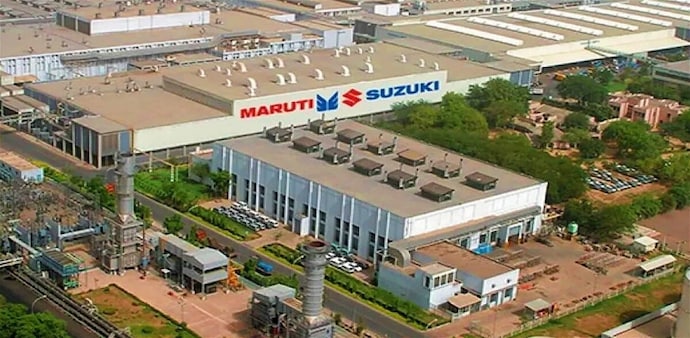
Maruti Suzuki is currently the only passenger vehicle manufacturer in India with in-plant railway sidings at two manufacturing facilities — Hansalpur and Manesar. The combined annual dispatch capacity of these two facilities stands at 7.5 lakh vehicles.
The company said the rail network services over 600 cities through 22 logistics hubs and transports popular models including the Dzire, WagonR, Swift, Brezza, Baleno, Fronx and Grand Vitara. Export hubs such as Mundra and Pipavav ports are also connected through railways.
Maruti Suzuki’s green logistics journey began in 2013 when it became India’s first automobile manufacturer to obtain an Automobile Freight Train Operator (AFTO) licence. Since then, the company has steadily expanded its railway-led vehicle movement strategy as part of its sustainability roadmap.
India’s largest carmaker, Maruti Suzuki, has crossed a major logistics milestone by cumulatively dispatching over 3 million vehicles through railways, underscoring the company’s aggressive push towards greener and more efficient transportation.
The company said it has sharply increased the share of railways in its outbound logistics from just 5% in FY15 to 26.5% in FY26. Notably, the jump from 2 million to 3 million cumulative rail dispatches was achieved in only 21 months — the fastest million milestone in the company’s history.
Maruti Suzuki Managing Director & CEO, Hisashi Takeuchi, said the automaker has invested more than Rs 1,372 crore in dedicated green logistics infrastructure, including railway sidings at its Hansalpur and Manesar plants, specialized automobile rakes, and logistics hub upgrades.
The company credited the Centre’s PM GatiShakti National Master Plan for enabling integrated multimodal logistics and supporting the industry’s shift towards rail-led freight movement. Maruti Suzuki now aims to raise the share of rail-based dispatches to 35% by FY31 and is also planning an in-plant railway siding at its upcoming Kharkhoda facility.
Maruti Suzuki is currently the only passenger vehicle manufacturer in India with in-plant railway sidings at two manufacturing facilities — Hansalpur and Manesar. The combined annual dispatch capacity of these two facilities stands at 7.5 lakh vehicles.
The company said the rail network services over 600 cities through 22 logistics hubs and transports popular models including the Dzire, WagonR, Swift, Brezza, Baleno, Fronx and Grand Vitara. Export hubs such as Mundra and Pipavav ports are also connected through railways.
Maruti Suzuki’s green logistics journey began in 2013 when it became India’s first automobile manufacturer to obtain an Automobile Freight Train Operator (AFTO) licence. Since then, the company has steadily expanded its railway-led vehicle movement strategy as part of its sustainability roadmap.