
One year of GST: Report card of India's biggest tax reform
One year of GST: Report card of India's biggest tax reform
BusinessToday.In
- Jul 1, 2018,
- Updated Jul 4, 2018 6:19 PM IST
- 1/12
India's businesses saw a complete makeover with the introduction of Goods and Services Tax, dubbed as one nation one tax. It aimed at to remove the cascading effect of 'tax on tax', and reducing the overall prices of most of the items.

- 2/12
The GST -- India's biggest post-Independence tax reform -- engulfed around 17 taxes and multiple cesses, aligning India with global regimes. Central taxes such as excise duty, services tax, countervailing duty and state taxes - including value added tax, octroi and purchase tax - were all rolled into one.
- 3/12
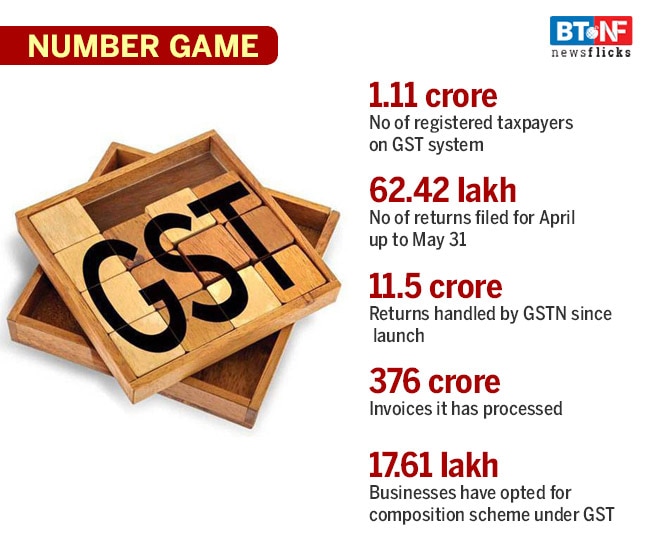
According to the Finance Ministry, the GST system has stabilised since rollout and some 1.11 crore businesses have registered themselves under the regime. The government claims that the average monthly compliance of return filing and tax payment should rise to around 96 per cent in a few months. The government is expecting to mop up on an average Rs 1 lakh crore in taxes every month. The industry too welcomed the tax reform despite the initial hiccups. The GST Council ironed-out major issues in 27 meetings over one year.
- 4/12
A World Bank report on GST states that India's GST structure was among the most complex in the world with not only one of the highest tax rates but also the highest number of tax slabs as compared to other countries.
- 5/12
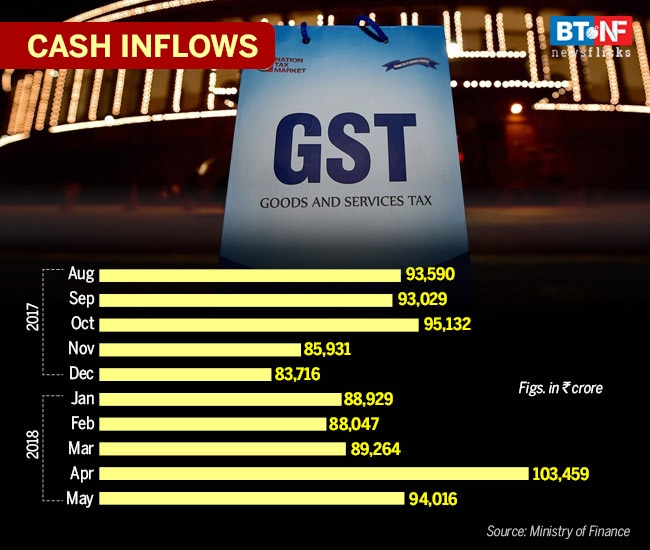
The total GST revenue collections have been inconsistent with the first few months seeing impressive GST collections of over Rs 90,000 crore and then a gradual slide to Rs 83,716 crore in December, post which it has again picked up. In April, it scaled to over Rs 1 lakh crore but has dipped to Rs 94,016 crore in May. The average GST collection for the last fiscal was Rs 89,885 crore.
- 6/12
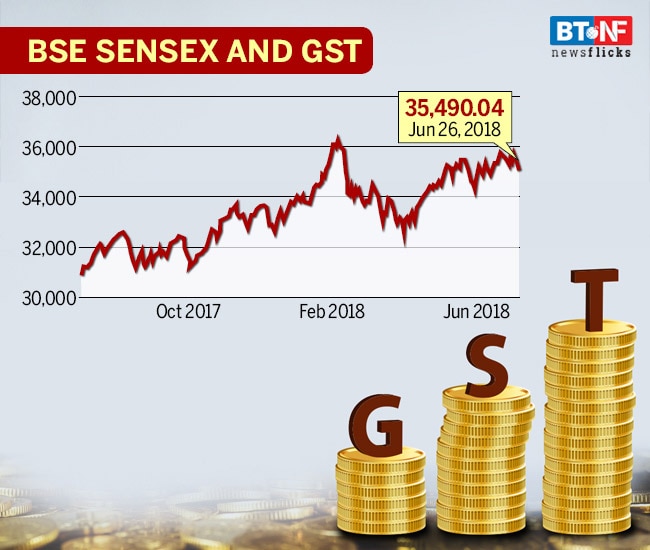
India's equity benchmark BSE Sensex has gained 13.67 per cent since GST was rolled out till June 26 this year. The index which represents the consumer durables sector advanced 26 per cent in the same period.
- 7/12
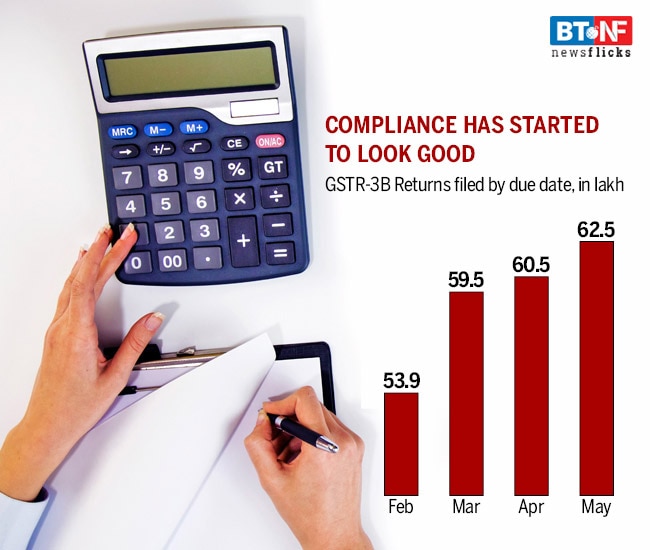
The biggest dampener in GST was the compliance process. Technical flaws blocked the smooth rollout. The filing system that was put in place in the beginning was quickly abandoned as businesses struggled with compliance. A new return form is being crafted to help make the process much less painful for businesses and is likely to be available soon.
- 8/12
According to the Economic Survey 2017-18, a preliminary analysis suggests there has been a 50 per cent increase in the number of indirect taxpayers, besides a large increase in voluntary registrations, especially by small enterprises.
- 9/12
Delayed refund to exportersThe delayed refund of Integrated GST (IGST) has led to blockage of working capital funds with export houses. The export industry faced a slump in growth, registering only Rs 30,280 crores in 2017-18 as against the anticipated Rs 32,500 crores in the previous fiscal year. The textile industry, in particular, is expected to stare at a loss of Rs 1,500 crore refunds budgeted for this year.
- 10/12
GST Council delivered
The GST Council with central and state representatives and the federal arrangement worked perfectly. The Centre has a 33% vote while the states account for 66%. It has never had to vote on any issues, with just one dissent recorded so far. The council has successfully found solutions to most issues that made the first year good mostly.
- 11/12
Next year in focusThe second year of the GST may witness
- Simplification of compliance process
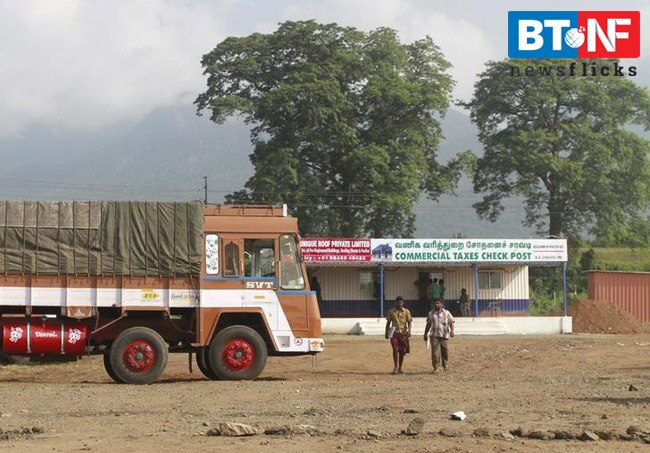
- Ease in generation of e-way bill for barrier free movement of goods
- Next year, taxpayers will be required to fill out a simpler return like a GSTR-3B to avail input tax credit without the hassle of matching the claims across multiple returns.
- 12/12
- Slabs rationalisation: There are 6 slabs, excluding exempt goods, at present. Most goods fall in the 12%, 18% and 28% brackets. There is a case for merging slabs to reduce complexity and classification disputes. The 12% and 18% bracket could be merged into one single slab in the 14-16% range.
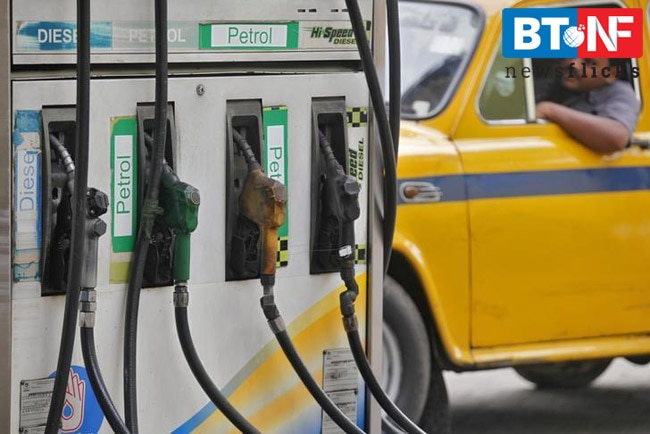
- More goods under the GST net. Key items outside its ambit are electricity, alcohol, petroleum goods and real estate.
- Anti-profiteering agency was constituted for a period of two years. It has been functional for about six months and issued a few orders following investigations. The Council needs to decide whether to wind it up after two years or keep it going until the tax regime matures.