
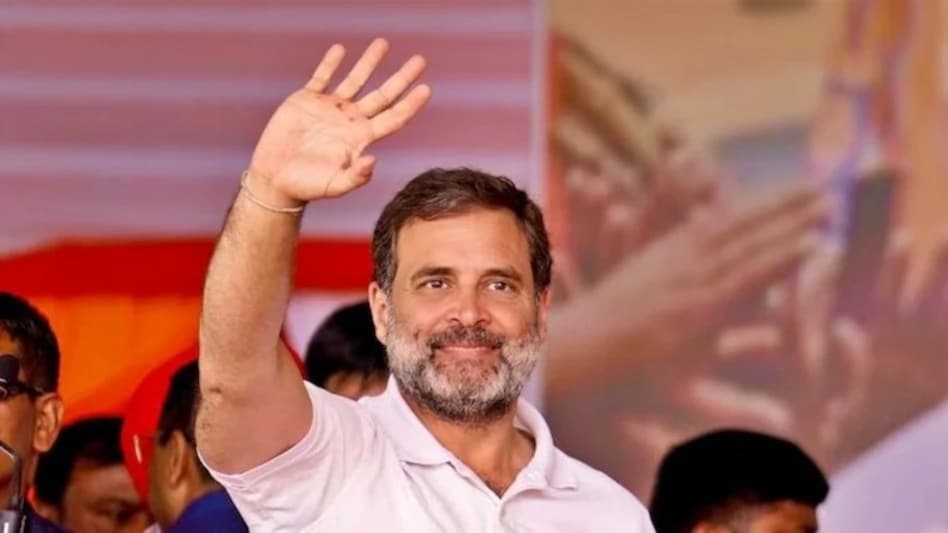
'Indian voter has rejected Narendra Modi': Is this the emergence of Rahul Gandhi as one of India's tallest leader?
This remarkable achievement signals a potential shift in the Indian political landscape and suggests that Rahul Gandhi's strategic overhaul of the party has resonated with voters across the nation.
- Jun 4, 2024,
- Updated Jun 4, 2024 6:20 PM IST
In a stunning reversal of political fortunes, the Congress party is on the verge of crossing the three-digit mark in the 2024 general elections for the first time in a decade. This remarkable achievement signals a potential shift in the Indian political landscape and suggests that Rahul Gandhi's strategic overhaul of the party has resonated with voters across the nation.
As the results trickled in, Rahul Gandhi, along with Congress President Mallikarjun Kharge, Sonia Gandhi and Priyanka Gandhi, addressed the press. In the press conference, Rahul Gandhi reiterated his commitment to protect and safeguard the Indian Constitution and said that this election results signals the fact that the Indian voter has rejected the politics of Narendra Modi.
"The numbers show that the Indian voter has rejected Narendra Modi and the BJP. It is a defeat of the BJP," he said, while adding that tomorrow, i.e., June 5, the INDIA alliance partners will meet and discuss the way forward.
Rahul Gandhi's Strategy Triumphs
For years, Rahul Gandhi has been working to revitalize the Congress party, focusing on issues of social justice and grassroots mobilization, in particular through his Bharat Jodo Yatra and a call for caste census. His efforts appear to have paid off. The significant gains made by Congress suggest that Gandhi’s strategy of forging alliances and emphasizing social justice has struck a chord with the electorate. The success is particularly evident in Uttar Pradesh, where a coalition with the Samajwadi Party has yielded impressive results.
BJP Faces Setback Under Modi's Leadership
In a surprising twist, the Bharatiya Janata Party (BJP), led by Narendra Modi, has for the first time in a decade, fallen well short of the majority mark. This shortfall means that the BJP will now be heavily reliant on its allies to form a government, marking a significant reduction in the dominance of Modi's brand. This dependence on coalition partners is a stark contrast to the previous two elections where the BJP enjoyed a clear majority.
A Thumbs Up for Social Justice
The election results have also been a significant endorsement of Rahul Gandhi's social justice strategy. The Congress and Samajwadi Party alliance has made massive gains, securing 45 seats, compared to the BJP’s 31 seats in these key constituencies. This shift indicates a growing acceptance and support for the inclusive policies advocated by the Congress-led coalition.
The UP Surge: Coalition Power
A closer look at Uttar Pradesh reveals the dynamics behind this political shift. The data indicates a massive consolidation of votes from Yadavs, Muslims, and Dalits, which has propelled the Congress-Samajwadi Party alliance to a commanding position. This coalition has successfully harnessed the support of these crucial demographics, showcasing the effectiveness of Rahul Gandhi's approach to building broad-based alliances.
The Evolving Political Landscape
The 2024 general elections mark a pivotal moment in Indian politics. The Congress party's resurgence and the BJP's reliance on allies suggest a more fragmented and competitive political arena. The reduction of Narendra Modi’s overwhelming influence and the rise of Rahul Gandhi as a formidable leader underscore the evolving dynamics in the country's political discourse.
As the dust settles, one thing appears to be clear: the Indian electorate may have signaled a desire for change, and Rahul Gandhi's Congress appears to be at the forefront of this new political wave.
In a stunning reversal of political fortunes, the Congress party is on the verge of crossing the three-digit mark in the 2024 general elections for the first time in a decade. This remarkable achievement signals a potential shift in the Indian political landscape and suggests that Rahul Gandhi's strategic overhaul of the party has resonated with voters across the nation.
As the results trickled in, Rahul Gandhi, along with Congress President Mallikarjun Kharge, Sonia Gandhi and Priyanka Gandhi, addressed the press. In the press conference, Rahul Gandhi reiterated his commitment to protect and safeguard the Indian Constitution and said that this election results signals the fact that the Indian voter has rejected the politics of Narendra Modi.
"The numbers show that the Indian voter has rejected Narendra Modi and the BJP. It is a defeat of the BJP," he said, while adding that tomorrow, i.e., June 5, the INDIA alliance partners will meet and discuss the way forward.
Rahul Gandhi's Strategy Triumphs
For years, Rahul Gandhi has been working to revitalize the Congress party, focusing on issues of social justice and grassroots mobilization, in particular through his Bharat Jodo Yatra and a call for caste census. His efforts appear to have paid off. The significant gains made by Congress suggest that Gandhi’s strategy of forging alliances and emphasizing social justice has struck a chord with the electorate. The success is particularly evident in Uttar Pradesh, where a coalition with the Samajwadi Party has yielded impressive results.
BJP Faces Setback Under Modi's Leadership
In a surprising twist, the Bharatiya Janata Party (BJP), led by Narendra Modi, has for the first time in a decade, fallen well short of the majority mark. This shortfall means that the BJP will now be heavily reliant on its allies to form a government, marking a significant reduction in the dominance of Modi's brand. This dependence on coalition partners is a stark contrast to the previous two elections where the BJP enjoyed a clear majority.
A Thumbs Up for Social Justice
The election results have also been a significant endorsement of Rahul Gandhi's social justice strategy. The Congress and Samajwadi Party alliance has made massive gains, securing 45 seats, compared to the BJP’s 31 seats in these key constituencies. This shift indicates a growing acceptance and support for the inclusive policies advocated by the Congress-led coalition.
The UP Surge: Coalition Power
A closer look at Uttar Pradesh reveals the dynamics behind this political shift. The data indicates a massive consolidation of votes from Yadavs, Muslims, and Dalits, which has propelled the Congress-Samajwadi Party alliance to a commanding position. This coalition has successfully harnessed the support of these crucial demographics, showcasing the effectiveness of Rahul Gandhi's approach to building broad-based alliances.
The Evolving Political Landscape
The 2024 general elections mark a pivotal moment in Indian politics. The Congress party's resurgence and the BJP's reliance on allies suggest a more fragmented and competitive political arena. The reduction of Narendra Modi’s overwhelming influence and the rise of Rahul Gandhi as a formidable leader underscore the evolving dynamics in the country's political discourse.
As the dust settles, one thing appears to be clear: the Indian electorate may have signaled a desire for change, and Rahul Gandhi's Congress appears to be at the forefront of this new political wave.