
BT Infra Summit 2026: Experts call for sustainable solutions, technology integration in India’s massive infra push
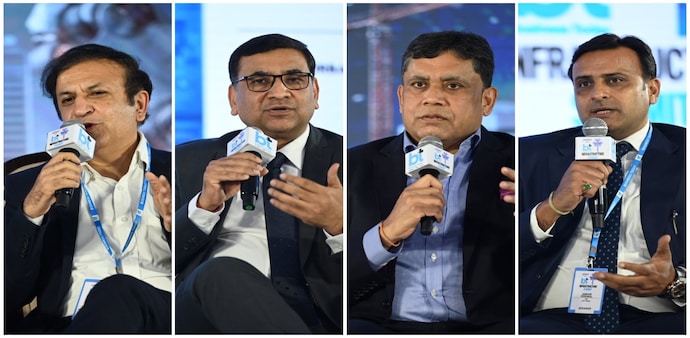
The panellists said that given the massive infra development ongoing in India the country is now an integral market for global companies when it came to developing strategies.
- Jul 31, 2026,
- Updated Jul 31, 2026 9:36 PM IST
India’s massive infrastructure development from railways to roads, power transmission and real estate will require lot of technology and digitalisation, experts across diverse industries said on July 31. Speaking at the Business Today Infrastructure Summit 2026, experts also stressed on the need for sustainable solutions to build the infrastructure.
“We need to really get a lot of technology and digitalisation in. When you build infrastructure, or you build factories, business information modelling (BIM) becomes extremely important even for smaller businesses, even for smaller manufacturing, because that integrates a lot of things,” Amit Gossain, MD, Kone Elevator – India and South Asia, said.
He cited an example from his own industry, where in problems in elevators connected remotely can be fixed even before they occur, aided by IoT (internet of things) and AI (artificial intelligence). He feels such a technology can also be used for roads and bridges.
Technology usage can lead to speedy execution, but experts also pointed that there can’t be short-cuts in the build up.
Rajeev Garg, Chief Sales Officer of Jindal Stainless also called on the need for sustainable solutions for the infra development. A few years ago a foot over bridge had collapsed in Mumbai. Subsequent studies pointed to corrosion as a key issue that had made the foundations weaker. It was after that the stainless steel association was invited by the railways to develop new long-lasting materials, pointed Garg.
The company, he says, developed a few materials, got them tested and approved, and that the material was now being used in many bridges in Mumbai and elsewhere.
“This is a case study how industry, academia and research can work in unison and come out with new innovative and sustainable solutions to fuel the infra growth that we are aspiring for,” Garg noted.
The panellists said that given the massive infra development ongoing, their hands were full in terms of the opportunities, and that India was now an integral market for global companies when it came to developing strategies.
“The original idea was we export out of India. But, the business that we have with the deals at hand in India is very telling,” said Bharat Kaushal, Corporate Officer, Hitachi Limited and Executive Officer, Hitachi India.
The huge infra development is also helping in speeding up supply chains, according to Ankur Periwal, MD, KPT Pipes.
“Our raw material, which comes from South Korea or Middle East, used to take 7-9 days to reach Dehradun from Mumbai and Mundra. It has now reduced almost 20 per cent. We ship across the country and the world. Ten years ago it used to take around 10 days to reach Chennai, but now in 5-6 days we have the material there. So, supply chain management has improved a lot in the last few years,” pointed Periwal.
Despite all the massive development that is happening in India, he feels its still going to be an uphill task when it comes to scaling up exports, especially when compared with China and we would perhaps need another 15-20 years to get there, according to Periwal.
Watch the full conversation here
India’s massive infrastructure development from railways to roads, power transmission and real estate will require lot of technology and digitalisation, experts across diverse industries said on July 31. Speaking at the Business Today Infrastructure Summit 2026, experts also stressed on the need for sustainable solutions to build the infrastructure.
“We need to really get a lot of technology and digitalisation in. When you build infrastructure, or you build factories, business information modelling (BIM) becomes extremely important even for smaller businesses, even for smaller manufacturing, because that integrates a lot of things,” Amit Gossain, MD, Kone Elevator – India and South Asia, said.
He cited an example from his own industry, where in problems in elevators connected remotely can be fixed even before they occur, aided by IoT (internet of things) and AI (artificial intelligence). He feels such a technology can also be used for roads and bridges.
Technology usage can lead to speedy execution, but experts also pointed that there can’t be short-cuts in the build up.
Rajeev Garg, Chief Sales Officer of Jindal Stainless also called on the need for sustainable solutions for the infra development. A few years ago a foot over bridge had collapsed in Mumbai. Subsequent studies pointed to corrosion as a key issue that had made the foundations weaker. It was after that the stainless steel association was invited by the railways to develop new long-lasting materials, pointed Garg.
The company, he says, developed a few materials, got them tested and approved, and that the material was now being used in many bridges in Mumbai and elsewhere.
“This is a case study how industry, academia and research can work in unison and come out with new innovative and sustainable solutions to fuel the infra growth that we are aspiring for,” Garg noted.
The panellists said that given the massive infra development ongoing, their hands were full in terms of the opportunities, and that India was now an integral market for global companies when it came to developing strategies.
“The original idea was we export out of India. But, the business that we have with the deals at hand in India is very telling,” said Bharat Kaushal, Corporate Officer, Hitachi Limited and Executive Officer, Hitachi India.
The huge infra development is also helping in speeding up supply chains, according to Ankur Periwal, MD, KPT Pipes.
“Our raw material, which comes from South Korea or Middle East, used to take 7-9 days to reach Dehradun from Mumbai and Mundra. It has now reduced almost 20 per cent. We ship across the country and the world. Ten years ago it used to take around 10 days to reach Chennai, but now in 5-6 days we have the material there. So, supply chain management has improved a lot in the last few years,” pointed Periwal.
Despite all the massive development that is happening in India, he feels its still going to be an uphill task when it comes to scaling up exports, especially when compared with China and we would perhaps need another 15-20 years to get there, according to Periwal.
Watch the full conversation here