
BT Infra Summit 2026: India's energy security needs a new playbook as clean power, storage and grid modernisation take centre stage
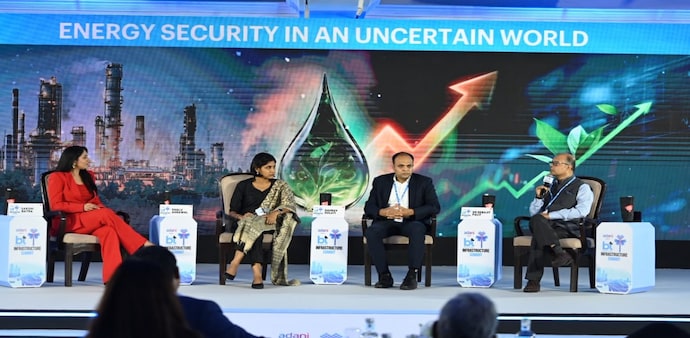
India's energy security is entering a new phase, with experts calling for greater focus on clean energy, battery storage and grid modernisation alongside traditional fuel security. Speaking at the BT Infrastructure Summit – Infra India 2047, industry leaders outlined the investments and policy reforms needed to build a resilient and future-ready energy ecosystem.
- Jul 31, 2026,
- Updated Jul 31, 2026 7:06 PM IST
India's definition of energy security is undergoing a fundamental shift—from simply ensuring access to electricity and fuels to building a resilient, affordable and sustainable energy system capable of withstanding global disruptions, experts said at the BT Infrastructure Summit Infra India 2047.
Shalu Agrawal, Director, Programmes at CEEW, said India has largely overcome the challenge of energy access, with nearly universal electrification and improved power supply across rural and urban areas. The next phase, she noted, is about ensuring affordability, reliable supplies and resilience against external shocks.
She highlighted that rapidly falling battery storage costs and increasingly competitive solar and wind power have aligned the objectives of affordability, reliability and sustainability. However, she cautioned that expanding transmission infrastructure, redesigning power markets and developing flexible contracting mechanisms will be crucial as renewable energy capacity accelerates.
Gaurav Gulati, Partner, Energy & Process Industries Practice at Kearney India, said India's structural dependence on imported hydrocarbons will continue for years, making strategic storage and robust logistics essential pillars of energy security. He estimated that modernising the country's transmission network alone could require investments of $15–20 billion over the coming decade.
Gulati also stressed the need for battery storage, pumped storage projects and smarter grid planning to accommodate rising renewable energy generation while maintaining reliability. He added that government initiatives such as the PM Surya Ghar and PM-KUSUM schemes have boosted rooftop solar adoption and strengthened domestic solar manufacturing.
Offering a broader perspective on India's energy transition, Dr Debajit Palit, Centre Head, Centre for Climate Change & Energy Transition at Chintan Research Foundation, argued that the debate should move beyond "fossil versus renewable" to "electrons wherever possible, molecules wherever necessary." He said the electrification of transport, industry and other end uses should be prioritised, while renewable energy, nuclear power, compressed biogas and storage technologies should work together to gradually reduce import dependence. According to Palit, India's transition must focus on decarbonisation without disrupting economic growth, supported by stronger policies on storage, demand-side management, microgrids and the emerging India Energy Stack.
The discussion underscored that India's path to energy security will depend not only on expanding renewable capacity but also on building resilient transmission networks, investing in storage technologies, encouraging domestic manufacturing and creating policy frameworks that enable a reliable, flexible and future-ready energy ecosystem.
India's definition of energy security is undergoing a fundamental shift—from simply ensuring access to electricity and fuels to building a resilient, affordable and sustainable energy system capable of withstanding global disruptions, experts said at the BT Infrastructure Summit Infra India 2047.
Shalu Agrawal, Director, Programmes at CEEW, said India has largely overcome the challenge of energy access, with nearly universal electrification and improved power supply across rural and urban areas. The next phase, she noted, is about ensuring affordability, reliable supplies and resilience against external shocks.
She highlighted that rapidly falling battery storage costs and increasingly competitive solar and wind power have aligned the objectives of affordability, reliability and sustainability. However, she cautioned that expanding transmission infrastructure, redesigning power markets and developing flexible contracting mechanisms will be crucial as renewable energy capacity accelerates.
Gaurav Gulati, Partner, Energy & Process Industries Practice at Kearney India, said India's structural dependence on imported hydrocarbons will continue for years, making strategic storage and robust logistics essential pillars of energy security. He estimated that modernising the country's transmission network alone could require investments of $15–20 billion over the coming decade.
Gulati also stressed the need for battery storage, pumped storage projects and smarter grid planning to accommodate rising renewable energy generation while maintaining reliability. He added that government initiatives such as the PM Surya Ghar and PM-KUSUM schemes have boosted rooftop solar adoption and strengthened domestic solar manufacturing.
Offering a broader perspective on India's energy transition, Dr Debajit Palit, Centre Head, Centre for Climate Change & Energy Transition at Chintan Research Foundation, argued that the debate should move beyond "fossil versus renewable" to "electrons wherever possible, molecules wherever necessary." He said the electrification of transport, industry and other end uses should be prioritised, while renewable energy, nuclear power, compressed biogas and storage technologies should work together to gradually reduce import dependence. According to Palit, India's transition must focus on decarbonisation without disrupting economic growth, supported by stronger policies on storage, demand-side management, microgrids and the emerging India Energy Stack.
The discussion underscored that India's path to energy security will depend not only on expanding renewable capacity but also on building resilient transmission networks, investing in storage technologies, encouraging domestic manufacturing and creating policy frameworks that enable a reliable, flexible and future-ready energy ecosystem.