
BT Infra Summit 2026: Storage, green hydrogen key to India’s next renewable leap, says ReNew’s chief
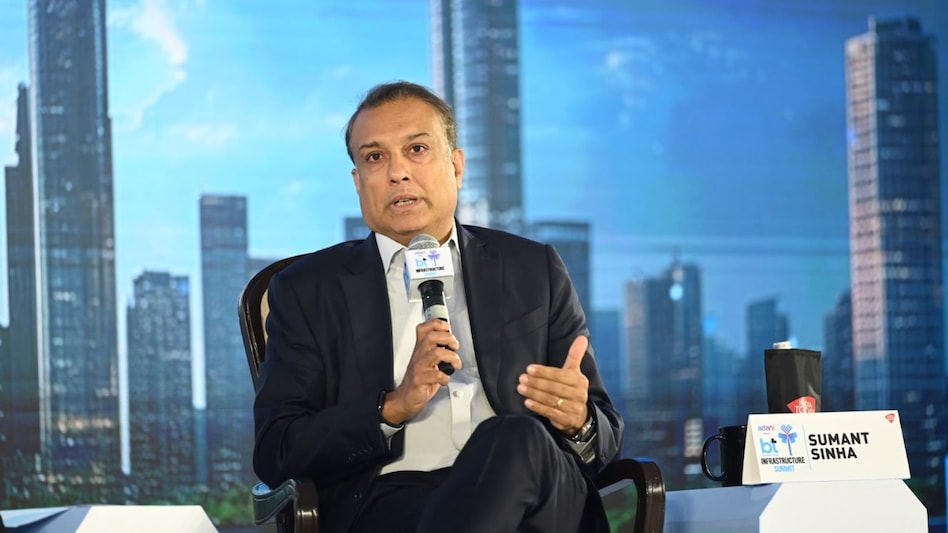
Storage, green fuels and domestic manufacturing will drive the next phase of India’s clean energy transition, says Sumant Sinha, Founder, Chairman and CEO of ReNew.
- Jul 31, 2026,
- Updated Jul 31, 2026 6:53 PM IST
India’s renewable energy transition has reached “multiple inflection points”, with the country now needing to focus on storage, domestic manufacturing and green fuels as it moves beyond rapid capacity addition, Sumant Sinha, Founder, Chairman and CEO of ReNew, said on Friday.
Speaking at the Business Today Infrastructure Summit 2026, Sinha said India had made significant progress in renewable energy and was now entering the next phase of its energy transition.
India has set a target of achieving 500 GW of non-fossil fuel electricity capacity by 2030.
“Our renewable energy journey is well underway. We are in the process of crossing 300 gigawatts of installed renewable capacity, out of which wind and solar account for a large majority, more than two-thirds. The target has long been 500 gigawatts, and we have been on our way to achieving that target.”
India added 50 GW of renewable capacity last year and is expected to surpass that this year, he said.
“This year we are likely to exceed that number. We also overtook the US to become the second-largest country adding new renewable capacity, after China.”
Sinha said the industry was now facing a different set of challenges.
“Renewables have now reached a point where, despite the progress we’ve made, we are facing multiple inflection points.”
The first challenge, he said, is integrating a growing share of renewable power into the grid. Renewables now account for around 20% of India’s power supply, creating periods of surplus solar generation during the day and shortages during evening peak demand.
“The first thing we have to do is install much more storage alongside every renewable energy project. That means better grid management through pumped hydro, battery-based storage, and other storage technologies. That’s the first inflection point.”
As renewable capacity rises, storage is becoming increasingly important to balance the grid and ensure reliable power supply.
The second challenge is reducing India’s dependence on imported equipment.
“We have built most of our renewable capacity using imported equipment. That’s something we now need to address in light of the energy security challenges we are facing.”
While importing renewable energy equipment is different from importing fossil fuels on a continuous basis, India still needs to move its supply chain further upstream to reduce import dependence, he said.
The third inflection point, Sinha said, is extending renewables beyond electricity generation.
“Electricity accounts for only 20% of total energy consumption. The remaining 80% is outside the reach of renewables today. So how do we begin addressing that?”
“So how can we start addressing that? Through green fuels. Those are the kinds of areas we now need to work on, green ammonia, green hydrogen and similar products.”
He further said India must also accelerate electrification across transportation and industry.
“We have to electrify end-use industries. That means cars, two-wheelers and public transport all need to become electric. Once that happens, renewable electricity can supply those sectors.”
On the economics of clean energy, Sinha said affordability has been the biggest driver of adoption.
“The reality is they’re shifting because clean energy is cheaper. That’s why they’re doing it.”
He added, “Renewable power is so much cheaper than coal-based power in India that, even after adding battery storage to firm up supply, it is still cheaper than, or at worst, comparable to, coal-based power.”
Calling for a broader policy approach, Sinha said India now needs to move beyond capacity targets and adopt an integrated approach to the energy transition.
“We need a much more end-to-end green energy ecosystem. We need to move away from setting targets for individual pieces of the puzzle and instead look at the entire value chain in a much more integrated way.”
He also stressed the importance of policy certainty.
“Policy certainty is something the industry has always looked for because we’re making long-term investments, and long-term investments require long-term policy stability.”
Sinha said India should aspire to become one of the world’s leading clean energy economies despite China’s head start.
“We are probably around 20 years behind China in many of these areas. But there’s no reason we shouldn’t aspire to catch up,” he said.
“Even if we don’t fully catch up, we can firmly establish ourselves as the second-most advanced country in electrification. We can become an exporter of clean technology equipment, clean technology knowledge and know-how to the rest of the world,” he further said.
Watch the full conversation here
India’s renewable energy transition has reached “multiple inflection points”, with the country now needing to focus on storage, domestic manufacturing and green fuels as it moves beyond rapid capacity addition, Sumant Sinha, Founder, Chairman and CEO of ReNew, said on Friday.
Speaking at the Business Today Infrastructure Summit 2026, Sinha said India had made significant progress in renewable energy and was now entering the next phase of its energy transition.
India has set a target of achieving 500 GW of non-fossil fuel electricity capacity by 2030.
“Our renewable energy journey is well underway. We are in the process of crossing 300 gigawatts of installed renewable capacity, out of which wind and solar account for a large majority, more than two-thirds. The target has long been 500 gigawatts, and we have been on our way to achieving that target.”
India added 50 GW of renewable capacity last year and is expected to surpass that this year, he said.
“This year we are likely to exceed that number. We also overtook the US to become the second-largest country adding new renewable capacity, after China.”
Sinha said the industry was now facing a different set of challenges.
“Renewables have now reached a point where, despite the progress we’ve made, we are facing multiple inflection points.”
The first challenge, he said, is integrating a growing share of renewable power into the grid. Renewables now account for around 20% of India’s power supply, creating periods of surplus solar generation during the day and shortages during evening peak demand.
“The first thing we have to do is install much more storage alongside every renewable energy project. That means better grid management through pumped hydro, battery-based storage, and other storage technologies. That’s the first inflection point.”
As renewable capacity rises, storage is becoming increasingly important to balance the grid and ensure reliable power supply.
The second challenge is reducing India’s dependence on imported equipment.
“We have built most of our renewable capacity using imported equipment. That’s something we now need to address in light of the energy security challenges we are facing.”
While importing renewable energy equipment is different from importing fossil fuels on a continuous basis, India still needs to move its supply chain further upstream to reduce import dependence, he said.
The third inflection point, Sinha said, is extending renewables beyond electricity generation.
“Electricity accounts for only 20% of total energy consumption. The remaining 80% is outside the reach of renewables today. So how do we begin addressing that?”
“So how can we start addressing that? Through green fuels. Those are the kinds of areas we now need to work on, green ammonia, green hydrogen and similar products.”
He further said India must also accelerate electrification across transportation and industry.
“We have to electrify end-use industries. That means cars, two-wheelers and public transport all need to become electric. Once that happens, renewable electricity can supply those sectors.”
On the economics of clean energy, Sinha said affordability has been the biggest driver of adoption.
“The reality is they’re shifting because clean energy is cheaper. That’s why they’re doing it.”
He added, “Renewable power is so much cheaper than coal-based power in India that, even after adding battery storage to firm up supply, it is still cheaper than, or at worst, comparable to, coal-based power.”
Calling for a broader policy approach, Sinha said India now needs to move beyond capacity targets and adopt an integrated approach to the energy transition.
“We need a much more end-to-end green energy ecosystem. We need to move away from setting targets for individual pieces of the puzzle and instead look at the entire value chain in a much more integrated way.”
He also stressed the importance of policy certainty.
“Policy certainty is something the industry has always looked for because we’re making long-term investments, and long-term investments require long-term policy stability.”
Sinha said India should aspire to become one of the world’s leading clean energy economies despite China’s head start.
“We are probably around 20 years behind China in many of these areas. But there’s no reason we shouldn’t aspire to catch up,” he said.
“Even if we don’t fully catch up, we can firmly establish ourselves as the second-most advanced country in electrification. We can become an exporter of clean technology equipment, clean technology knowledge and know-how to the rest of the world,” he further said.
Watch the full conversation here