
Beyond the Frame: Anu Malhotra’s Journey into India’s Vanishing Worlds
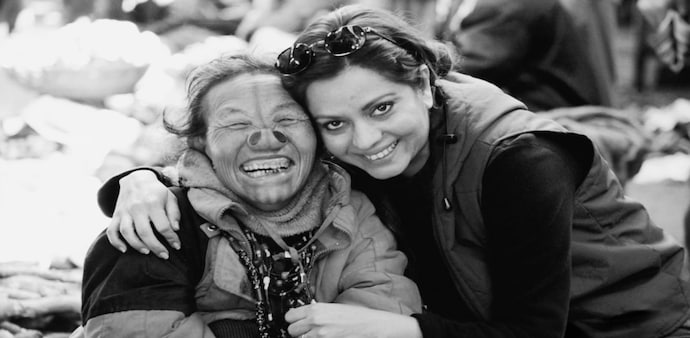
In Arunachal Pradesh’s Ziro Valley, while documenting the Apatani people, Malhotra encountered a worldview that challenged her assumptions about beauty.
- Oct 28, 2026,
- Updated Oct 28, 2026 3:45 PM IST
For over three decades, filmmaker, photographer and author Anu Malhotra has documented India’s indigenous cultures and spiritual traditions. From pioneering Indian television to immersing herself in remote Northeastern and Himalayan communities, her work poses a vital question: what can the modern world learn from ways of living it risks forgetting?
An Unsettling Encounter with Beauty
In Arunachal Pradesh’s Ziro Valley, while documenting the Apatani people, Malhotra encountered a worldview that challenged her assumptions about beauty.
Elderly Apatani women, their faces marked by dark tattoos and nostrils fitted with polished rattan plugs known as yaping hulo—historically worn to signal tribal identity and deter abductions—studied her features candidly. They suggested she, too, would look beautiful wearing them. Initially taken aback, after spending spent in their villages, Malhotra contemplated having the plugs fitted.
“The production crew was horrified,” she recalls with a laugh. “But it revealed something fundamental: beauty is framed by the world you inhabit. Step into another culture, surrender your ego, and your unquestioned assumptions unravel.”
The Pioneer Who Reframed Indian Television
In 1994, Malhotra founded AIM Television, producing over 600 hours of nonfiction programming. She introduced reality-style travel series including Namaste India, Indian Holiday and India Magic, alongside culture and lifestyle programmes such as Khoobsurat, Lakmé Fashion Catalogue and Sangini. Over 16 programmes, mostly original formats she created, premiered on Indian and international channels, shaping urban television and conversations around women’s agency.
In 2000, she coined the phrase “Incredible India” and created the Tourism Ministry’s initial flagship films, presenting India as a dynamic, living civilisation to international audiences.
For Malhotra, media also had to drive social change. Her public-health campaign Haath Se Haath Mila, created with the BBC World Service Trust, challenged HIV/AIDS stigma through 52 episodes featuring over 60 Bollywood icons. Reaching 100 million viewers and generating measurable behavioural change, it earned her the UNAIDS Global Award in 2007.
As television increasingly favoured sensationalist family dramas, Malhotra refused to join the regressive saas-bahu trend and left broadcast television. The demands of running a 100-person media house had also precipitated a severe health crisis that left her bedridden for months.
The enforced pause became a creative turning point. She moved towards ethnographic filmmaking, fine-art photography and documenting communities whose traditions were being eroded by modern development.
Wisdom in the Margins
Her films Tribal Wisdom, documenting seven indigenous communities, and Coming Full Circle, exploring India’s wisdom traditions, emerged from extended field immersions. They also deepened her understanding of community responsibility, spirituality and ecologically conscious living.
In Wokching, a Konyak Naga village in Nagaland, an accidental fire destroyed nearly 40 traditional wood-and-thatch homes shortly after her arrival. Before official relief came, neighbouring villages mobilised, carrying rice, blankets, timber and tools uphill. Residents cleared debris, felled timber and prepared communal meals. Within a week, every displaced family had shelter.
Assistance, Malhotra realised, was not extraordinary charity but a social responsibility and obligation. Her interpreter, Pong, observed: “In cities you value individual success, whereas we prioritize community harmony.”
She witnessed similar collective responsibility in Himachal Pradesh’s Kullu Valley, where weddings, funerals and festivals involve entire villages rather than remaining private financial burdens. While traditional societies retain their own hierarchies and gender constraints, they also offer models of mutual support and ecological balance that individualistic societies need to reconsider.
Raghav Chandra, Secretary, GOI and National Commission for Scheduled Tribes (NCST) writes
“Anu Malhotra’s work invites us to recognise the knowledge systems, cultural traditions and collective values that are an integral part of India’s heritage. Preserving this knowledge is about ensuring that future generations can understand, value and learn from it.”
Entering the Realm of the Shamans
Her exploration culminated in the award-winning documentary and book Shamans of the Himalayas, an intimate portrait of Goors—spiritual mediums who enter intense trances and states of possession through drumming, incense and chanting. They help resolve land disputes, address psychological distress and restore communal balance.
Access required humility and respect. Sacred temples and palanquins, or raths, could be filmed only with permission granted through ritual divination.
“These communities have an acute radar for insincerity,” Malhotra says. “If they sense you have come to treat them as exotica, their doors close immediately.”
Preserving Cultural Memory
Recognising that film alone could not capture the sensory richness of indigenous heritage, Malhotra created Soul Survivors, an exhibition combining large-format photography, documentary footage, soundscapes, ancestral artefacts and handwoven textiles. Presented at New Delhi’s National Museum and Bikaner House, and featured at COP28 in Dubai in 2023, it brought audiences closer to Apatani, Konyak Naga and Tibetan nomadic traditions.
Her latest initiative Anamnesis: The Sacred and the Seen will extend this work through multimedia and interactive media, to preserve cultural memory and make ancestral wisdom accessible to future generations.
Recognised with over 20 national and international awards, Malhotra received the Nari Shakti Puraskar in 2018, one of India’s highest honours recognising women’s empowerment.
Across broadcasting, public-service campaigns, ethnographic films and immersive exhibitions, a consistent purpose emerges: to document what modernity overlooks. Her work leaves us with a question that reaches beyond cultural preservation: as we construct the future, what wisdom from our ancestral past are we willing to carry forward