
How Brain Games Combine Entertainment With Problem-Solving
Instead of presenting a traditional exercise, a brain game gives players an objective, rules and immediate feedback. Solving the problem becomes part of the gameplay.
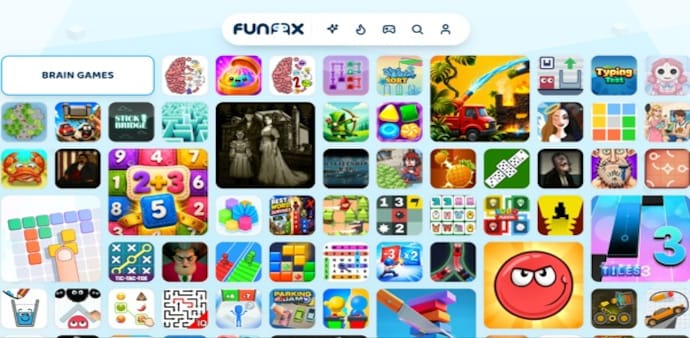
- Oct 19, 2026,
- Updated Oct 19, 2026 11:55 AM IST
Online games do not always depend on fast reactions. Some are designed around patterns, logic, memory, numbers and observation.
These experiences are commonly grouped as brain games, and their appeal comes from turning a problem into entertainment.
Instead of presenting a traditional exercise, a brain game gives players an objective, rules and immediate feedback. Solving the problem becomes part of the gameplay.
Different Brain Games Test Different Skills
Brain games are not a single genre with one set of mechanics.
A number game may require planning several moves ahead. A visual puzzle can depend on spotting a small detail. Memory games challenge players to remember positions or sequences, while logic games ask them to determine how different pieces of information connect.
This variety allows players to choose challenges based on the type of problem-solving they enjoy.
Good Brain Games Start With Simple Rules
Many popular online brain games like Brain Test: Tricky Puzzles use mechanics that can be understood quickly.
The difficulty develops later. A number puzzle may begin with plenty of available space before becoming increasingly crowded. A sorting challenge can start with only a few colours before introducing more complicated arrangements.
Keeping the rules consistent while increasing the complexity allows players to improve through experience.
Failure Provides Useful Feedback
Problem-solving naturally involves making mistakes.
Games can make that process more enjoyable by providing immediate feedback. When a solution fails, players can see the result, reconsider their approach and try again.
This turns failure into part of the learning process rather than simply the end of the session.
Short browser puzzles are particularly effective at this because another attempt can usually begin quickly.
Entertainment Keeps the Problem Interesting
The difference between a brain game and a traditional exercise is often presentation.
Colours, animations, levels, progression and interactive challenges make the problem feel like something to solve rather than an assignment to complete.
This is why brain puzzle games can appeal even to players who would not deliberately sit down to practise logic problems.
The thinking happens as part of the entertainment.
Why Brain Games Work Well Online
Browser-based brain games are well suited to both quick and extended sessions.
Players can complete a few puzzles when they have limited time or continue into harder levels when they want a longer challenge. Many also use straightforward controls that work naturally within a web-game format.
Brain games should not be treated as a guaranteed way to improve intelligence or cognitive ability. Their clearest value is simpler: they provide entertainment built around thinking and problem-solving.
For players who enjoy challenges where the solution matters more than reaction speed, online brain games offer plenty of ways to put that thinking into practice.