
Rising Gold Prices Are Changing Wedding Jewellery Buying. Old Gold Exchange Could Be Part of the Answer
With wedding season approaching, high gold prices are prompting families to rethink jewellery purchases and consider exchanging old gold to fund new designs. As consumers become more value-conscious, gold exchange is emerging as an important part of wedding jewellery planning.
- Sep 17, 2026,
- Updated Sep 17, 2026 6:04 PM IST
India’s wedding season is approaching, and along with the usual rush for venues, clothes and celebrations comes one of the biggest planned purchases for many families: gold jewellery.
But this year, the equation is different. With gold prices at elevated levels, families planning wedding purchases are having to think more carefully about how much fresh gold they want to buy and how they can make their existing jewellery work harder.
That is bringing gold exchange into sharper focus.
For a long time, wedding jewellery buying followed a fairly simple pattern: sell or set aside old jewellery, then buy new pieces. Today, an increasing number of consumers are looking at the value sitting inside their homes before making their next purchase.
Old jewellery that has not been worn for years can potentially be exchanged and its value put towards new designs. For a family with significant wedding jewellery requirements, this can help reduce the amount of fresh money required for the purchase.
The shift is also happening alongside greater consumer attention to gold prices. Buyers are tracking the gold price trend, checking the gold market price today and trying to understand where prices could move next. For those who already own gold, the gold value today can be an important part of this calculation.
In other words, the question for wedding shoppers is no longer only how much gold they need to buy. It is also how much value they already have.
Why the exchange process matters
The growing interest in old gold exchange is also bringing more attention to how the transaction is conducted.
The value a customer receives depends on factors such as purity and weight, while deductions can affect the final amount available towards a new purchase. This makes the process particularly important at a time when consumers are becoming more value-conscious.
Historically, concerns around purity testing, valuation and deductions have been among the reasons consumers have been cautious about gold exchange. Organised jewellery retailers are increasingly trying to address these concerns through standardised and more transparent processes.
Tanishq Gold Exchange is one such example. The company says more than 36 lakh Indians have exchanged old gold through Tanishq over the years, while more than
14,000 kg of gold was brought back into circulation through its exchange programme in the last year alone.
At Tanishq stores, customers can watch the transaction through its various stages. Purity is tested using Karatmeters, gold and stone weights are measured separately, and the melting process is carried out inside the store by dedicated karigars. The company also accepts old jewellery purchased from any jeweller, starting from 9KT purity, even without bills.
The company says its buying and exchange rates are the same and that there are no hidden deductions. For consumers comparing the gold exchange price or looking for a gold exchange offer, these details can materially affect the value of the transaction.
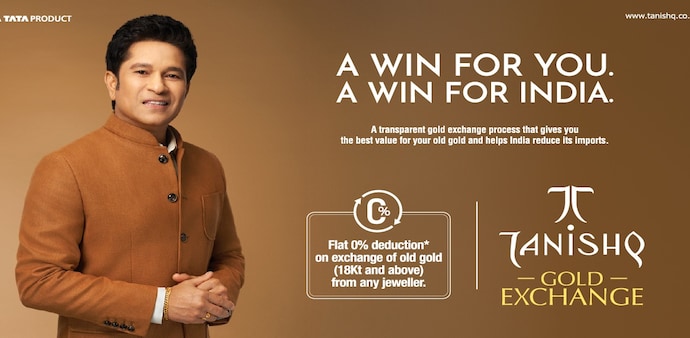
This month, Tanishq is offering flat 0% deduction on the exchange of old gold of 18KT purity and above. For wedding shoppers, the offer effectively provides an opportunity to bring existing jewellery into the purchase equation while retaining more of its assessed value.
An industry shift with a wider implication
The growing role of exchange also has a significance beyond individual wedding purchases.
India continues to depend heavily on imported gold, even as Indian households hold large quantities accumulated over decades (approximately 25,000 tonnes)
This creates an unusual dynamic: the country imports large quantities of gold to meet demand, while substantial quantities are already sitting within homes. A stronger organised gold exchange ecosystem can help bring some of this dormant gold back into circulation instead of requiring every new jewellery purchase to be funded by fresh gold.
For the consumer, the benefit is simpler. A piece that has been sitting unused can become part of the budget for a new wedding purchase.
That may explain why gold exchange is gradually moving beyond being an occasional retail service. As rising gold prices make consumers more conscious of value, exchange is emerging as a way to think about jewellery buying differently — by combining the gold a family already owns with what it plans to buy next.
For wedding shoppers, that could make the first step in jewellery planning not a trip to a store, but a look inside the family locker.
India’s wedding season is approaching, and along with the usual rush for venues, clothes and celebrations comes one of the biggest planned purchases for many families: gold jewellery.
But this year, the equation is different. With gold prices at elevated levels, families planning wedding purchases are having to think more carefully about how much fresh gold they want to buy and how they can make their existing jewellery work harder.
That is bringing gold exchange into sharper focus.
For a long time, wedding jewellery buying followed a fairly simple pattern: sell or set aside old jewellery, then buy new pieces. Today, an increasing number of consumers are looking at the value sitting inside their homes before making their next purchase.
Old jewellery that has not been worn for years can potentially be exchanged and its value put towards new designs. For a family with significant wedding jewellery requirements, this can help reduce the amount of fresh money required for the purchase.
The shift is also happening alongside greater consumer attention to gold prices. Buyers are tracking the gold price trend, checking the gold market price today and trying to understand where prices could move next. For those who already own gold, the gold value today can be an important part of this calculation.
In other words, the question for wedding shoppers is no longer only how much gold they need to buy. It is also how much value they already have.
Why the exchange process matters
The growing interest in old gold exchange is also bringing more attention to how the transaction is conducted.
The value a customer receives depends on factors such as purity and weight, while deductions can affect the final amount available towards a new purchase. This makes the process particularly important at a time when consumers are becoming more value-conscious.
Historically, concerns around purity testing, valuation and deductions have been among the reasons consumers have been cautious about gold exchange. Organised jewellery retailers are increasingly trying to address these concerns through standardised and more transparent processes.
Tanishq Gold Exchange is one such example. The company says more than 36 lakh Indians have exchanged old gold through Tanishq over the years, while more than
14,000 kg of gold was brought back into circulation through its exchange programme in the last year alone.
At Tanishq stores, customers can watch the transaction through its various stages. Purity is tested using Karatmeters, gold and stone weights are measured separately, and the melting process is carried out inside the store by dedicated karigars. The company also accepts old jewellery purchased from any jeweller, starting from 9KT purity, even without bills.
The company says its buying and exchange rates are the same and that there are no hidden deductions. For consumers comparing the gold exchange price or looking for a gold exchange offer, these details can materially affect the value of the transaction.
This month, Tanishq is offering flat 0% deduction on the exchange of old gold of 18KT purity and above. For wedding shoppers, the offer effectively provides an opportunity to bring existing jewellery into the purchase equation while retaining more of its assessed value.
An industry shift with a wider implication
The growing role of exchange also has a significance beyond individual wedding purchases.
India continues to depend heavily on imported gold, even as Indian households hold large quantities accumulated over decades (approximately 25,000 tonnes)
This creates an unusual dynamic: the country imports large quantities of gold to meet demand, while substantial quantities are already sitting within homes. A stronger organised gold exchange ecosystem can help bring some of this dormant gold back into circulation instead of requiring every new jewellery purchase to be funded by fresh gold.
For the consumer, the benefit is simpler. A piece that has been sitting unused can become part of the budget for a new wedding purchase.
That may explain why gold exchange is gradually moving beyond being an occasional retail service. As rising gold prices make consumers more conscious of value, exchange is emerging as a way to think about jewellery buying differently — by combining the gold a family already owns with what it plans to buy next.
For wedding shoppers, that could make the first step in jewellery planning not a trip to a store, but a look inside the family locker.