
31 dead, 5.65 lakh affected: Assam floods worsen as Brahmaputra crosses danger mark in 12 districts
The India Meteorological Department has put the state on yellow alert and warned of thunderstorms and heavy rain at isolated locations over the next four days
- Jul 22, 2026,
- Updated Jul 22, 2026 11:57 AM IST
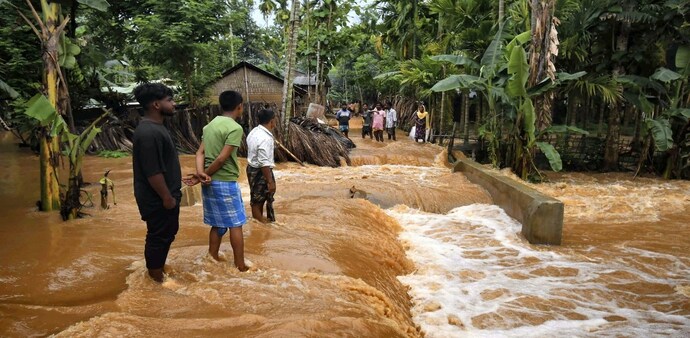
Assam's flood havoc deepened sharply on Wednesday, with 21 more deaths recorded in a single day and the number of people caught in the disaster swelling to nearly 5.65 lakh. The season's toll has now climbed to 31, according to figures released by the Assam State Disaster Management Authority at midnight on Tuesday. The India Meteorological Department has put the state on yellow alert and warned of thunderstorms and heavy rain at isolated locations over the next four days.
Where the damage is worst
Twelve districts are bearing the brunt of the flooding: Biswanath, Charaideo, Dhemaji, Dibrugarh, Golaghat, Jorhat, Kamrup, Kamrup Metropolitan, Karbi Anglong, Nagaon, Sivasagar and Tinsukia.
Sivasagar is the hardest hit, with close to 3.6 lakh people affected. Of the 21 deaths recorded in the last 24 hours, 13 came from Sivasagar alone, among them four women and two children. Charaideo reported five more deaths, including two children. Golaghat lost two people, and one woman died in Jorhat.
Jorhat and Charaideo follow Sivasagar in scale of impact, with roughly 88,000 and 72,500 people affected respectively. The deterioration since Monday night has been sharp; at that point, the number of people affected stood at around 3.63 lakh across 15 districts.
Rivers in the red
Several major waterways are running dangerously high. The Brahmaputra is above the danger mark at Neamatighat, while two of its tributaries, Buridihing at Khowang and Dhansiri at Golaghat and Numaligarh, have also breached danger levels. More critically, the Dikhou river at Sivasagar and the Disang river at Nanglamuraghat are both flowing above the highest flood level.
The Regional Meteorological Centre in Guwahati noted that an upper air cyclonic circulation over central Assam and adjoining Nagaland has become less pronounced, though the IMD's yellow alert remains in effect.
Rescue and relief operations
More than 6,000 people have been evacuated from Charaideo, Golaghat, Jorhat and Sivasagar by the Army, NDRF, SDRF, fire services, police and civil agencies working in coordination. The administration is currently running 273 relief camps and distribution centres across 10 districts, sheltering 12,284 displaced individuals.
In the past 24 hours, authorities have distributed over 5,000 quintals of rice, 956 quintals of dal, 265 quintals of salt and more than 20,000 litres of mustard oil to people affected by the flooding.
The wider toll
The scale of damage extends well beyond human casualties. At present, 872 villages remain submerged and more than 24,210 hectares of agricultural land has been damaged. Around 1.85 lakh domestic animals and poultry have been caught in the disaster. Roads, bridges and embankments have been damaged across multiple districts, adding to the difficulty of relief operations in already hard-to-reach areas.
Assam's flood havoc deepened sharply on Wednesday, with 21 more deaths recorded in a single day and the number of people caught in the disaster swelling to nearly 5.65 lakh. The season's toll has now climbed to 31, according to figures released by the Assam State Disaster Management Authority at midnight on Tuesday. The India Meteorological Department has put the state on yellow alert and warned of thunderstorms and heavy rain at isolated locations over the next four days.
Where the damage is worst
Twelve districts are bearing the brunt of the flooding: Biswanath, Charaideo, Dhemaji, Dibrugarh, Golaghat, Jorhat, Kamrup, Kamrup Metropolitan, Karbi Anglong, Nagaon, Sivasagar and Tinsukia.
Sivasagar is the hardest hit, with close to 3.6 lakh people affected. Of the 21 deaths recorded in the last 24 hours, 13 came from Sivasagar alone, among them four women and two children. Charaideo reported five more deaths, including two children. Golaghat lost two people, and one woman died in Jorhat.
Jorhat and Charaideo follow Sivasagar in scale of impact, with roughly 88,000 and 72,500 people affected respectively. The deterioration since Monday night has been sharp; at that point, the number of people affected stood at around 3.63 lakh across 15 districts.
Rivers in the red
Several major waterways are running dangerously high. The Brahmaputra is above the danger mark at Neamatighat, while two of its tributaries, Buridihing at Khowang and Dhansiri at Golaghat and Numaligarh, have also breached danger levels. More critically, the Dikhou river at Sivasagar and the Disang river at Nanglamuraghat are both flowing above the highest flood level.
The Regional Meteorological Centre in Guwahati noted that an upper air cyclonic circulation over central Assam and adjoining Nagaland has become less pronounced, though the IMD's yellow alert remains in effect.
Rescue and relief operations
More than 6,000 people have been evacuated from Charaideo, Golaghat, Jorhat and Sivasagar by the Army, NDRF, SDRF, fire services, police and civil agencies working in coordination. The administration is currently running 273 relief camps and distribution centres across 10 districts, sheltering 12,284 displaced individuals.
In the past 24 hours, authorities have distributed over 5,000 quintals of rice, 956 quintals of dal, 265 quintals of salt and more than 20,000 litres of mustard oil to people affected by the flooding.
The wider toll
The scale of damage extends well beyond human casualties. At present, 872 villages remain submerged and more than 24,210 hectares of agricultural land has been damaged. Around 1.85 lakh domestic animals and poultry have been caught in the disaster. Roads, bridges and embankments have been damaged across multiple districts, adding to the difficulty of relief operations in already hard-to-reach areas.