
7.8% GDP growth: Garg challenges ₹86 lakh crore-to-₹80 lakh crore revision, questions methodology
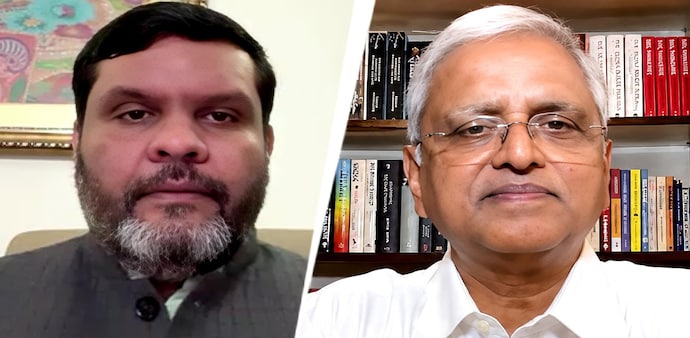
Former Finance Secretary Subhash Chandra Garg and Economic Advisory Council to the Prime Minister member Gaurav Vallabh clashed over India’s latest GDP estimates. The exchange exposed two fundamentally different approaches to reading India's economic data.
- Sep 3, 2026,
- Updated Sep 3, 2026 10:48 AM IST
India’s GDP debate has turned into a numbers game with a ₹6 lakh crore gap at the centre of the argument.
Former Finance Secretary Subhash Chandra Garg and Economic Advisory Council to the Prime Minister member Gaurav Vallabh clashed over India’s latest GDP estimates during an India Today TV discussion, with Garg questioning how an earlier first-quarter current-price GDP estimate of about ₹86 lakh crore was revised down to roughly ₹80 lakh crore.
For Garg, the revision is too large to be brushed aside. Vallabh, however, argued that the numbers changed because the underlying methodology, data sources and coverage of economic activity changed with the new GDP series.
Question on ₹86 lakh crore to ₹80 lakh crore revision
Garg focused on the government's current-price GDP estimates. He argued that if the earlier ₹86 lakh crore figure were retained, nominal GDP growth would work out to around 2.6%, compared with the 10.3% growth calculated using the revised figure.
Garg stressed that he was not disputing the GDP deflator or the calculation of real growth. His concern was the sharp change in the underlying current-price GDP estimate.
“If the GDP as mentioned by the government earlier was ₹86 lakh crores, then you get the growth only 2.6%,” Garg said, questioning why the earlier estimate had fallen to ₹80 lakh crore.
He also pointed to a reduction of around ₹12 lakh crore in the current-price GDP estimate for 2023-24 under the revised series, arguing that revisions of such scale deserve greater explanation.
Vallabh: New data changed the picture
Vallabh rejected the suggestion that the revision undermined the latest growth figures.
He argued that changing the GDP base year involves more than adjusting prices. The revised series incorporates newer surveys, GST data, company information, government records and changes in the coverage of economic activity.
Vallabh illustrated the point with a hypothetical example: if an earlier estimate was based on 86 factories producing at a certain level, but newer data showed that only 80 were operating at that level, the estimated size of the economy would also change.
His argument was that Garg's 2.6% calculation effectively compares figures generated under two different measurement frameworks.
“If the base year changes, the coverage of economic activity changes,” Vallabh said.
7.8% growth becomes the next flashpoint
The debate then shifted to India's headline 7.8% real GDP growth in the first quarter. Garg maintained that his calculation did not rely on changing the deflator or inflation assumption. Instead, he used the earlier current-price GDP figure to highlight the impact of the revision.
Vallabh pointed to other economic indicators to support the government's growth narrative. Private consumption grew 7.1%, gross fixed capital formation rose 11.9% and real exports increased 12%, according to the figures cited during the discussion.
He also pointed to labour-market data, including an unemployment rate of 3.1%, arguing that the broader indicators were consistent with strong economic activity.
Garg shifts the debate from GDP to jobs
The disagreement eventually moved beyond national accounting to the quality of employment.
Garg acknowledged the increase in the number of people classified as employed but questioned how much of that growth represented quality jobs. He argued that a significant share was concentrated in unpaid work in family enterprises and agricultural employment.
He also raised concerns over educated youth unemployment, including the possibility that some jobseekers eventually leave the labour force after failing to find suitable employment.
Vallabh acknowledged that job quality remains a challenge but maintained that employment trends were moving in the right direction.
Why the GDP revision matters
The exchange exposed two fundamentally different approaches to reading India's economic data.
For Garg, the central question is transparency: when an estimate falls from ₹86 lakh crore to ₹80 lakh crore, the scale of the revision demands a clear explanation of what changed.
For Vallabh, the revised number cannot be assessed independently of the methodology behind it. New data sources, broader or altered coverage and improved measurement can change the estimated size of the economy without necessarily implying that the underlying economic activity suddenly deteriorated.
The two also disagreed on whether the scale of the revision was unusual. Garg said he had not encountered a reduction of comparable magnitude during his career, while Vallabh pointed to previous upward and downward revisions as evidence that revisions are a normal part of national income accounting.
India’s GDP debate has turned into a numbers game with a ₹6 lakh crore gap at the centre of the argument.
Former Finance Secretary Subhash Chandra Garg and Economic Advisory Council to the Prime Minister member Gaurav Vallabh clashed over India’s latest GDP estimates during an India Today TV discussion, with Garg questioning how an earlier first-quarter current-price GDP estimate of about ₹86 lakh crore was revised down to roughly ₹80 lakh crore.
For Garg, the revision is too large to be brushed aside. Vallabh, however, argued that the numbers changed because the underlying methodology, data sources and coverage of economic activity changed with the new GDP series.
Question on ₹86 lakh crore to ₹80 lakh crore revision
Garg focused on the government's current-price GDP estimates. He argued that if the earlier ₹86 lakh crore figure were retained, nominal GDP growth would work out to around 2.6%, compared with the 10.3% growth calculated using the revised figure.
Garg stressed that he was not disputing the GDP deflator or the calculation of real growth. His concern was the sharp change in the underlying current-price GDP estimate.
“If the GDP as mentioned by the government earlier was ₹86 lakh crores, then you get the growth only 2.6%,” Garg said, questioning why the earlier estimate had fallen to ₹80 lakh crore.
He also pointed to a reduction of around ₹12 lakh crore in the current-price GDP estimate for 2023-24 under the revised series, arguing that revisions of such scale deserve greater explanation.
Vallabh: New data changed the picture
Vallabh rejected the suggestion that the revision undermined the latest growth figures.
He argued that changing the GDP base year involves more than adjusting prices. The revised series incorporates newer surveys, GST data, company information, government records and changes in the coverage of economic activity.
Vallabh illustrated the point with a hypothetical example: if an earlier estimate was based on 86 factories producing at a certain level, but newer data showed that only 80 were operating at that level, the estimated size of the economy would also change.
His argument was that Garg's 2.6% calculation effectively compares figures generated under two different measurement frameworks.
“If the base year changes, the coverage of economic activity changes,” Vallabh said.
7.8% growth becomes the next flashpoint
The debate then shifted to India's headline 7.8% real GDP growth in the first quarter. Garg maintained that his calculation did not rely on changing the deflator or inflation assumption. Instead, he used the earlier current-price GDP figure to highlight the impact of the revision.
Vallabh pointed to other economic indicators to support the government's growth narrative. Private consumption grew 7.1%, gross fixed capital formation rose 11.9% and real exports increased 12%, according to the figures cited during the discussion.
He also pointed to labour-market data, including an unemployment rate of 3.1%, arguing that the broader indicators were consistent with strong economic activity.
Garg shifts the debate from GDP to jobs
The disagreement eventually moved beyond national accounting to the quality of employment.
Garg acknowledged the increase in the number of people classified as employed but questioned how much of that growth represented quality jobs. He argued that a significant share was concentrated in unpaid work in family enterprises and agricultural employment.
He also raised concerns over educated youth unemployment, including the possibility that some jobseekers eventually leave the labour force after failing to find suitable employment.
Vallabh acknowledged that job quality remains a challenge but maintained that employment trends were moving in the right direction.
Why the GDP revision matters
The exchange exposed two fundamentally different approaches to reading India's economic data.
For Garg, the central question is transparency: when an estimate falls from ₹86 lakh crore to ₹80 lakh crore, the scale of the revision demands a clear explanation of what changed.
For Vallabh, the revised number cannot be assessed independently of the methodology behind it. New data sources, broader or altered coverage and improved measurement can change the estimated size of the economy without necessarily implying that the underlying economic activity suddenly deteriorated.
The two also disagreed on whether the scale of the revision was unusual. Garg said he had not encountered a reduction of comparable magnitude during his career, while Vallabh pointed to previous upward and downward revisions as evidence that revisions are a normal part of national income accounting.