
After 79 years: Iron track cuts through isolation as trains reach Chhattisgarh's Rowghat
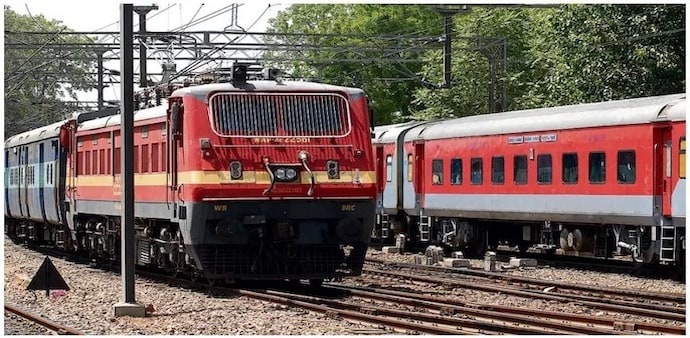
Chhattisgarh Chief Minister Vishnu Deo Sai inaugurated the new section, while Union Railway Minister Ashwini Vaishnaw joined virtually from New Delhi to flag off passenger services connecting Rowghat with Raipur via Dalli-Rajhara.
- Oct 22, 2026,
- Updated Oct 22, 2026 12:02 PM IST
After seven decades of isolation, the distant town of Rowghat in Chhattisgarh's Kanker district woke up to the haunting, triumphant whistle of a locomotive, marking its historic integration into India's national railway grid for the first time since Independence.
The breakthrough came with the inauguration of the newly completed 17.5-km Tadoki-Rowghat rail section, a critical engineering feat that wraps up the 95-km Dalli-Rajhara-Rowghat project built at an investment of ₹1,628 crore. Prior to this, passenger operations only extended as far as Tadoki (spanning 77.5 km).
To mark the milestone, Chhattisgarh Chief Minister Vishnu Deo Sai inaugurated the new section, while Union Railway Minister Ashwini Vaishnaw joined virtually from New Delhi to flag off passenger services connecting Rowghat with Raipur via Dalli-Rajhara.
For generations, residents of this remote pocket in the Bastar region faced severe transit constraints that slowed access to higher education, specialized medical care, local jobs, and major commercial markets. The arrival of regular passenger lines changes that landscape overnight, creating a seamless economic bridge to the state capital, Raipur.
This 95-km stretch forms part of a larger 240-km Dallirajhara-Rowghat-Jagdalpur railway initiative — a joint venture involving the Chhattisgarh government, NMDC, SAIL, and Indian Railways — with future plans to extend the link further toward Jagdalpur, Koraput in Odisha, and Visakhapatnam in Andhra Pradesh.
Beyond public mobility, the infrastructure triumph serves a heavy industrial purpose. The Rowghat tract houses rich iron ore reserves vital to the country's steel sector, including SAIL's Bhilai Steel Plant. The newly minted rail link promises to fast-track raw material logistics, streamline supply chains, and stimulate localized economic growth.
Alongside the Rowghat milestone, Chief Minister Sai also inaugurated the 22-km Abhanpur-Kurud broad gauge section (part of the larger Abhanpur-Dhamtari gauge conversion project) and laid the foundation stone for a modern electric locomotive maintenance facility in Raipur.
Designed to house up to 300 high-horsepower electric locomotives, the facility is slated to manufacture modern 9,000-horsepower electric locomotives complying with international standards, with potential for future exports.
Officials also highlighted that ₹57,000 crore worth of railway works are currently underway across Chhattisgarh, which has achieved 100% railway electrification and is actively redeveloping 32 stations.