
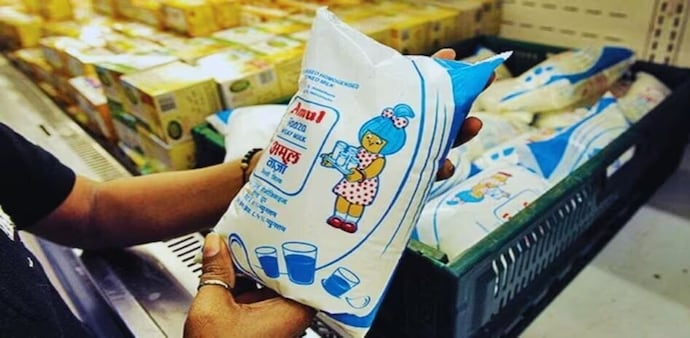
Amul milk gets costlier from Thursday, prices rise by Rs 2-4 per litre across India
The increase comes six months after the Gujarat Co-operative Milk Marketing Federation, which markets Amul products, last revised milk prices in May
- Nov 11, 2026,
- Updated Nov 11, 2026 7:57 PM IST
Dairy major Amul has announced a price hike of Rs 2-4 per litre across major milk variants in India, effective Thursday, November 12.
The increase comes six months after the Gujarat Co-operative Milk Marketing Federation (GCMMF), which markets Amul products, last revised milk prices in May.
In a statement on Wednesday, GCMMF said fresh pouch milk prices would increase by 4-5 per cent across major variants and pack sizes.
"The price of our largest-selling Amul Taaza toned milk with 3 per cent milk fat has been increased by only Rs 2 per litre (3.3 per cent increase) and Amul Gold Milk with 6 per cent milk fat by Rs 4 per litre (5.5 per cent rise)," the federation said.
The cooperative attributed the increase to a sharp rise in the cost of milk production, including green and dry fodder, cattle feed ingredients such as oil cake, maize and molasses, packaging film and fuel.
Read More: Mother Dairy increases milk prices by ₹2-4 from Nov 12: Check new rates
GCMMF also cited low and uneven rainfall in Gujarat and several other parts of India, which has added pressure on dairy farmers.
"In the current challenging environmental circumstances due to low and uneven rainfall in Gujarat, as well as many parts of India, we are constrained to increase the consumer price of milk to pay better prices to our producers and support them in these difficult times," it said.
Higher prices to support dairy farmers
The federation said its member unions have already increased milk procurement prices paid to farmers by 4-5 per cent over the past year. A further revision in procurement rates is expected to help producers manage rising costs.
GCMMF said 80 per cent of the revenue collected from consumers through its cooperative network is returned to around 36 lakh milk producers. It added that a major portion of the latest retail price increase would be passed on to farmers, helping them sustain and expand milk production.