
Beyond factory floors: Piyush Goyal outlines next generation India-Japan economic partnership
"For decades, our economic relationship was built on a familiar template: Japanese capital and technology, Indian market and talent pool. Suzuki, Honda, the Delhi Metro, the Dedicated Freight Corridor. Enormously valuable, and India is grateful for all of it. But that template is now too small for what both countries need," Goyal wrote in a substack piece.
- Aug 28, 2026,
- Updated Aug 28, 2026 10:04 AM IST
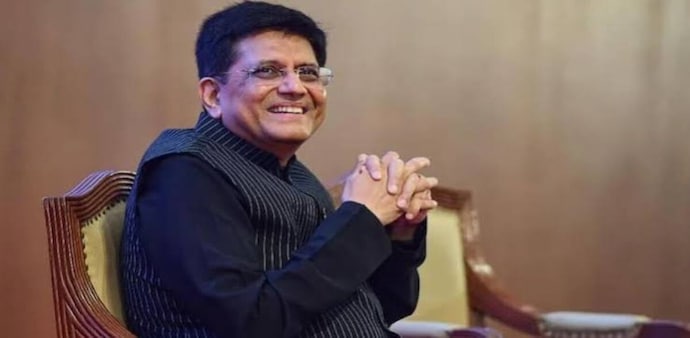
Union Minister of Commerce and Industry Piyush Goyal, who led a nearly 200-member business delegation across Japan from August 24 to August 27, outlined the changing nature of bilateral ties in a Substack piece titled "Four Days, Three Cities, and a Partnership Coming of Age".
Detailing the trip, Goyal noted that the longstanding economic framework was actively evolving past historic precedents.
"India and Japan have been friends for a very long time. What is changing is the nature of that friendship," Goyal wrote. "For decades, our economic relationship was built on a familiar template: Japanese capital and technology, Indian market and talent pool. Suzuki, Honda, the Delhi Metro, the Dedicated Freight Corridor. Enormously valuable, and India is grateful for all of it. But that template is now too small for what both countries need."
Instead of focusing solely on conventional manufacturing setups, bilateral discussions pivoted toward high-tech innovation, supply chain resilience, and critical infrastructure.
"The conversations I had last week were not about factories alone. They were about economic security. Resilient supply chains that do not break the next time the world does. Semiconductors. Artificial intelligence. Clean energy. Defence-linked manufacturing. Space. Robotics for ageing societies," he wrote.
Goyal emphasised that these emerging sectors form the bedrock of the "India-Japan Next Generation Economic Partnership," stressing that the initiative "is not a slogan." The push builds directly on the target set during Prime Minister Narendra Modi's 2025 visit to Japan, which aimed for JPY 10 trillion in Japanese private investment in India over a ten-year horizon.
Beyond strategic frameworks, the four-day itinerary yielded rapid operational outcomes. Speaking to reporters at the conclusion of his visit, Goyal highlighted how swiftly conversations converted into corporate action.
"I saw very good excitement in Japan. I have had many good meetings. More than 200 people from India, from the world of industry, came with me. They also have many business-to-business connections," Goyal said. "I was talking to a company in robotics on Monday in Tokyo, and today in Osaka, they have identified a company in India to invest in and make robots in India. So, the results are also coming along with it, and a lot of potential has been seen."
Looking ahead to 2026 — designated as the "India-Japan Year of Shared Horizons" to mark 75 years of diplomatic relations — Goyal underscored the trajectory of the alliance.
"The possibilities are limitless. We have to give shape to the industrial world of India," Goyal said.
Union Minister of Commerce and Industry Piyush Goyal, who led a nearly 200-member business delegation across Japan from August 24 to August 27, outlined the changing nature of bilateral ties in a Substack piece titled "Four Days, Three Cities, and a Partnership Coming of Age".
Detailing the trip, Goyal noted that the longstanding economic framework was actively evolving past historic precedents.
"India and Japan have been friends for a very long time. What is changing is the nature of that friendship," Goyal wrote. "For decades, our economic relationship was built on a familiar template: Japanese capital and technology, Indian market and talent pool. Suzuki, Honda, the Delhi Metro, the Dedicated Freight Corridor. Enormously valuable, and India is grateful for all of it. But that template is now too small for what both countries need."
Instead of focusing solely on conventional manufacturing setups, bilateral discussions pivoted toward high-tech innovation, supply chain resilience, and critical infrastructure.
"The conversations I had last week were not about factories alone. They were about economic security. Resilient supply chains that do not break the next time the world does. Semiconductors. Artificial intelligence. Clean energy. Defence-linked manufacturing. Space. Robotics for ageing societies," he wrote.
Goyal emphasised that these emerging sectors form the bedrock of the "India-Japan Next Generation Economic Partnership," stressing that the initiative "is not a slogan." The push builds directly on the target set during Prime Minister Narendra Modi's 2025 visit to Japan, which aimed for JPY 10 trillion in Japanese private investment in India over a ten-year horizon.
Beyond strategic frameworks, the four-day itinerary yielded rapid operational outcomes. Speaking to reporters at the conclusion of his visit, Goyal highlighted how swiftly conversations converted into corporate action.
"I saw very good excitement in Japan. I have had many good meetings. More than 200 people from India, from the world of industry, came with me. They also have many business-to-business connections," Goyal said. "I was talking to a company in robotics on Monday in Tokyo, and today in Osaka, they have identified a company in India to invest in and make robots in India. So, the results are also coming along with it, and a lot of potential has been seen."
Looking ahead to 2026 — designated as the "India-Japan Year of Shared Horizons" to mark 75 years of diplomatic relations — Goyal underscored the trajectory of the alliance.
"The possibilities are limitless. We have to give shape to the industrial world of India," Goyal said.