
BRICS Leaders' Summit 2026: UPI for cross-border payments, trade likely to top agenda
BRICS 2026: Member countries are exploring local-currency settlements to reduce reliance on the US dollar and global payment network SWIFT.
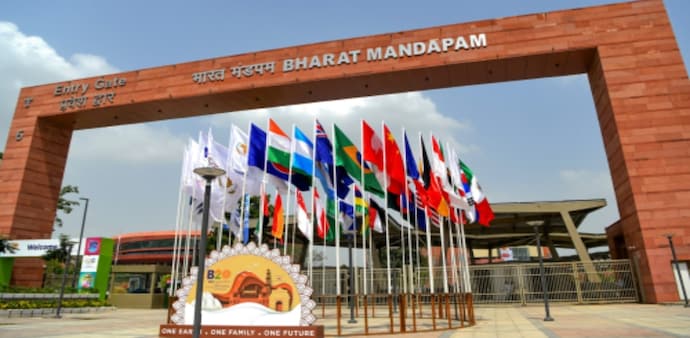
- Sep 10, 2026,
- Updated Sep 10, 2026 2:43 PM IST
Cross-border digital payments, boosting trade and exploring a common currency are among the key priorities likely to be discussed at the BRICS Leaders’ Summit this weekend.
According to sources, India is keen to take forward discussions on the cross-border use of digital payments such as UPI, while boosting bilateral trade will also be a key theme. India is hosting the BRICS Leaders’ Summit, which is set to take place in New Delhi on September 12 and 13.
The BRICS bloc brings together 11 major emerging markets and developing countries: Brazil, China, Egypt, Ethiopia, India, Indonesia, Iran, Russia, Saudi Arabia, South Africa and the United Arab Emirates. Member countries have been keen to explore ways to settle payments in a common currency, with lower reliance on the US dollar and the global payment network SWIFT.
Further, with geopolitical and tariff-related developments impacting global trade, BRICS member countries have also been looking at ways to boost trade within the bloc and facilitate greater market access.
A report by Global Trade Research India (GTRI) noted that BRICS countries export about $1.1 trillion to one another, equal to 18.8% of their combined global exports. They import $1.4 trillion from fellow BRICS members, representing 29.5% of their global imports. “Thus, BRICS is more important to its members as a source of imports than as an export market,” it highlighted.
Intra-BRICS exports account for only 4.1% of world exports, while intra-BRICS imports represent 5.4% of world imports.
It highlighted that for India, the priority should be to correct the growing imbalance. BRICS is becoming an increasingly important source of machinery, industrial inputs, energy and commodities, but it is not absorbing a comparable share of Indian exports.
“India should seek better market access in China, Russia and Indonesia, address non-tariff barriers, promote higher-value exports and reduce excessive dependence on a few BRICS suppliers,” it further said.
Industry body PHDCCI, in a statement on September 10, also noted that the 18th BRICS Summit offers a chance to improve India’s economic engagement with growing markets and turn BRICS cooperation into real benefits for Indian companies. “For business the success of BRICS should finally be measured by whether it makes cross-border trade and investment cheaper and simpler,” it said.
Rajeev Juneja, President, PHDCCI, noted that India should push for a system to remove trade barriers. Indian companies often deal with customs rules, paperwork, standards and regulations in different places.
“Second, BRICS should make it easier to use currencies for trade. Using currencies, including the rupee, can lower costs and some of the risks when making payments across borders,” he said, adding that third, India should use UPI to make cross-border payments easier.
Cross-border digital payments, boosting trade and exploring a common currency are among the key priorities likely to be discussed at the BRICS Leaders’ Summit this weekend.
According to sources, India is keen to take forward discussions on the cross-border use of digital payments such as UPI, while boosting bilateral trade will also be a key theme. India is hosting the BRICS Leaders’ Summit, which is set to take place in New Delhi on September 12 and 13.
The BRICS bloc brings together 11 major emerging markets and developing countries: Brazil, China, Egypt, Ethiopia, India, Indonesia, Iran, Russia, Saudi Arabia, South Africa and the United Arab Emirates. Member countries have been keen to explore ways to settle payments in a common currency, with lower reliance on the US dollar and the global payment network SWIFT.
Further, with geopolitical and tariff-related developments impacting global trade, BRICS member countries have also been looking at ways to boost trade within the bloc and facilitate greater market access.
A report by Global Trade Research India (GTRI) noted that BRICS countries export about $1.1 trillion to one another, equal to 18.8% of their combined global exports. They import $1.4 trillion from fellow BRICS members, representing 29.5% of their global imports. “Thus, BRICS is more important to its members as a source of imports than as an export market,” it highlighted.
Intra-BRICS exports account for only 4.1% of world exports, while intra-BRICS imports represent 5.4% of world imports.
It highlighted that for India, the priority should be to correct the growing imbalance. BRICS is becoming an increasingly important source of machinery, industrial inputs, energy and commodities, but it is not absorbing a comparable share of Indian exports.
“India should seek better market access in China, Russia and Indonesia, address non-tariff barriers, promote higher-value exports and reduce excessive dependence on a few BRICS suppliers,” it further said.
Industry body PHDCCI, in a statement on September 10, also noted that the 18th BRICS Summit offers a chance to improve India’s economic engagement with growing markets and turn BRICS cooperation into real benefits for Indian companies. “For business the success of BRICS should finally be measured by whether it makes cross-border trade and investment cheaper and simpler,” it said.
Rajeev Juneja, President, PHDCCI, noted that India should push for a system to remove trade barriers. Indian companies often deal with customs rules, paperwork, standards and regulations in different places.
“Second, BRICS should make it easier to use currencies for trade. Using currencies, including the rupee, can lower costs and some of the risks when making payments across borders,” he said, adding that third, India should use UPI to make cross-border payments easier.