
'BRICS remains a useful hedging instrument': Expert explains what G2, G3 would mean for India
The circumstances and the geopolitical developments have given a new lease of life to BRICS, says Happymon Jacob
- Sep 12, 2026,
- Updated Sep 12, 2026 5:33 PM IST
BRICS Summit 2026 | BRICS has gained a 'new lease of life' amid the geopolitical uncertainty created by Donald Trump's return to power, but the grouping does not have enough influence to reshape the international order, according to Happymon Jacob, founder and director of the Council for Strategic and Defence Research (CSDR).
Jacob, author of India After Nonalignment, said BRICS remains useful for India as a platform for cooperation and hedging. "The circumstances and the geopolitical developments have given a new lease of life to BRICS," Jacob said in an exclusive interview with Business Today Digital.
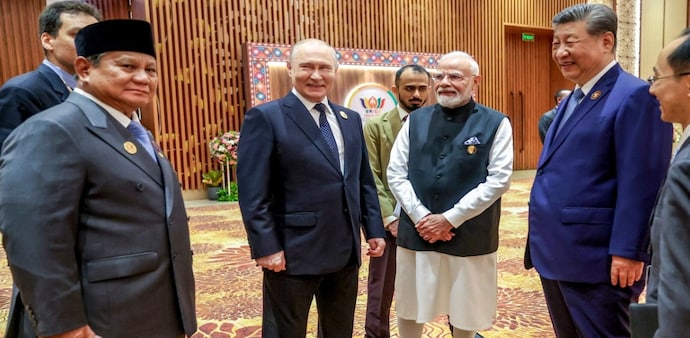
India is hosting the 18th BRICS Summit in New Delhi. Chinese President Xi Jinping and Russian President Vladimir Putin are among the top leaders who have arrived in the capital for the power-packed summit.
Don't Miss: BRICS New Delhi Declaration calls for dialogue and multilateralism: All that it says
Edited Excerpts
How do you see BRICS as an institution in today's fragmented world? How significant is it today?
The importance of regional organisations or organisations based on mutual interests in a world order such as this, where the world order itself is somewhat declining and disappearing, is very significant.
There was a time when, a few years ago, I thought that BRICS was expanding and therefore becoming irrelevant. But the turn of events today, thanks to the arrival of Donald Trump and Donald Trump making BRICS out to be a big challenge for the United States, which it is not, and the sort of insecurity faced by powers outside of the United States and China, have somehow brought them together around various themes, issues, concerns, and interests.
I would say the circumstances and the geopolitical developments have given a new lease of life to BRICS.
I also think that in an age where hedging is important, in an age where you are looking for partners to collaborate on specific issue areas and specific mutual interests, institutions like BRICS are perhaps important.
I would, however, caution against viewing BRICS as an organisation that is extremely consequential in geopolitical terms. I don't think BRICS has that kind of power to reshape or reorder the international system or international order in the days to come.
But it is a hedging instrument. It is useful for countries like India. It is useful to have conversations among like-minded countries. This forum provides for all of that.
You had earlier feared that if BRICS expanded, it could become irrelevant. However, BRICS has expanded, and there are talks of more countries joining. If it expands further, could it lose cohesion given the differences between its members?
My sense, in principle, is that when an organisation expands quickly without proper thinking, it leads to a certain amount of lack of coherence and lack of a common agenda and objectives. That is true in the case of BRICS.
If BRICS had been the original set of members, it would have done much more than it is able to achieve today.
The reality is that because of the kind of membership, we are probably seeing a certain amount of anti-Western sentiment and anti-American sentiment within BRICS. A desire to use words and phraseology that put the West in an accusatory manner.
Now, there may be merit to that kind of an argument, but that doesn't suit India's interests. India wants to be, and rightfully so, in a good relationship with the US, notwithstanding the difficulties with them, the Europeans, the Global South, and other secondary powers such as China and the Russian Federation.
So, I agree with you that the more you expand without a clearly thought-out plan, the less coherent it becomes. And less coherence means less relevance.
We've seen the decline in relevance of BRICS over the years. Given the uncertain international system we find ourselves in, institutions like BRICS still have a certain amount of saliency and importance.
There are growing talks of a G2, involving the US and China, or a G3 involving the US, China, and Russia. If a G2 or G3 becomes a reality, where does that leave BRICS and India?
In principle, any talks about a G2 create problems for second-order powers like India because if the Chinese and the Americans were to sit together and have an understanding that they are going to be the top two in the international system, the rest of us would find it difficult to manoeuvre.
There will be spheres of influence, and there will be the Cold War windage of countries having to join one group or the other. I don't think the tight bipolar competition or a G2 framework is going to come back to the international order anytime soon.
The United States is definitely powerful. China is now a powerful rival or a peer rival to the United States. And other countries like India, Turkey, Russia, or the Europeans are all powerful enough to do things on their own in the international system and shape their own regional orders. Therefore, I don't think a tight bipolarity is going to come.
But theoretically speaking, if such a tight bipolarity comes, that's definitely not going to be useful for second-order powers, which includes India.
Having said that, I will also add that the nature of power is such in international politics that the moment you have a certain amount of material power - and China is number two, a $20 trillion economy and a growing military - the moment you have that, international order tends to accommodate the big guns in the system.
So I think while I don't see that happening yet, such a possibility cannot be ruled out, and that's certainly not going to be to our advantage.
So, if that happens, would it be a setback for India?
I think so. It's definitely going to be a setback. A tight bipolar order or even a tripolar order is going to be a setback for India.
What helps India is either a multipolar order or loose unipolarity, which the American power somewhat is, loose but not entirely in control. Not the unipolarity of the 1990s but somewhat of a loose unipolarity of the early to mid-2000s.
There are two major ongoing wars right now, the Ukraine-Russia war and the Iran-US war. Do you see any role that BRICS can play? Is there any realistic chance of BRICS playing a role?
I don't think so. I don't think BRICS has that level of influence with any of these countries. I don't think BRICS can influence Russia to stop the war or get into negotiations with Ukraine. I don't think they can influence Iran to get into negotiations with the US.
These two wars, the Iran-US war and the Ukraine-Russia war, are in some ways conducted by great powers themselves - the United States and Russia in this case. And they will have to take the call.
None of the others, including China, may be in a position to influence the outcomes of that war or the process of that, let alone BRICS as an institution.
What are the two or three things that you would be watching out for, and what do you expect BRICS or the Delhi summit to achieve?
I would be looking carefully at the language. What is the language that BRICS declarations use in terms of the ongoing wars? What is the kind of language they would be using vis-a-vis the US and the West in general?
I'll be looking very carefully at any language in terms of a common currency or a common payment mechanism, any conversation along those lines.
BRICS Summit 2026 | BRICS has gained a 'new lease of life' amid the geopolitical uncertainty created by Donald Trump's return to power, but the grouping does not have enough influence to reshape the international order, according to Happymon Jacob, founder and director of the Council for Strategic and Defence Research (CSDR).
Jacob, author of India After Nonalignment, said BRICS remains useful for India as a platform for cooperation and hedging. "The circumstances and the geopolitical developments have given a new lease of life to BRICS," Jacob said in an exclusive interview with Business Today Digital.
India is hosting the 18th BRICS Summit in New Delhi. Chinese President Xi Jinping and Russian President Vladimir Putin are among the top leaders who have arrived in the capital for the power-packed summit.
Don't Miss: BRICS New Delhi Declaration calls for dialogue and multilateralism: All that it says
Edited Excerpts
How do you see BRICS as an institution in today's fragmented world? How significant is it today?
The importance of regional organisations or organisations based on mutual interests in a world order such as this, where the world order itself is somewhat declining and disappearing, is very significant.
There was a time when, a few years ago, I thought that BRICS was expanding and therefore becoming irrelevant. But the turn of events today, thanks to the arrival of Donald Trump and Donald Trump making BRICS out to be a big challenge for the United States, which it is not, and the sort of insecurity faced by powers outside of the United States and China, have somehow brought them together around various themes, issues, concerns, and interests.
I would say the circumstances and the geopolitical developments have given a new lease of life to BRICS.
I also think that in an age where hedging is important, in an age where you are looking for partners to collaborate on specific issue areas and specific mutual interests, institutions like BRICS are perhaps important.
I would, however, caution against viewing BRICS as an organisation that is extremely consequential in geopolitical terms. I don't think BRICS has that kind of power to reshape or reorder the international system or international order in the days to come.
But it is a hedging instrument. It is useful for countries like India. It is useful to have conversations among like-minded countries. This forum provides for all of that.
You had earlier feared that if BRICS expanded, it could become irrelevant. However, BRICS has expanded, and there are talks of more countries joining. If it expands further, could it lose cohesion given the differences between its members?
My sense, in principle, is that when an organisation expands quickly without proper thinking, it leads to a certain amount of lack of coherence and lack of a common agenda and objectives. That is true in the case of BRICS.
If BRICS had been the original set of members, it would have done much more than it is able to achieve today.
The reality is that because of the kind of membership, we are probably seeing a certain amount of anti-Western sentiment and anti-American sentiment within BRICS. A desire to use words and phraseology that put the West in an accusatory manner.
Now, there may be merit to that kind of an argument, but that doesn't suit India's interests. India wants to be, and rightfully so, in a good relationship with the US, notwithstanding the difficulties with them, the Europeans, the Global South, and other secondary powers such as China and the Russian Federation.
So, I agree with you that the more you expand without a clearly thought-out plan, the less coherent it becomes. And less coherence means less relevance.
We've seen the decline in relevance of BRICS over the years. Given the uncertain international system we find ourselves in, institutions like BRICS still have a certain amount of saliency and importance.
There are growing talks of a G2, involving the US and China, or a G3 involving the US, China, and Russia. If a G2 or G3 becomes a reality, where does that leave BRICS and India?
In principle, any talks about a G2 create problems for second-order powers like India because if the Chinese and the Americans were to sit together and have an understanding that they are going to be the top two in the international system, the rest of us would find it difficult to manoeuvre.
There will be spheres of influence, and there will be the Cold War windage of countries having to join one group or the other. I don't think the tight bipolar competition or a G2 framework is going to come back to the international order anytime soon.
The United States is definitely powerful. China is now a powerful rival or a peer rival to the United States. And other countries like India, Turkey, Russia, or the Europeans are all powerful enough to do things on their own in the international system and shape their own regional orders. Therefore, I don't think a tight bipolarity is going to come.
But theoretically speaking, if such a tight bipolarity comes, that's definitely not going to be useful for second-order powers, which includes India.
Having said that, I will also add that the nature of power is such in international politics that the moment you have a certain amount of material power - and China is number two, a $20 trillion economy and a growing military - the moment you have that, international order tends to accommodate the big guns in the system.
So I think while I don't see that happening yet, such a possibility cannot be ruled out, and that's certainly not going to be to our advantage.
So, if that happens, would it be a setback for India?
I think so. It's definitely going to be a setback. A tight bipolar order or even a tripolar order is going to be a setback for India.
What helps India is either a multipolar order or loose unipolarity, which the American power somewhat is, loose but not entirely in control. Not the unipolarity of the 1990s but somewhat of a loose unipolarity of the early to mid-2000s.
There are two major ongoing wars right now, the Ukraine-Russia war and the Iran-US war. Do you see any role that BRICS can play? Is there any realistic chance of BRICS playing a role?
I don't think so. I don't think BRICS has that level of influence with any of these countries. I don't think BRICS can influence Russia to stop the war or get into negotiations with Ukraine. I don't think they can influence Iran to get into negotiations with the US.
These two wars, the Iran-US war and the Ukraine-Russia war, are in some ways conducted by great powers themselves - the United States and Russia in this case. And they will have to take the call.
None of the others, including China, may be in a position to influence the outcomes of that war or the process of that, let alone BRICS as an institution.
What are the two or three things that you would be watching out for, and what do you expect BRICS or the Delhi summit to achieve?
I would be looking carefully at the language. What is the language that BRICS declarations use in terms of the ongoing wars? What is the kind of language they would be using vis-a-vis the US and the West in general?
I'll be looking very carefully at any language in terms of a common currency or a common payment mechanism, any conversation along those lines.