
BRICS vs G7: Who has the edge in population, economy, energy & military power in 2026?
BRICS vs G7: Who has the edge in population, economy, energy & military power in 2026?
The biggest advantage for BRICS 2026 is its sheer demographic and economic scale. The expanded BRICS grouping has 11 members and accounts for roughly half of the world's population and around 40% of global GDP, according to recent estimates.
Business Today Desk
- Sep 10, 2026,
- Updated Sep 10, 2026 9:30 AM IST
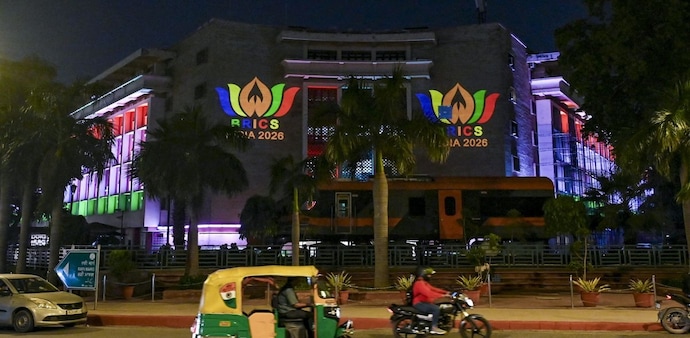
BRICS 2026: As India prepares to host the 18th BRICS Summit in New Delhi on September 12-13, the grouping enters a critical phase. BRICS has expanded far beyond its original Brazil-Russia-India-China-South Africa core and now represents a much larger share of the world's population, economic output and commodity base.
Advertisement
The comparison with the G7, however, is more complicated than simply asking which bloc has the bigger GDP.
India's 2026 BRICS chairship is built around the theme “Building for Resilience, Innovation, Cooperation and Sustainability”, with priorities including economic cooperation, digital public infrastructure, energy and food security, healthcare, climate action and reforms of global institutions.
BRICS vs G7: The numbers tell two different stories
The biggest advantage for BRICS is its sheer demographic and economic scale. The expanded BRICS grouping has 11 members and accounts for roughly half of the world's population and around 40% of global GDP, according to recent estimates.
But the GDP comparison changes significantly depending on how economic size is measured.
Advertisement
In purchasing-power-parity (PPP) terms, BRICS has overtaken the G7 because China and India have much greater domestic purchasing power than their dollar-converted GDP suggests. On this measure, the emerging-market bloc represents a substantially larger portion of the global economy.
In nominal-dollar GDP, however, the G7 remains considerably larger, largely because of the enormous size of the US economy and the high-income economies of Germany, Japan, Britain, France, Italy and Canada.
That distinction matters. PPP measures the amount of goods and services economies can produce domestically; nominal GDP is more relevant when assessing financial firepower, international investment and the ability to transact in global markets.
Where BRICS has the edge
1. Population and markets: BRICS has an overwhelming demographic advantage. Its members include China and India, the world's two most populous countries, along with Indonesia, Brazil, Russia, Iran, Egypt, Ethiopia, South Africa, Saudi Arabia and the UAE.
Advertisement
That gives BRICS access to enormous consumer markets, labour pools and future economic growth. The G7, by contrast, represents a much smaller share of the world's population but includes some of its richest economies.
2. Energy and commodities: This is another area where BRICS has considerable strategic weight.
Its members include some of the world's biggest oil and gas producers, including Russia, Saudi Arabia, the UAE and Iran, while Brazil is a major agricultural and energy producer. China and India are among the world's largest energy consumers.
This gives the grouping influence over critical supply chains ranging from crude oil and gas to food, minerals and industrial commodities.
3. Trade and the Global South: BRICS has also become an important platform for emerging economies seeking greater influence over the global financial and political system. Recent estimates put the bloc's share of global trade at roughly one-quarter.
Its New Development Bank is another institutional asset, providing an alternative source of infrastructure and development financing for emerging economies.
Where the G7 remains far more powerful
Advertisement
The G7's greatest strength is not population. It is concentrated economic, financial, technological and military power. The US alone gives the G7 enormous weight. The dollar remains the dominant international reserve and transaction currency, while US financial markets, technology companies and capital markets have global reach.
The G7 also brings together several of the world's most advanced industrial and technological economies. Its members collectively possess major strengths in semiconductors, aerospace, pharmaceuticals, artificial intelligence, financial services and advanced manufacturing.
Military power is another major difference. The United States is by far the world's largest military spender and possesses a global network of bases, alliances and strategic capabilities. The G7 also operates within a dense network of defence partnerships, particularly through NATO.
Biggest weakness of BRICS: Political divisions
This is where the comparison becomes particularly important. BRICS is economically large but politically far less cohesive than the G7.
China and India are strategic competitors. Russia's relationship with the West has fundamentally reshaped the geopolitical environment. Iran, Saudi Arabia and the UAE have their own competing regional interests. Brazil and India have generally preferred a more pragmatic Global South platform rather than turning BRICS into an explicitly anti-Western alliance.
Advertisement
India, in particular, has resisted attempts to portray BRICS simply as a counterweight to the US-led order. New Delhi's approach has focused more on strategic autonomy, development, trade, technology and reform of institutions such as the IMF and UN.
BRICS 2026: As India prepares to host the 18th BRICS Summit in New Delhi on September 12-13, the grouping enters a critical phase. BRICS has expanded far beyond its original Brazil-Russia-India-China-South Africa core and now represents a much larger share of the world's population, economic output and commodity base.
Advertisement
The comparison with the G7, however, is more complicated than simply asking which bloc has the bigger GDP.
India's 2026 BRICS chairship is built around the theme “Building for Resilience, Innovation, Cooperation and Sustainability”, with priorities including economic cooperation, digital public infrastructure, energy and food security, healthcare, climate action and reforms of global institutions.
BRICS vs G7: The numbers tell two different stories
The biggest advantage for BRICS is its sheer demographic and economic scale. The expanded BRICS grouping has 11 members and accounts for roughly half of the world's population and around 40% of global GDP, according to recent estimates.
But the GDP comparison changes significantly depending on how economic size is measured.
Advertisement
In purchasing-power-parity (PPP) terms, BRICS has overtaken the G7 because China and India have much greater domestic purchasing power than their dollar-converted GDP suggests. On this measure, the emerging-market bloc represents a substantially larger portion of the global economy.
In nominal-dollar GDP, however, the G7 remains considerably larger, largely because of the enormous size of the US economy and the high-income economies of Germany, Japan, Britain, France, Italy and Canada.
That distinction matters. PPP measures the amount of goods and services economies can produce domestically; nominal GDP is more relevant when assessing financial firepower, international investment and the ability to transact in global markets.
Where BRICS has the edge
1. Population and markets: BRICS has an overwhelming demographic advantage. Its members include China and India, the world's two most populous countries, along with Indonesia, Brazil, Russia, Iran, Egypt, Ethiopia, South Africa, Saudi Arabia and the UAE.
Advertisement
That gives BRICS access to enormous consumer markets, labour pools and future economic growth. The G7, by contrast, represents a much smaller share of the world's population but includes some of its richest economies.
2. Energy and commodities: This is another area where BRICS has considerable strategic weight.
Its members include some of the world's biggest oil and gas producers, including Russia, Saudi Arabia, the UAE and Iran, while Brazil is a major agricultural and energy producer. China and India are among the world's largest energy consumers.
This gives the grouping influence over critical supply chains ranging from crude oil and gas to food, minerals and industrial commodities.
3. Trade and the Global South: BRICS has also become an important platform for emerging economies seeking greater influence over the global financial and political system. Recent estimates put the bloc's share of global trade at roughly one-quarter.
Its New Development Bank is another institutional asset, providing an alternative source of infrastructure and development financing for emerging economies.
Where the G7 remains far more powerful
Advertisement
The G7's greatest strength is not population. It is concentrated economic, financial, technological and military power. The US alone gives the G7 enormous weight. The dollar remains the dominant international reserve and transaction currency, while US financial markets, technology companies and capital markets have global reach.
The G7 also brings together several of the world's most advanced industrial and technological economies. Its members collectively possess major strengths in semiconductors, aerospace, pharmaceuticals, artificial intelligence, financial services and advanced manufacturing.
Military power is another major difference. The United States is by far the world's largest military spender and possesses a global network of bases, alliances and strategic capabilities. The G7 also operates within a dense network of defence partnerships, particularly through NATO.
Biggest weakness of BRICS: Political divisions
This is where the comparison becomes particularly important. BRICS is economically large but politically far less cohesive than the G7.
China and India are strategic competitors. Russia's relationship with the West has fundamentally reshaped the geopolitical environment. Iran, Saudi Arabia and the UAE have their own competing regional interests. Brazil and India have generally preferred a more pragmatic Global South platform rather than turning BRICS into an explicitly anti-Western alliance.
Advertisement
India, in particular, has resisted attempts to portray BRICS simply as a counterweight to the US-led order. New Delhi's approach has focused more on strategic autonomy, development, trade, technology and reform of institutions such as the IMF and UN.
Read more!