
BT EXPLAINER: Why has FSSAI banned flavoured liquor by Old Monk, McDowell's, and other alcohol brands
Here's a simple breakdown of what the order means, why it was issued and whether consumers should be worried.
- Aug 6, 2026,
- Updated Aug 6, 2026 8:30 AM IST
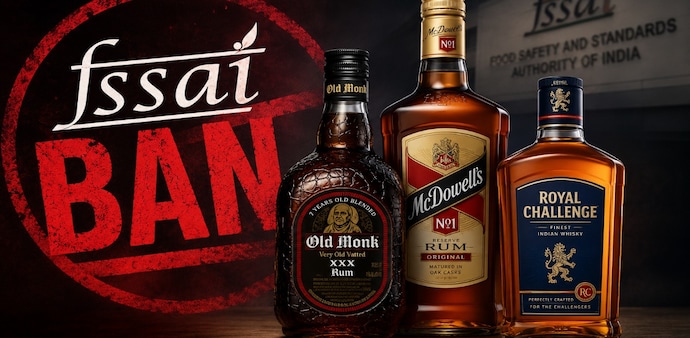
A fresh FSSAI order has put some of India's best-known liquor brands under the spotlight. The regulator has directed companies including United Spirits, Inbrew Beverages, Associated Alcohol & Breweries and Mohan Rocky Springwater to stop selling select whisky and rum variants, sparking questions over brands like Old Monk, Royal Challenge, McDowell's No.1, Antiquity Blue and Bagpiper. Here's a simple breakdown of what the order means, why it was issued and whether consumers should be worried.
Which products have been affected by the FSSAI ban?
- Old Monk
- McDowell's No.1 Rum
- Royal Challenge Whisky
- Antiquity Blue Whisky
- Bagpiper Deluxe Whisky
- Old Cask Deluxe XXX Rum
- Central Province Whisky
- McDowell's No.1 Celebration XXX Rum
Has FSSAI banned these liquor brands completely?
No. The order applies only to specific variants manufactured at certain facilities, not every bottle sold under these brands across India. The regulator has also allowed some manufacturers to sell existing stock after making label changes, while future production must comply with its directions.
Why has FSSAI taken this action?
According to FSSAI, the affected products allegedly contained "whisky flavour" in whisky or "rum flavour" in rum. The regulator says the distinctive taste and aroma of these spirits should develop naturally through ingredients, fermentation, distillation and ageing—not by adding flavouring substances that mimic the same beverage.
FSSAI says there is no internationally accepted practice of adding whisky flavour to whisky or rum flavour to rum.
Does this mean flavouring alcohol is illegal?
Not exactly. The regulator has clarified that flavouring substances are allowed in some cases.
For example, flavours such as vanilla or coffee may be used where regulations permit. The issue is specifically with adding flavours that recreate the defining character of whisky or rum itself. In such cases, the product should instead be labelled as a "whisky-flavoured spirit" or "rum-flavoured spirit", rather than standard whisky or rum.
Why is Old Monk's age claim under scrutiny?
FSSAI has also questioned Old Monk's "7 Years Old Blended" claim. Under India's alcohol regulations, the age mentioned on a blended spirit should reflect the youngest spirit used in the blend, not the oldest.
Can you still drink bottles you already own?
Yes. The prohibition order is aimed at the sale of specified products, not their possession or consumption. Consumers who already own these bottles are not affected. The latest action is part of FSSAI's broader push to tighten food and beverage standards and crack down on misleading claims across the industry.
A fresh FSSAI order has put some of India's best-known liquor brands under the spotlight. The regulator has directed companies including United Spirits, Inbrew Beverages, Associated Alcohol & Breweries and Mohan Rocky Springwater to stop selling select whisky and rum variants, sparking questions over brands like Old Monk, Royal Challenge, McDowell's No.1, Antiquity Blue and Bagpiper. Here's a simple breakdown of what the order means, why it was issued and whether consumers should be worried.
Which products have been affected by the FSSAI ban?
- Old Monk
- McDowell's No.1 Rum
- Royal Challenge Whisky
- Antiquity Blue Whisky
- Bagpiper Deluxe Whisky
- Old Cask Deluxe XXX Rum
- Central Province Whisky
- McDowell's No.1 Celebration XXX Rum
Has FSSAI banned these liquor brands completely?
No. The order applies only to specific variants manufactured at certain facilities, not every bottle sold under these brands across India. The regulator has also allowed some manufacturers to sell existing stock after making label changes, while future production must comply with its directions.
Why has FSSAI taken this action?
According to FSSAI, the affected products allegedly contained "whisky flavour" in whisky or "rum flavour" in rum. The regulator says the distinctive taste and aroma of these spirits should develop naturally through ingredients, fermentation, distillation and ageing—not by adding flavouring substances that mimic the same beverage.
FSSAI says there is no internationally accepted practice of adding whisky flavour to whisky or rum flavour to rum.
Does this mean flavouring alcohol is illegal?
Not exactly. The regulator has clarified that flavouring substances are allowed in some cases.
For example, flavours such as vanilla or coffee may be used where regulations permit. The issue is specifically with adding flavours that recreate the defining character of whisky or rum itself. In such cases, the product should instead be labelled as a "whisky-flavoured spirit" or "rum-flavoured spirit", rather than standard whisky or rum.
Why is Old Monk's age claim under scrutiny?
FSSAI has also questioned Old Monk's "7 Years Old Blended" claim. Under India's alcohol regulations, the age mentioned on a blended spirit should reflect the youngest spirit used in the blend, not the oldest.
Can you still drink bottles you already own?
Yes. The prohibition order is aimed at the sale of specified products, not their possession or consumption. Consumers who already own these bottles are not affected. The latest action is part of FSSAI's broader push to tighten food and beverage standards and crack down on misleading claims across the industry.