
Bullet train to begin commercial operations by mid-2027: Vaishnaw
Trial runs on the 50-km Surat–Bilimora stretch are due by May 2027, with commercial service to follow safety clearances.
- Nov 23, 2026,
- Updated Nov 23, 2026 5:20 PM IST
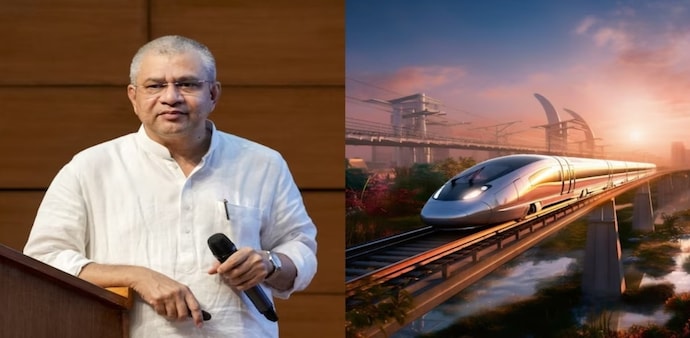
India’s first indigenous bullet train is scheduled to begin operations around mid-2027 on the 50-km stretch between Surat and Vapi, Railway Minister Ashwini Vaishnaw said on Monday.
The minister said the B28 bullet train, which will run at 280 kmph, is set for a trial run by May 2027, with electrification and signalling to be completed by the end of this fiscal year. The entire Mumbai–Ahmedabad section is slated to be operational by the end of 2029.
Phased rollout, full line by 2029
“Various sections of the entire stretch will be made operational as they get safety clearance,” the minister said, adding that the full line is likely to open for commercial operations by the end of 2029.
The Railways is also developing the B35, with a maximum speed of 350 kmph, by 2035. Both will be fully indigenous trainsets. Passenger traffic set to return to pre-Covid levels
Indian Railways has added 2,500 new train services in the last six years and is set to cross the pre-Covid level of 8 billion passengers this fiscal year, Vaishnaw said.
He said many more trains will be added to the network to meet the huge passenger demand.
It has taken Indian Railways seven years to return to its pre-Covid passenger level.
“As per our assessment, we will cross 8 billion annual passengers by the end of this fiscal year. It will be similar to the pre-Covid figure,” Vaishnaw said.
Record festive-season services
He added that during the Diwali and Chhath festive season, a record 18,000 additional services ferried 200 million passengers, 8% more than last year.
Non-ticketed travel also declined during the season, generating additional revenue for the public-sector behemoth.