
Car window left open, rainwater damages luxury car; owner wins ₹2 lakh insurance payout
The order was passed on August 24 by a bench comprising president Dakeshwar Prasad Sharma and members Nirupma Pradhan and Anil Kumar Agnihotri.
- Sep 23, 2026,
- Updated Sep 23, 2026 2:28 PM IST
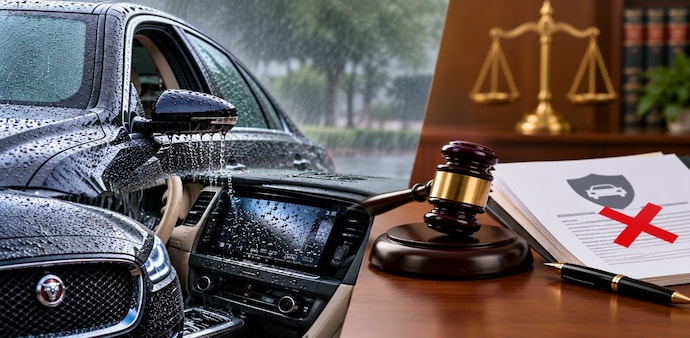
A luxury car owner whose vehicle was damaged after rainwater entered through a slightly open driver-side window has won ₹2.02 lakh from his insurer after a consumer commission ruled that the company could not rely on policy exclusions that had not been provided to him, The Indian Express reported.
The Chhattisgarh District Consumer Commission directed the insurer to pay ₹1.75 lakh towards the claim, ₹20,000 for mental agony and ₹7,000 as litigation costs.
The insurer had rejected the claim, arguing that rainwater damage was not covered and that leaving the car window open amounted to gross negligence.
The order was passed on August 24 by a bench comprising president Dakeshwar Prasad Sharma and members Nirupma Pradhan and Anil Kumar Agnihotri.
Rainwater damages car's infotainment system
The man had insured his car under a private car insurance policy valid from November 29, 2020 to November 28, 2021.
In August 2021, rainwater entered the vehicle after its driver-side window was left slightly open. The water damaged the car's infotainment system and other components.
The insurer appointed a surveyor, who assessed the repair cost at ₹1.98 lakh. The car owner, however, claimed that he had spent ₹2.73 lakh on repairs.
Don't Miss: India ranks 4th among countries worst hit by heat-related deaths due to Super El Nino. Here's how
The insurer rejected the claim on February 4, 2022, saying rainwater damage was not covered under the policy. It also argued that leaving the window open amounted to gross negligence and violated the policy conditions.
The owner challenged the rejection before the consumer commission, alleging deficiency in service and unfair trade practice. He argued that the insurer had not given him the complete policy terms and conditions when the policy was issued.
Insurer relied on exclusions not given to owner
The commission found that the insurer had not supplied the policy terms, conditions and exclusions to the complainant along with the insurance policy.
The commission said the insurer could not later rely on those exclusions to reject the claim.
“Since the opposite party had not provided the complainant with a copy of the policy’s terms, conditions, and exclusions along with the insurance policy, those terms and conditions were not binding on the complainant.”
It therefore held that the insurer could not reject the claim by relying on the exclusion clauses.
Must Read: 'All decisions taken unanimously': Election Commission denies dissent report on SIR
Policy documents raised questions
The commission also examined the documents submitted by the insurer.
The insurance policy produced by the company consisted of four pages, while the separate terms and conditions relied upon by it ran to six pages.
The commission noted that these terms could not be treated as part of the insurance policy because they had not been supplied to the complainant along with the policy.
The order also pointed out that the insurer had produced only three pages of the policy before the commission, even though the document itself showed that the policy issued to the complainant consisted of four pages.
“However, the opposite party had produced only three pages of the insurance policy before the commission. From the document itself, it was clear that the opposite party had issued a four-page insurance policy to the complainant. The terms and conditions of the policy, however, had not been provided to the complainant along with the policy,” it said.
The commission consequently directed the insurer to pay ₹1.75 lakh towards the claim, along with ₹20,000 for mental agony and ₹7,000 as litigation costs.
A luxury car owner whose vehicle was damaged after rainwater entered through a slightly open driver-side window has won ₹2.02 lakh from his insurer after a consumer commission ruled that the company could not rely on policy exclusions that had not been provided to him, The Indian Express reported.
The Chhattisgarh District Consumer Commission directed the insurer to pay ₹1.75 lakh towards the claim, ₹20,000 for mental agony and ₹7,000 as litigation costs.
The insurer had rejected the claim, arguing that rainwater damage was not covered and that leaving the car window open amounted to gross negligence.
The order was passed on August 24 by a bench comprising president Dakeshwar Prasad Sharma and members Nirupma Pradhan and Anil Kumar Agnihotri.
Rainwater damages car's infotainment system
The man had insured his car under a private car insurance policy valid from November 29, 2020 to November 28, 2021.
In August 2021, rainwater entered the vehicle after its driver-side window was left slightly open. The water damaged the car's infotainment system and other components.
The insurer appointed a surveyor, who assessed the repair cost at ₹1.98 lakh. The car owner, however, claimed that he had spent ₹2.73 lakh on repairs.
Don't Miss: India ranks 4th among countries worst hit by heat-related deaths due to Super El Nino. Here's how
The insurer rejected the claim on February 4, 2022, saying rainwater damage was not covered under the policy. It also argued that leaving the window open amounted to gross negligence and violated the policy conditions.
The owner challenged the rejection before the consumer commission, alleging deficiency in service and unfair trade practice. He argued that the insurer had not given him the complete policy terms and conditions when the policy was issued.
Insurer relied on exclusions not given to owner
The commission found that the insurer had not supplied the policy terms, conditions and exclusions to the complainant along with the insurance policy.
The commission said the insurer could not later rely on those exclusions to reject the claim.
“Since the opposite party had not provided the complainant with a copy of the policy’s terms, conditions, and exclusions along with the insurance policy, those terms and conditions were not binding on the complainant.”
It therefore held that the insurer could not reject the claim by relying on the exclusion clauses.
Must Read: 'All decisions taken unanimously': Election Commission denies dissent report on SIR
Policy documents raised questions
The commission also examined the documents submitted by the insurer.
The insurance policy produced by the company consisted of four pages, while the separate terms and conditions relied upon by it ran to six pages.
The commission noted that these terms could not be treated as part of the insurance policy because they had not been supplied to the complainant along with the policy.
The order also pointed out that the insurer had produced only three pages of the policy before the commission, even though the document itself showed that the policy issued to the complainant consisted of four pages.
“However, the opposite party had produced only three pages of the insurance policy before the commission. From the document itself, it was clear that the opposite party had issued a four-page insurance policy to the complainant. The terms and conditions of the policy, however, had not been provided to the complainant along with the policy,” it said.
The commission consequently directed the insurer to pay ₹1.75 lakh towards the claim, along with ₹20,000 for mental agony and ₹7,000 as litigation costs.