
China's Arunachal incursion? Tribal body alleges PLA's silent march into grazing grounds
In a memorandum submitted to the Arunachal Pradesh government, the organisation claimed that the Chinese military has built roads, camps and other infrastructure in areas the community considers to be on the Indian side of the frontier.
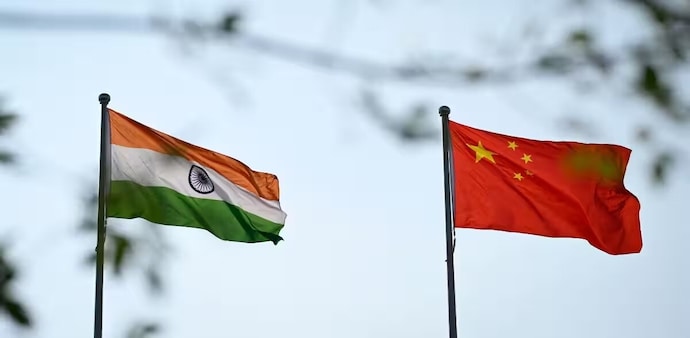
- Jun 29, 2026,
- Updated Jun 29, 2026 2:06 PM IST
China's expansionist mentality has long extended beyond maps and diplomatic statements. From repeatedly claiming India's Arunachal Pradesh as part of what it calls "South Tibet" to renaming locations inside the state and rapidly expanding border infrastructure, Beijing has consistently sought to reinforce its territorial claims along the Himalayan frontier.
Now, just as India and China are attempting to put years of border tensions behind them following Prime Minister Narendra Modi's recent visit to China and his meeting with Chinese President Xi Jinping, fresh allegations from Arunachal Pradesh threaten to cast a shadow over the fragile diplomatic thaw.
The Nah Welfare Society (NWS), representing the Nah tribal community in Arunachal Pradesh's Upper Subansiri district, has alleged that the Chinese People's Liberation Army (PLA) has gradually expanded into traditional grazing grounds, hunting areas and agricultural land used by local villagers over the past six years.
In a memorandum submitted to the Arunachal Pradesh government, the organisation claimed that the Chinese military has built roads, camps and other infrastructure in areas the community considers to be on the Indian side of the frontier. It has urged both the state government and the Centre to conduct an immediate ground verification and take steps to safeguard India's territorial interests and the community's traditional land rights.
Community raises concerns over shrinking access
According to the Nah Welfare Society, the alleged expansion has steadily reduced access to high-altitude areas that villagers have traditionally relied upon for grazing livestock, seasonal farming and hunting.
The organisation warned that continued encroachment could threaten livelihoods and disconnect communities from ancestral lands that have sustained them for generations.
No official confirmation yet
The memorandum calls for an official survey of the affected areas and stronger monitoring of developments along the frontier.
As of now, the allegations remain unverified. Neither the Government of India nor the Indian Army has publicly confirmed the claims, while China has not responded to the latest allegations.
The allegations come at a sensitive diplomatic moment. India and China have recently sought to stabilise bilateral relations after years of military standoffs along the Line of Actual Control (LAC). Prime Minister Narendra Modi's meeting with Chinese President Xi Jinping, along with ongoing diplomatic and military engagements, had raised hopes of a gradual improvement in ties.
China's expansionist mentality has long extended beyond maps and diplomatic statements. From repeatedly claiming India's Arunachal Pradesh as part of what it calls "South Tibet" to renaming locations inside the state and rapidly expanding border infrastructure, Beijing has consistently sought to reinforce its territorial claims along the Himalayan frontier.
Now, just as India and China are attempting to put years of border tensions behind them following Prime Minister Narendra Modi's recent visit to China and his meeting with Chinese President Xi Jinping, fresh allegations from Arunachal Pradesh threaten to cast a shadow over the fragile diplomatic thaw.
The Nah Welfare Society (NWS), representing the Nah tribal community in Arunachal Pradesh's Upper Subansiri district, has alleged that the Chinese People's Liberation Army (PLA) has gradually expanded into traditional grazing grounds, hunting areas and agricultural land used by local villagers over the past six years.
In a memorandum submitted to the Arunachal Pradesh government, the organisation claimed that the Chinese military has built roads, camps and other infrastructure in areas the community considers to be on the Indian side of the frontier. It has urged both the state government and the Centre to conduct an immediate ground verification and take steps to safeguard India's territorial interests and the community's traditional land rights.
Community raises concerns over shrinking access
According to the Nah Welfare Society, the alleged expansion has steadily reduced access to high-altitude areas that villagers have traditionally relied upon for grazing livestock, seasonal farming and hunting.
The organisation warned that continued encroachment could threaten livelihoods and disconnect communities from ancestral lands that have sustained them for generations.
No official confirmation yet
The memorandum calls for an official survey of the affected areas and stronger monitoring of developments along the frontier.
As of now, the allegations remain unverified. Neither the Government of India nor the Indian Army has publicly confirmed the claims, while China has not responded to the latest allegations.
The allegations come at a sensitive diplomatic moment. India and China have recently sought to stabilise bilateral relations after years of military standoffs along the Line of Actual Control (LAC). Prime Minister Narendra Modi's meeting with Chinese President Xi Jinping, along with ongoing diplomatic and military engagements, had raised hopes of a gradual improvement in ties.