
‘China is no longer a reliable business…’: Expert on Beijing’s export controls on tunnel-boring machines and why it matters to India
The expert pointed out that this is not only about Chinese manufacturers but also German or Japanese TBM makers building in China who must seek Beijing’s approval before shipping to India.
- Oct 21, 2026,
- Updated Oct 21, 2026 11:38 AM IST
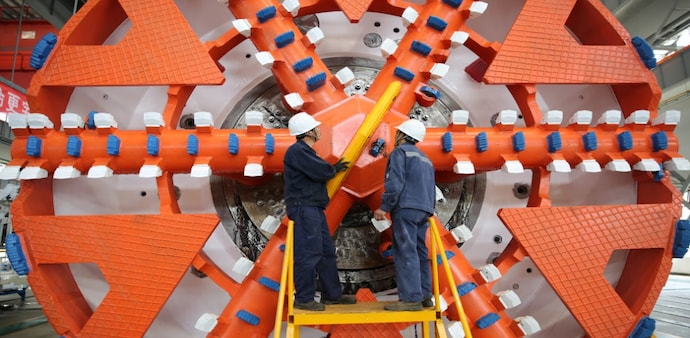
China’s decision to introduce export controls on tunnel-boring machines, equipment widely used in construction projects will impact India majorly, said policy expert and Deputy Director of Takshashila Institution, Pranay Kotasthane.
Breaking down Beijing’s decision, Kotasthane said it matters to India because as per the move, exports to ‘countries in dispute with China’ needing a licence, makes India a major target. “The design matters more. Exports to "countries in dispute with China" need a licence. India is obviously a major target. Everyone else must promise not to pass the machines to such countries. Firms outside China can't transfer China-origin items there either,” he said.
The expert pointed out that this is not only about Chinese manufacturers but also German or Japanese TBM makers building in China who must seek Beijing’s approval before shipping to India. This move will also make a factory in China a liability for any firm that wants to serve the Indian market.
“We've seen this movie before,” he said, referring to a prior order in 2024 that held up TBMs from Herrenknecht's China intended for India at the customs. “That was an informal squeeze. Now it's official. And the 3,000 m threshold will impact Indian defence construction,” he said.
Kotasthane acknowledged that Indian projects might face delays but on the other hand, Herrenknecht already builds TBMs in Chennai, including two of India’s largest. “Beijing has given firms one more reason to expand outside China,” he said.
“The larger lesson is that China is no longer a reliable business partner,” he said, adding that India now must make the move easy with its predictable approvals, reliability and quick customs clearances.
China is a major supplier of tunnelling and other boring machinery used in metro rail and highway construction. According to UN Comtrade data, the country exported about USD 793 million worth of self-propelled coal or rock cutters and tunnelling machinery in 2025.
The machines weigh about 3,000 tonnes and are being used in several construction projects across India.
India imported USD 800,000 worth of tunnelling machinery from China in the last financial year, compared with USD 500,000 in the previous financial year. The increase followed an easing of border tensions between the two countries since the 2020 Galwan Valley clash.
The measures come as China holds negotiations with the US and the EU.