
'China is ready to...': Chinese envoy as Ajit Doval meets Wang Yi in Beijing
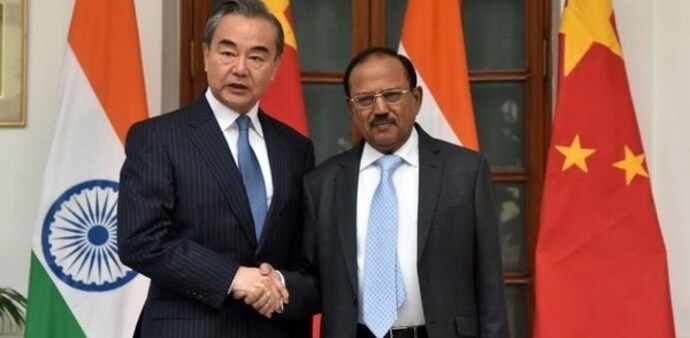
Feihong's statement comes on the day India's National Security Advisor Ajit Doval met with his Chinese counterpart and Foreign Minister Wang Yi in Beijing.
- Dec 18, 2024,
- Updated Dec 18, 2024 4:23 PM IST
Xu Feihong, Chinese ambassador to India, said on Wednesday that China was ready to work with India to implement the important common understandings between the leaders of both countries. He also said that Beijing was also ready to respect each other's core interests and major concerns, strengthen mutual trust through dialogue and communication, properly settle differences with sincerity and good faith, and "bring bilateral relations back to the track of stable and healthy development as soon as possible".
Feihong's statement comes on the day India's National Security Advisor Ajit Doval met with his Chinese counterpart and Foreign Minister Wang Yi in Beijing. Doval held the 23rd round of the Special Representatives' (SR) talks with Wang Yi and discussed a range of issues to rebuild the bilateral ties following the October 21 agreement of disengagement and patrolling in eastern Ladakh.
Ahead of crucial talks, China said that it was ready to work with India to implement the commitments based on the common understandings reached between Prime Minister Narendra Modi and President Xi Jinping during their meeting at Kazan in Russia on the sidelines of the BRICS summit on October 24.
Chinese Foreign Ministry spokesman Lin Jian told a media briefing that China is prepared to settle differences with sincerity. “China is ready to work with India to implement the important common understandings between the leaders of China and India, respect each other’s core interests and major concerns, strengthen mutual trust through dialogue and communication, properly settle differences with sincerity and good faith, and bring bilateral relations back to the track of stable and healthy development as soon as possible,” he said.
After the Modi-Xi meeting, which was their first after five years, External Affairs Minister S Jaishankar and his Chinese counterpart met on the sidelines of the G20 summit in Brazil followed by a meeting of the Working Mechanism for Consultation & Coordination on China-India Border Affairs (WMCC).
The military standoff along the Line of Actual Control (LAC) in eastern Ladakh began in May 2020 and followed by a deadly clash at the Galwan Valley in June that year resulted in a severe strain in ties between the two neighbours. Barring trade, relations between the two countries virtually came to a standstill.
The face-off effectively ended following the completion of the disengagement process from the last two friction points of Demchok and Depsang under an agreement finalised on October 21. Wednesday's SRs' meeting is regarded as significant as it is the first structured engagement between the two countries to restore the relations. The SRs meeting is taking place after a gap of five years.
The last meeting was held in 2019 in Delhi. Constituted in 2003 to comprehensively address the vexed dispute of the India-China border spanning to 3,488 kms, the SRs mechanism over the years met 22 times.
(With inputs from PTI)
Xu Feihong, Chinese ambassador to India, said on Wednesday that China was ready to work with India to implement the important common understandings between the leaders of both countries. He also said that Beijing was also ready to respect each other's core interests and major concerns, strengthen mutual trust through dialogue and communication, properly settle differences with sincerity and good faith, and "bring bilateral relations back to the track of stable and healthy development as soon as possible".
Feihong's statement comes on the day India's National Security Advisor Ajit Doval met with his Chinese counterpart and Foreign Minister Wang Yi in Beijing. Doval held the 23rd round of the Special Representatives' (SR) talks with Wang Yi and discussed a range of issues to rebuild the bilateral ties following the October 21 agreement of disengagement and patrolling in eastern Ladakh.
Ahead of crucial talks, China said that it was ready to work with India to implement the commitments based on the common understandings reached between Prime Minister Narendra Modi and President Xi Jinping during their meeting at Kazan in Russia on the sidelines of the BRICS summit on October 24.
Chinese Foreign Ministry spokesman Lin Jian told a media briefing that China is prepared to settle differences with sincerity. “China is ready to work with India to implement the important common understandings between the leaders of China and India, respect each other’s core interests and major concerns, strengthen mutual trust through dialogue and communication, properly settle differences with sincerity and good faith, and bring bilateral relations back to the track of stable and healthy development as soon as possible,” he said.
After the Modi-Xi meeting, which was their first after five years, External Affairs Minister S Jaishankar and his Chinese counterpart met on the sidelines of the G20 summit in Brazil followed by a meeting of the Working Mechanism for Consultation & Coordination on China-India Border Affairs (WMCC).
The military standoff along the Line of Actual Control (LAC) in eastern Ladakh began in May 2020 and followed by a deadly clash at the Galwan Valley in June that year resulted in a severe strain in ties between the two neighbours. Barring trade, relations between the two countries virtually came to a standstill.
The face-off effectively ended following the completion of the disengagement process from the last two friction points of Demchok and Depsang under an agreement finalised on October 21. Wednesday's SRs' meeting is regarded as significant as it is the first structured engagement between the two countries to restore the relations. The SRs meeting is taking place after a gap of five years.
The last meeting was held in 2019 in Delhi. Constituted in 2003 to comprehensively address the vexed dispute of the India-China border spanning to 3,488 kms, the SRs mechanism over the years met 22 times.
(With inputs from PTI)