
China's mega dam, India's Siang project: Why are Arunachal locals protesting against it?
The Siang Upper Multipurpose Project is a proposed large hydropower and water-storage project on the Siang River in Arunachal Pradesh
- Oct 25, 2026,
- Updated Oct 25, 2026 9:22 PM IST
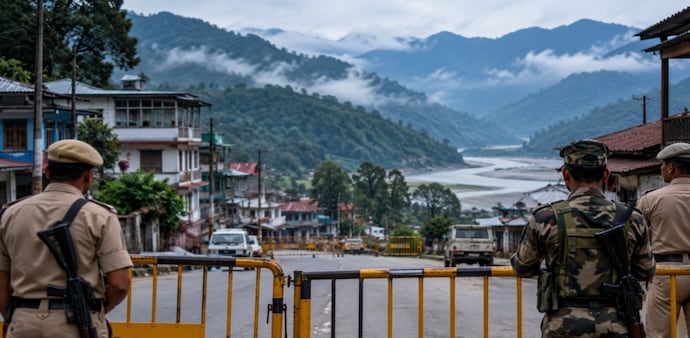
Arunachal Pradesh's proposed 11,200-MW Siang Upper Multipurpose Project (SUMP) has drawn opposition from sections of indigenous communities over concerns about displacement, environmental impact, and livelihoods. Protests against the project turned violent in Pasighat on Friday.
The project is being seen as a strategic response to China's massive hydropower development on the Yarlung Tsangpo River in Tibet. But sections of the local Adi community fear that the proposed dam could submerge ancestral land, displace villages and permanently alter the Siang River ecosystem.
On Sunday, Arunachal Chief Minister Pema Khandu held separate meetings with legislators and representatives of indigenous organisations. He stressed the need to balance national security with environmental concerns and the rights of local communities.
Read More: China’s Brahmaputra mega-dam sparks seismic fears: Why should India be worried
What is the Siang Upper Multipurpose Project?
The Siang Upper Multipurpose Project is a proposed large hydropower and water-storage project on the Siang River in Arunachal Pradesh.
The project has a proposed generation capacity of 11,200 MW, making it one of India's largest planned hydropower developments.
The Union Ministry of Power has listed the project among proposed hydropower projects in the northeastern region.
Unlike a conventional hydropower project focused primarily on electricity generation, SUMP is also intended to store and regulate river water.
The proposed reservoir could help manage variations in river flows, provide flood moderation and strengthen India's water security.
State-run NHPC has been tasked with preparing the project's pre-feasibility report.
According to NHPC's annual report 2023-24, the Ministry of Jal Shakti assigned the company this work in April 2022. NHPC subsequently examined three alternative locations: Uggeng, Dite Dime and Parong.
The alternatives carried proposed generation capacities of 11,600 MW and 11,200 MW, depending on the location. However, the project remains at the assessment stage. A pre-feasibility report is not equivalent to final approval for construction.
Why is the project linked to China?
The Siang River originates in Tibet, where it is known as the Yarlung Tsangpo. It enters Arunachal Pradesh as the Siang and later forms part of the Brahmaputra River system.
China's construction of a massive hydropower project on the lower reaches of the Yarlung Tsangpo has heightened India's concerns about upstream control over a major transboundary river.
India is concerned about the potential implications of upstream developments for downstream water flows, flooding and communities dependent on the river.
In a March 2025 statement to Parliament, the Ministry of External Affairs said the government was monitoring China's hydropower plans and taking necessary measures to safeguard the interests of people living downstream.
The government has also raised the need for transparency, consultation and protection of downstream interests with China through diplomatic channels.
Supporters of SUMP argue that a large storage facility on the Indian side could help regulate river flows and provide a degree of protection against sudden changes in water discharge.
China, for its part, has maintained that its project will not adversely affect downstream areas.
Why are indigenous communities protesting?
For communities living along the Siang River, the fear is about possible displacement and loss of ancestral land.
Sections of the indigenous Adi community fear that a large reservoir could submerge villages, agricultural land, forests and culturally significant areas.
Their concerns include displacement, loss of traditional livelihoods and changes to the river ecosystem.
Residents have also questioned the safety of constructing a mega dam in a seismically sensitive Himalayan region.
The Siang River is closely connected to the cultural identity and daily lives of communities living along its banks.
Opponents have demanded that survey and pre-feasibility activities be stopped until affected communities are adequately consulted.
They argue that decisions with potentially irreversible consequences for their land and livelihoods should not proceed without their participation.
What triggered the latest violence?
The protests escalated on October 23, when several organisations opposing the project called a 12-hour bandh across Siang, Upper Siang and East Siang districts.
The organisations included Adi Bane Kebang United, the SUMP Affected Area Youth Association, the Siang Indigenous Farmers' Forum Youth Wing and the Adi Galo Welfare Society.
Their demands included halting pre-feasibility activities, releasing arrested activists, reinstating suspended village-level leaders and withdrawing security forces deployed in the region.
According to reports, the bandh was largely peaceful during the day. However, violence erupted in Pasighat after the shutdown ended.
A mob allegedly set fire to an NHPC office, a police station and several police vehicles. Properties belonging to political leaders were also vandalised.
Police said around 40 security personnel were injured during the unrest. Authorities subsequently imposed restrictions on public gatherings in affected areas. The violence marked a serious escalation in opposition to the proposed project.
The Arunachal CM has maintained that the government is willing to discuss the project's benefits, risks and potential consequences with affected communities.
On Sunday, he met legislators to discuss the pre-feasibility report, national security considerations, environmental concerns and the aspirations of residents. "Our priority is to protect national interests while respecting the rights and aspirations of the people of Siang Valley," he said.
In a separate meeting with the Arunachal Indigenous Tribes Forum and community-based organisations, Khandu expressed concern about misinformation surrounding the project.
"Our people deserve accurate information to understand the project, its strategic importance and the concerns associated with it," he said.
The chief minister has also said that public consensus should remain central to decisions about taking the project forward.