
Delhi air turns 'poor': GRAP-1 curbs kick in. What are allowed & what are not?
The revised GRAP schedule approved in September 2026 moved certain diesel generator-set measures and restrictions on the entry of buses meeting BS-IV or lower emission standards from Stage II to Stage I.
Subhankar Paul
- Oct 22, 2026,
- Updated Oct 22, 2026 8:16 AM IST
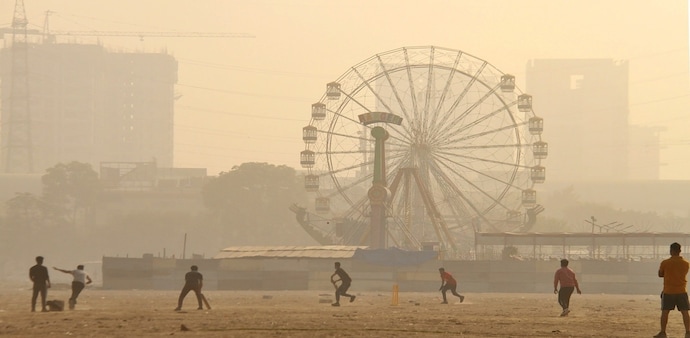
Residents of Delhi and the surrounding cities woke up to hazy morning on October 22 as the AQI slipped into 'poor' category ahead of the winter months.
The Delhi-NCR region has entered the first stage of the Graded Response Action Plan (GRAP) after the national capital's Air Quality Index (AQI) rose from 179 on October 20 to 244 by 2 pm on October 21, 2026, pushing it into the ‘poor’ category. The Commission for Air Quality Management (CAQM) invoked Stage I measures with immediate effect as forecasts indicated that air quality could remain poor in the coming days.
Advertisement
GRAP-1 is the first level of emergency pollution-control measures and focuses on reducing road dust, construction emissions, waste burning and vehicular pollution. It does not impose a blanket ban on private cars, shut schools or halt construction across Delhi-NCR. However, construction sites and other activities must comply with the applicable pollution-control rules.
Here is what residents, commuters, businesses and construction operators need to know.
The revised GRAP schedule approved in September 2026 moved certain diesel generator-set measures and restrictions on the entry of buses meeting BS-IV or lower emission standards from Stage II to Stage I.
Advertisement
Construction and demolition: What changes?
Construction sites are required to implement dust-mitigation measures. These include covering construction materials, preventing dust from spreading beyond site boundaries, managing construction and demolition waste properly, and ensuring that dust-control equipment is used where required.
- Allowed: Construction activity that complies with applicable permissions and pollution-control requirements.
- Not allowed: Open burning of waste, dust-generating work that violates prescribed controls, or activities prohibited under specific orders.
The government may impose additional restrictions on construction and demolition through separate directions. Residents and contractors should therefore check the latest Delhi government and CAQM orders rather than assume that every project is automatically permitted or banned.
Are private vehicles allowed?
Yes. GRAP-1 does not impose the blanket restrictions on private cars that can apply at higher pollution stages.
Advertisement
However, vehicle owners must continue to follow existing emission and pollution-control rules, including maintaining a valid Pollution Under Control Certificate (PUCC) wherever required. Restrictions based on vehicle type, emission standards or registration may also apply under separate orders.
The revised GRAP framework extends restrictions on certain BS-III petrol and BS-IV diesel or older-standard four-wheelers to Sonipat, in addition to Gurugram, Faridabad, Ghaziabad and Gautam Buddh Nagar. These curbs are associated with Stage III, not a general Stage I ban.
What must residents & businesses avoid?
Residents should not burn leaves, garbage or other waste in the open. Construction operators must follow dust-control requirements, while local authorities are expected to step up mechanised road sweeping, water sprinkling and the collection of municipal and construction waste.
People can also help reduce pollution by carpooling, using public transport where practical, avoiding unnecessary vehicle trips and reporting visible pollution violations.
What happens if air pollution worsens?
GRAP has four stages, with progressively stricter measures as air quality deteriorates.
The restrictions under earlier stages generally continue when a higher stage is invoked, with additional curbs added as necessary. The CAQM can also act on forecasts and expected deterioration instead of waiting for the AQI to cross a threshold.
Advertisement
An Integrated Command and Control Centre (ICCC) is now monitoring construction-related pollution, while an AI-based traffic management system works to cut vehicular emissions across the city.
The measures form part of the Stage 1 implementation of the Graded Response Action Plan (GRAP). Authorities are also enforcing proper waste management, tightening checks on polluting vehicles, improving traffic flow, and regulating emissions across industries, power plants, and brick kilns.
AQI status of Delhi-NCR on October 21
Based on the air quality bulletin for October 21, air quality across the Delhi-NCR region predominantly fell into the 'Poor' category, with certain areas experiencing even worse conditions. Delhi recorded an AQI of 245 with PM2.5 and PM10 as prominent pollutants.
Surrounding NCR cities reflected similar or elevated pollution levels: Greater Noida registered an AQI of 280, Ghaziabad stood at 223, Gurugram at 216, Faridabad at 123, and Noida at 249. Other nearby towns like Bahadurgarh (205), Ballabgarh (216), and Khairthal (205) also logged 'Poor' air quality, while harsher spikes were noted in places like Khora, which reached a 'Very Poor' AQI of 317.
Read more!