
Delhi breathes toxic air after Diwali night: AQI at 368 despite restrictions on firecrackers, severe pollution warning ahead
Despite restrictions on firecracker use, several neighbourhoods reported widespread bursting of crackers on Sunday evening.
- Nov 9, 2026,
- Updated Nov 9, 2026 7:46 AM IST
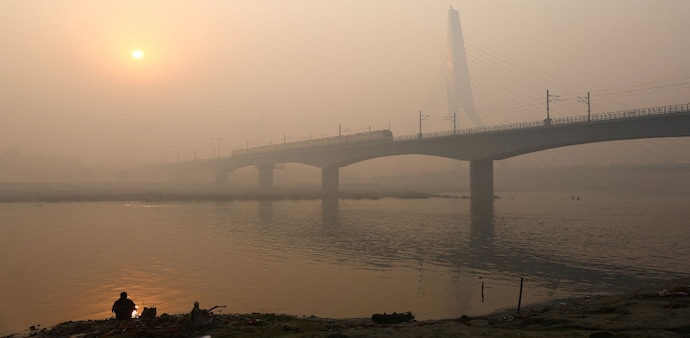
Delhi's air quality remained in the 'very poor' category on Monday morning, November 9, with the Air Quality Index (AQI) standing at 368 at 7 am, following a night of Diwali celebrations that left several parts of the capital covered in thick smoke and haze.
The AQI was 15 points lower than at the same hour on Sunday. Of the city's 71 monitoring stations, 54 were reporting data, with PM2.5 emerging as the leading pollutant at 52 stations.
On Diwali night, air quality at 20 monitoring stations had slipped into the 'severe' category, while Delhi's overall AQI stood at 371 at 10 pm.
Firecrackers leave Delhi covered in smoke
Despite restrictions on firecracker use, several neighbourhoods reported widespread bursting of crackers on Sunday evening. Residents in Pitampura, Burari, Mayur Vihar and Lutyens' Delhi reported fireworks continuing as celebrations intensified.
Smoke accumulated over roads and residential areas, reducing visibility. Residents also complained of a strong smell of burnt crackers and difficulty breathing.
The Supreme Court had permitted green firecrackers on November 7 and 8 only between 6 am and 7 am and 8 pm and 10 pm. The Delhi government had urged residents to follow these directions.
Don't Miss: As GRAP III kicks in, Delhi-NCR schools directed to shift classes 1-5 to hybrid mode
Sonia Vihar records AQI of 463
Of the 59 stations reporting at 10 pm on Sunday, 20 recorded 'severe' air quality, 33 were in the 'very poor' category and six were in the 'poor' category.
Sonia Vihar recorded the highest AQI at 463, followed by Jahangirpuri at 450. Punjabi Bagh, Burari, Okhla and Rohini were also among the areas experiencing severe pollution.
Delhi's daily average AQI settled at 376 on Sunday, compared with 369 on Saturday.
Air quality may worsen further
The Air Quality Early Warning System has forecast that Delhi's AQI could enter the 'severe' category from November 9 and remain there for the next few days.
Experts have linked the expected deterioration to unfavourable weather conditions, vehicle emissions, Diwali celebrations and stubble burning in neighbouring states.
According to the Decision Support System, transport was expected to contribute 19% of Delhi's pollution on Sunday, while stubble burning accounted for an estimated 3.5%. Its contribution was forecast at 2.99% on Monday.
Low wind speeds and poor ventilation are also expected to make it difficult for pollutants to disperse.
(With inputs from PTI)