
Delhi Master Plan 2047: Union Minister Manohar Lal Khattar lays out 24-hour cities, metro expansion and new development rules
The plan also proposes a framework for plots carved out in these zones.
- Aug 20, 2026,
- Updated Aug 20, 2026 5:32 PM IST
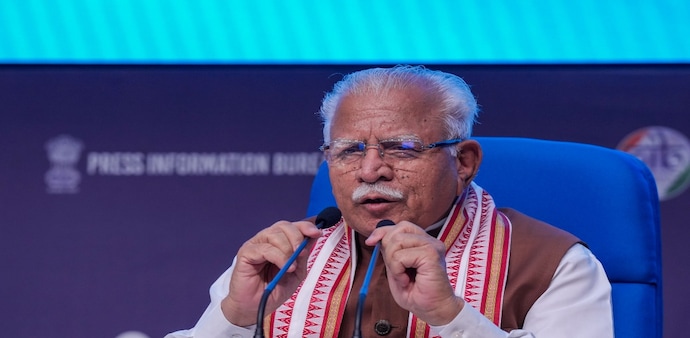
Delhi’s Master Plan 2047 proposes round-the-clock city zones with 24-hour transport services, along with new road and development norms for low-density areas, Union Minister Manohar Lal Khattar said.
Khattar told ANI, "There is a proposal to develop '24-hour city' zones, where operations continue around the clock. Provisions are being made to ensure 24-hour transportation services, particularly metro connectivity, for these locations."
The proposed plan also includes specific provisions for low-density areas, including wider internal roads and master trunk roads.
"Similarly, plans have been formulated for low-density areas; these include provisions for internal roads with an 18-meter width and master trunk roads with a 45-meter Right of Way (ROW)," Khattar said.
To manage congestion, the layout will require open space along plots on both sides of the 15-to-18-meter internal roads.
Don't Miss: Indian Oil close to signing LPG import deal with Algeria’s Sonatrach for 2027: Report
The plan also proposes a framework for plots carved out in these zones. Owners will be granted TDR (Transferable Development Rights) and FAR (Floor Area Ratio) based on a standard 2.5-acre benchmark.
"This ensures that even if a plot is smaller than 2.5 acres, the owner receives the full FAR entitlement associated with a 2.5-acre plot," Khattar said.
Under the proposed rules, farmhouses cannot be constructed in these low-density development zones on plots smaller than 2.5 acres.
Metro network to reach 695 km
Delhi’s metro network, which currently spans about 416 km, is planned to expand to 695 km by 2047.
The city’s public transport network will also be expanded with more buses and six new Regional Rapid Transit System corridors, Lal said.
Fewer building restrictions, new economy sectors
The plan removes building height restrictions in most areas, except for certain locations.
Data centres, co-working spaces and cloud kitchens have been added under the "new economies" category.
Focus on housing and environment
The plan is designed for a projected population of 3.20 crore while also protecting key environmental areas in Delhi.
Khattar said at a joint press conference with Delhi Lieutenant Governor T S Sandhu and Chief Minister Rekha Gupta that around 180 sq km of the Yamuna floodplains and the Ridge area will be protected as development expands.
Under MPD 2047, 30-40 lakh new flats are planned to meet the housing needs of the growing population. The Transit Oriented Development Policy will also support affordable housing.
CM Rekha Gupta said the long-awaited master plan would help revitalise Delhi by focusing on affordable housing and improving transportation infrastructure.
Must Read: India’s digital shopping story is reversing: Bill payments move back offline, shows study
Push for investment and jobs
Aligned with the vision of Viksit Bharat@2047, MPD 2047 aims to make Delhi a world-class, inclusive and economically vibrant city capable of supporting nearly 3.2 crore people.
The plan also shifts urban planning from a mainly regulatory approach to a development-focused framework aimed at encouraging investment, innovation and job creation.
Earlier this month, The Economic Times reported that the plan was approved after remaining pending for more than four years.
The DDA has said the master plan will guide Delhi’s growth and development over the coming decades, covering areas such as land use, housing, infrastructure and redevelopment.
According to the report, the plan was expected to address long-standing issues around the Green Development Area and farmhouse development, while easing some regulatory hurdles for construction and redevelopment. Industry executives had said clearer rules and faster approvals could help revive real estate activity in the capital.
Delhi’s Master Plan 2047 proposes round-the-clock city zones with 24-hour transport services, along with new road and development norms for low-density areas, Union Minister Manohar Lal Khattar said.
Khattar told ANI, "There is a proposal to develop '24-hour city' zones, where operations continue around the clock. Provisions are being made to ensure 24-hour transportation services, particularly metro connectivity, for these locations."
The proposed plan also includes specific provisions for low-density areas, including wider internal roads and master trunk roads.
"Similarly, plans have been formulated for low-density areas; these include provisions for internal roads with an 18-meter width and master trunk roads with a 45-meter Right of Way (ROW)," Khattar said.
To manage congestion, the layout will require open space along plots on both sides of the 15-to-18-meter internal roads.
Don't Miss: Indian Oil close to signing LPG import deal with Algeria’s Sonatrach for 2027: Report
The plan also proposes a framework for plots carved out in these zones. Owners will be granted TDR (Transferable Development Rights) and FAR (Floor Area Ratio) based on a standard 2.5-acre benchmark.
"This ensures that even if a plot is smaller than 2.5 acres, the owner receives the full FAR entitlement associated with a 2.5-acre plot," Khattar said.
Under the proposed rules, farmhouses cannot be constructed in these low-density development zones on plots smaller than 2.5 acres.
Metro network to reach 695 km
Delhi’s metro network, which currently spans about 416 km, is planned to expand to 695 km by 2047.
The city’s public transport network will also be expanded with more buses and six new Regional Rapid Transit System corridors, Lal said.
Fewer building restrictions, new economy sectors
The plan removes building height restrictions in most areas, except for certain locations.
Data centres, co-working spaces and cloud kitchens have been added under the "new economies" category.
Focus on housing and environment
The plan is designed for a projected population of 3.20 crore while also protecting key environmental areas in Delhi.
Khattar said at a joint press conference with Delhi Lieutenant Governor T S Sandhu and Chief Minister Rekha Gupta that around 180 sq km of the Yamuna floodplains and the Ridge area will be protected as development expands.
Under MPD 2047, 30-40 lakh new flats are planned to meet the housing needs of the growing population. The Transit Oriented Development Policy will also support affordable housing.
CM Rekha Gupta said the long-awaited master plan would help revitalise Delhi by focusing on affordable housing and improving transportation infrastructure.
Must Read: India’s digital shopping story is reversing: Bill payments move back offline, shows study
Push for investment and jobs
Aligned with the vision of Viksit Bharat@2047, MPD 2047 aims to make Delhi a world-class, inclusive and economically vibrant city capable of supporting nearly 3.2 crore people.
The plan also shifts urban planning from a mainly regulatory approach to a development-focused framework aimed at encouraging investment, innovation and job creation.
Earlier this month, The Economic Times reported that the plan was approved after remaining pending for more than four years.
The DDA has said the master plan will guide Delhi’s growth and development over the coming decades, covering areas such as land use, housing, infrastructure and redevelopment.
According to the report, the plan was expected to address long-standing issues around the Green Development Area and farmhouse development, while easing some regulatory hurdles for construction and redevelopment. Industry executives had said clearer rules and faster approvals could help revive real estate activity in the capital.