
Delhi-NCR floods after heavy rain: If Colombo & Ireland can handle rain, why can’t Indian cities?
The most schocking part is that these events are not entirely unpredictable. And the IMD increasingly provides advance warnings for heavy rainfall. Yet the same cycle repeats: rain, waterlogging, traffic collapse, emergency pumping, road repairs and then another monsoon.
- Aug 8, 2026,
- Updated Aug 8, 2026 2:42 PM IST
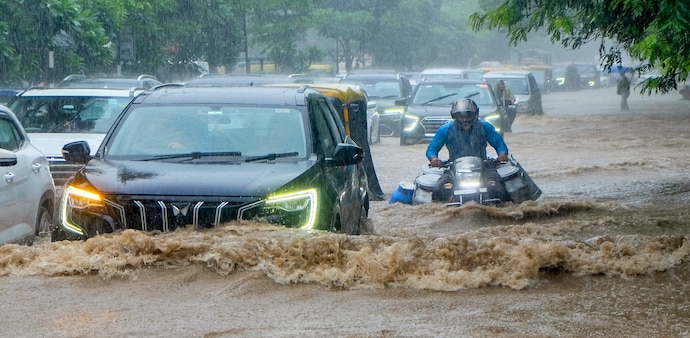
The rain came down, roads disappeared under water and traffic across Delhi-NCR slowed to a crawl. Vehicles were stranded, commuters were stuck for hours and familiar trouble spots once again turned into pools of water.
But amid the latest monsoon disruption, a question being raised on social media is difficult to ignore: if cities and regions that receive heavy rainfall can keep their roads functional, why do India's biggest metros struggle with the same problem every year?
The mood was captured by entrepreneur Harshdeep Rapal, who recalled his nearly two years working in Colombo, Sri Lanka, between 2007 and 2009.
"I worked in Sri Lanka (Colombo) for nearly two years, consulting for MTN (Dialog Telekom), during the peak of the LTTE war (2007–2009). Believe me, it rains there like cats and dogs for months - May to September, and again November to January. Yet, even when the country was dealing with an almost civil-war-like situation, I never saw roads crumble because of rains the way ours do every monsoon. So frustrating! This is how Colombo looks these days," he wrote in a post on X (formally twitter).
His comparison points to a problem that goes beyond rainfall. India's metros are not simply dealing with too much water; they are dealing with cities that often have too little capacity to absorb, channel and drain it.
Another social media user highlighted roads in West Cork, Ireland, pointing out that the region receives around 1,200-2,800 mm of rain every year. "These are tiny roads in West Cork in Ireland which gets 1200-2800 mm of rain every year. They are all asphalt. No concrete roads. And hardly any potholes," he added.
The comparisons are striking because they challenge a familiar explanation for India's monsoon misery: that heavy rain itself is responsible for damaged roads, potholes and urban chaos.
Rain is certainly a factor. But it is only part of the story.
Why does the same problem return every monsoon?
Delhi-NCR is hardly alone. Mumbai, Bengaluru, Hyderabad and several other major cities have repeatedly witnessed roads turning into waterways after intense spells of rain. A few hours of heavy rainfall can be enough to trigger waterlogging, traffic jams, vehicle breakdowns and long delays.
The basic problem is straightforward.
Cities have expanded rapidly, while their drainage networks and supporting infrastructure have often struggled to keep pace. More buildings, roads, parking areas and paved surfaces mean less ground is available to absorb rainwater. Instead, huge volumes of runoff are pushed towards stormwater drains.
If those drains are blocked, undersized or poorly connected, water backs up onto roads.
Natural drainage channels can make the situation even more complicated. Construction, encroachment and the loss of wetlands, lakes and open spaces can remove some of the natural routes through which rainwater once flowed.
The result is that a heavy downpour can overwhelm an entire neighbourhood surprisingly quickly.
Roads are another part of the problem
Water entering cracks and weak sections of asphalt can accelerate deterioration. Potholes can expand rapidly when roads remain waterlogged. Poorly designed slopes can prevent water from reaching drains, leaving large pools on the carriageway.
Repeated patchwork repairs may temporarily cover the damage without addressing the underlying drainage problem.
This is why the question raised by the Colombo and West Cork comparisons is important. It is not simply about whether India receives heavy rain. It is about how infrastructure is designed to deal with that rain.
Delhi's August 7 rainfall shows the scale
The latest disruption also came against a backdrop of significant rainfall across Delhi. Safdarjung, Delhi's representative weather station, recorded 77.1 mm of rain on August 7, after receiving 127 mm during the first seven days of August. Its August rainfall total consequently crossed 200 mm, reaching 204.1 mm by the evening of August 7.
But rainfall varied sharply across the Capital. Pushp Vihar recorded 111.5 mm, while Chhatarpur received 104.5 mm. Ayanagar recorded 87.4 mm, Palam 73.5 mm, Janakpuri 68 mm and Jharoda Kalan 67 mm.
That variation is important because urban flooding is often intensely local. One neighbourhood can receive a deluge while another gets considerably less rain, putting enormous pressure on specific drains, roads and low-lying areas.
Mumbai, Bengaluru face same problem
Mumbai's challenge is shaped by its coastal geography, high population density, tidal conditions and enormous volumes of monsoon rain.
Bengaluru faces a different set of vulnerabilities. Rapid construction has transformed the city's landscape, reducing open surfaces and disrupting natural drainage pathways. Its network of lakes and interconnected valleys, which historically helped manage excess water, has been affected by urban expansion.
In both cities, however, the underlying lesson is similar: rainfall becomes a crisis when urban infrastructure cannot move the water quickly enough.
Climate factor is making preparedness more important
There is another complication. Climate change does not necessarily mean every city will simply receive more rain. But changing weather patterns can increase the frequency or intensity of extreme rainfall events in some locations.
For cities, that means infrastructure designed around historical rainfall patterns may increasingly face events that exceed its capacity. Drainage systems therefore need to be designed not merely for the average monsoon day, but for intense bursts of rainfall.
Perhaps the most schocking part is that these events are not entirely unpredictable. Authorities know which roads routinely flood. They know where drains need cleaning. They know which underpasses become dangerous. They know which neighbourhoods are vulnerable.
And the IMD increasingly provides advance warnings for heavy rainfall. Yet the same cycle repeats: rain, waterlogging, traffic collapse, emergency pumping, road repairs and then another monsoon.
The rain came down, roads disappeared under water and traffic across Delhi-NCR slowed to a crawl. Vehicles were stranded, commuters were stuck for hours and familiar trouble spots once again turned into pools of water.
But amid the latest monsoon disruption, a question being raised on social media is difficult to ignore: if cities and regions that receive heavy rainfall can keep their roads functional, why do India's biggest metros struggle with the same problem every year?
The mood was captured by entrepreneur Harshdeep Rapal, who recalled his nearly two years working in Colombo, Sri Lanka, between 2007 and 2009.
"I worked in Sri Lanka (Colombo) for nearly two years, consulting for MTN (Dialog Telekom), during the peak of the LTTE war (2007–2009). Believe me, it rains there like cats and dogs for months - May to September, and again November to January. Yet, even when the country was dealing with an almost civil-war-like situation, I never saw roads crumble because of rains the way ours do every monsoon. So frustrating! This is how Colombo looks these days," he wrote in a post on X (formally twitter).
His comparison points to a problem that goes beyond rainfall. India's metros are not simply dealing with too much water; they are dealing with cities that often have too little capacity to absorb, channel and drain it.
Another social media user highlighted roads in West Cork, Ireland, pointing out that the region receives around 1,200-2,800 mm of rain every year. "These are tiny roads in West Cork in Ireland which gets 1200-2800 mm of rain every year. They are all asphalt. No concrete roads. And hardly any potholes," he added.
The comparisons are striking because they challenge a familiar explanation for India's monsoon misery: that heavy rain itself is responsible for damaged roads, potholes and urban chaos.
Rain is certainly a factor. But it is only part of the story.
Why does the same problem return every monsoon?
Delhi-NCR is hardly alone. Mumbai, Bengaluru, Hyderabad and several other major cities have repeatedly witnessed roads turning into waterways after intense spells of rain. A few hours of heavy rainfall can be enough to trigger waterlogging, traffic jams, vehicle breakdowns and long delays.
The basic problem is straightforward.
Cities have expanded rapidly, while their drainage networks and supporting infrastructure have often struggled to keep pace. More buildings, roads, parking areas and paved surfaces mean less ground is available to absorb rainwater. Instead, huge volumes of runoff are pushed towards stormwater drains.
If those drains are blocked, undersized or poorly connected, water backs up onto roads.
Natural drainage channels can make the situation even more complicated. Construction, encroachment and the loss of wetlands, lakes and open spaces can remove some of the natural routes through which rainwater once flowed.
The result is that a heavy downpour can overwhelm an entire neighbourhood surprisingly quickly.
Roads are another part of the problem
Water entering cracks and weak sections of asphalt can accelerate deterioration. Potholes can expand rapidly when roads remain waterlogged. Poorly designed slopes can prevent water from reaching drains, leaving large pools on the carriageway.
Repeated patchwork repairs may temporarily cover the damage without addressing the underlying drainage problem.
This is why the question raised by the Colombo and West Cork comparisons is important. It is not simply about whether India receives heavy rain. It is about how infrastructure is designed to deal with that rain.
Delhi's August 7 rainfall shows the scale
The latest disruption also came against a backdrop of significant rainfall across Delhi. Safdarjung, Delhi's representative weather station, recorded 77.1 mm of rain on August 7, after receiving 127 mm during the first seven days of August. Its August rainfall total consequently crossed 200 mm, reaching 204.1 mm by the evening of August 7.
But rainfall varied sharply across the Capital. Pushp Vihar recorded 111.5 mm, while Chhatarpur received 104.5 mm. Ayanagar recorded 87.4 mm, Palam 73.5 mm, Janakpuri 68 mm and Jharoda Kalan 67 mm.
That variation is important because urban flooding is often intensely local. One neighbourhood can receive a deluge while another gets considerably less rain, putting enormous pressure on specific drains, roads and low-lying areas.
Mumbai, Bengaluru face same problem
Mumbai's challenge is shaped by its coastal geography, high population density, tidal conditions and enormous volumes of monsoon rain.
Bengaluru faces a different set of vulnerabilities. Rapid construction has transformed the city's landscape, reducing open surfaces and disrupting natural drainage pathways. Its network of lakes and interconnected valleys, which historically helped manage excess water, has been affected by urban expansion.
In both cities, however, the underlying lesson is similar: rainfall becomes a crisis when urban infrastructure cannot move the water quickly enough.
Climate factor is making preparedness more important
There is another complication. Climate change does not necessarily mean every city will simply receive more rain. But changing weather patterns can increase the frequency or intensity of extreme rainfall events in some locations.
For cities, that means infrastructure designed around historical rainfall patterns may increasingly face events that exceed its capacity. Drainage systems therefore need to be designed not merely for the average monsoon day, but for intense bursts of rainfall.
Perhaps the most schocking part is that these events are not entirely unpredictable. Authorities know which roads routinely flood. They know where drains need cleaning. They know which underpasses become dangerous. They know which neighbourhoods are vulnerable.
And the IMD increasingly provides advance warnings for heavy rainfall. Yet the same cycle repeats: rain, waterlogging, traffic collapse, emergency pumping, road repairs and then another monsoon.