
Delhi's Diwali AQI worsens for third straight year: Why pollution controls are failing to deliver
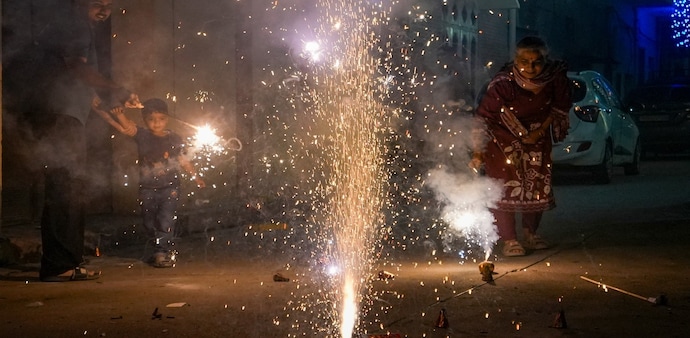
Delhi's average Diwali AQI climbed from 334 in 2024 to 360 in 2026, highlighting the capital's worsening seasonal pollution crisis. A three-year study shows that firecracker emissions compound an already severe pollution burden, raising questions about the effectiveness and timing of existing control measures.
- Nov 12, 2026,
- Updated Nov 12, 2026 7:20 AM IST
Delhi's air pollution crisis shows little sign of easing, with the national capital recording a steady deterioration in air quality during Diwali over the past three years. A new analysis by Climate Trends reveals that Delhi's average Air Quality Index (AQI) during the festival increased from 334 in 2024 to 348 in 2025 and 360 in 2026, remaining firmly in the 'Very Poor' category.
The study, titled Factors Determining Post-Diwali AQI Recovery Rates in Different Indian Cities: A Three-year Analysis (2024–2026), examined Central Pollution Control Board (CPCB) data across nine cities, including Delhi, Gurugram, Lucknow, Patna, Chandigarh, Mumbai, Hyderabad, Bengaluru and Chennai. Delhi was already choking before Diwali
One of the study's most significant findings is that Delhi entered Diwali 2026 with an average AQI of 347 during the preceding week, compared with 295 in 2024 and 242 in 2025.
Consequently, the festival-related increase was just 4% in 2026, compared with 13% in 2024 and 44% in 2025.
However, the smaller percentage increase does not indicate cleaner air. Instead, it reflects the capital's already elevated pollution levels before the festival.
Delhi's peak AQI during the Diwali window reached 376 in 2026, compared with 351 in 2025 and 339 in 2024.
MUST READ: AQI 299 to 376: What Delhi’s air around Diwali equals in cigarettes, day by day
Why pollution controls are struggling
The findings suggest that controlling firecracker emissions alone cannot resolve Delhi's recurring winter pollution crisis.
According to the study, post-monsoon atmospheric stagnation, low wind speeds, temperature inversions and crop-residue burning across Punjab and Haryana contribute to persistent pollution across the Indo-Gangetic Plain.
In 2024, Delhi's average AQI actually worsened after Diwali, increasing from 334 during the festival to 366 in the following week.
In 2025, the post-Diwali average remained elevated at 304, compared with the pre-festival baseline of 242.
These patterns indicate that pollution persists well beyond the festival, underscoring the need for preventive measures before seasonal conditions deteriorate.
ALSO READ: Delhi air quality improves to ‘poor’ as AQI drops to 299; here’s what may happen next
Why southern cities recover faster
The study found a striking contrast between northern and southern cities.
Chennai and Hyderabad returned to or below their pre-Diwali AQI levels within a week in both 2024 and 2025.
Researchers attributed faster recovery to coastal sea breezes, stronger winds over the Deccan plateau and seasonal rainfall, which help disperse pollutants.
Dr Palak Balyan, Research Lead at Climate Trends, said: "The key takeaway is that a short-term pollution spike need not translate into a prolonged episode."
What needs to change?
The study recommends implementing Graded Response Action Plan (GRAP)-type interventions and crop-residue burning controls before Diwali rather than waiting for pollution levels to escalate.
It also calls for region-specific air-quality management and stronger monitoring of pollution sources.
However, the analysis did not statistically separate firecracker emissions from meteorological conditions and agricultural burning, meaning it cannot establish the effectiveness of individual pollution-control measures.
With Delhi's Diwali AQI worsening for three consecutive years, the findings reinforce the need to tackle persistent seasonal emissions alongside festival-related pollution.