
EU’s top leaders Ursula von der Leyen, António Costa to be chief guests at India’s Republic Day
Their visit is expected to coincide with the India-EU Summit, where discussions are likely to focus on the long-pending Free Trade Agreement (FTA).
- Dec 18, 2025,
- Updated Dec 18, 2025 4:12 PM IST
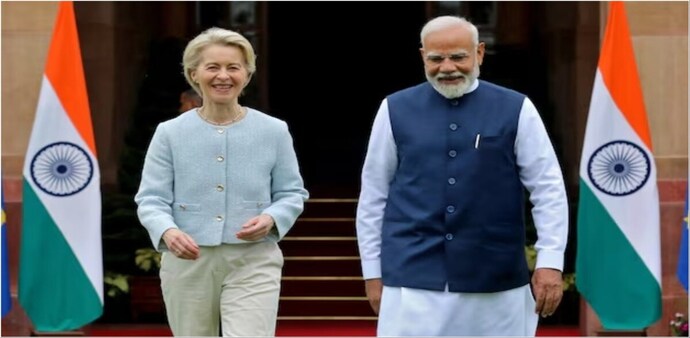
European Commission President Ursula von der Leyen and European Council President António Costa will be the chief guests at India’s Republic Day celebrations on January 26, underscoring a renewed strategic and economic push in India-European Union relations.
Their visit is expected to coincide with the India-EU Summit, where discussions are likely to focus on the long-pending Free Trade Agreement (FTA). Both sides are seeking to inject momentum into negotiations and move closer to concluding the deal, which has been under discussion for over a decade.
The twin events signal high-level political commitment to deepening cooperation across key areas, including trade, defence, technology, and people-to-people ties. India-EU relations have gathered pace in recent months, particularly after the visit of EU Commissioners to India in February 2025, which helped lay the groundwork for expanded collaboration.
FTA negotiations were formally resumed on December 8 in New Delhi after a prolonged pause. The latest round of talks comes at a critical juncture, with negotiators attempting to bridge remaining differences and meet the shared goal of concluding the ambitious agreement by the end of the year.
If achieved, the India-EU FTA is expected to significantly boost bilateral trade and investment, strengthen supply chains, and enhance strategic alignment between New Delhi and Brussels amid shifting global economic and geopolitical dynamics.
Earlier, Commerce Secretary Rajesh Agrawal said negotiations on the India-European Union trade deal are progressing across several chapters. While there had been expectations of finalising the agreement by year-end, he added that free trade agreements cannot be concluded against fixed deadlines.
Prime Minister Narendra Modi and European Commission President Ursula von der Leyen have reaffirmed their commitment to conclude negotiations for the much-awaited free trade deal between India and the European Union (EU) by December.
The European Union is India's biggest trade partner with bilateral trade in goods recording $135 billion in the financial year 2023-24.
The two sides have already concluded negotiations on 11 chapters that included customs and trade facilitation, dispute settlement, digital trade, sustainable food system, small and medium-sized enterprises, competition and subsidies and capital movements.
Negotiations on several key chapters including rules of origin and market access are yet to be concluded.
(With inputs from India Today)
European Commission President Ursula von der Leyen and European Council President António Costa will be the chief guests at India’s Republic Day celebrations on January 26, underscoring a renewed strategic and economic push in India-European Union relations.
Their visit is expected to coincide with the India-EU Summit, where discussions are likely to focus on the long-pending Free Trade Agreement (FTA). Both sides are seeking to inject momentum into negotiations and move closer to concluding the deal, which has been under discussion for over a decade.
The twin events signal high-level political commitment to deepening cooperation across key areas, including trade, defence, technology, and people-to-people ties. India-EU relations have gathered pace in recent months, particularly after the visit of EU Commissioners to India in February 2025, which helped lay the groundwork for expanded collaboration.
FTA negotiations were formally resumed on December 8 in New Delhi after a prolonged pause. The latest round of talks comes at a critical juncture, with negotiators attempting to bridge remaining differences and meet the shared goal of concluding the ambitious agreement by the end of the year.
If achieved, the India-EU FTA is expected to significantly boost bilateral trade and investment, strengthen supply chains, and enhance strategic alignment between New Delhi and Brussels amid shifting global economic and geopolitical dynamics.
Earlier, Commerce Secretary Rajesh Agrawal said negotiations on the India-European Union trade deal are progressing across several chapters. While there had been expectations of finalising the agreement by year-end, he added that free trade agreements cannot be concluded against fixed deadlines.
Prime Minister Narendra Modi and European Commission President Ursula von der Leyen have reaffirmed their commitment to conclude negotiations for the much-awaited free trade deal between India and the European Union (EU) by December.
The European Union is India's biggest trade partner with bilateral trade in goods recording $135 billion in the financial year 2023-24.
The two sides have already concluded negotiations on 11 chapters that included customs and trade facilitation, dispute settlement, digital trade, sustainable food system, small and medium-sized enterprises, competition and subsidies and capital movements.
Negotiations on several key chapters including rules of origin and market access are yet to be concluded.
(With inputs from India Today)