
Ex-Army chief on Starlink: 'I wouldn't depend on any foreign-owned telecom system in India'
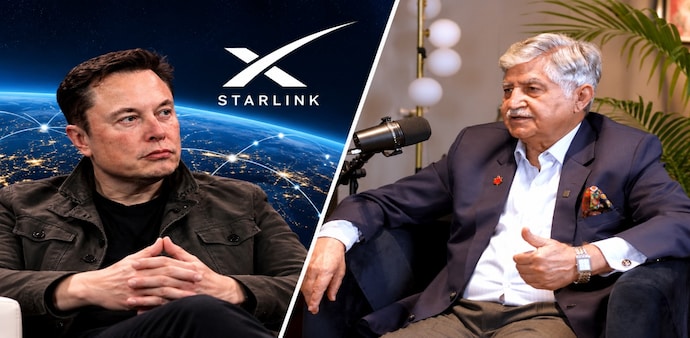
SpaceX CEO Elon Musk is pushing for a licence for his company Starlink, which provides satellite-based internet service
- Oct 11, 2026,
- Updated Oct 11, 2026 3:21 PM IST
Former Army chief Ved Malik on Sunday said he would not want India to depend on foreign-owned telecom systems. He cited the US sanctions imposed during the Kargil War and Washington's recent trade restrictions.
"With concern for national security, and my experience of defence sanctions imposed by USA during the Kargil war period and tariff and other restrictions imposed by US recently, I would not like to depend on any foreign-owned telecom system in India," Malik wrote on X.
Malik, who served as Army Chief from October 1997 to September 2000, led the Army during the 1999 Kargil War against Pakistan. His tenure coincided with US sanctions imposed on India by the Bill Clinton administration in May 1998, following India's nuclear tests at Pokhran.
The sanctions included restrictions on defence equipment sales, military technology transfers, financial assistance, and exports of sensitive dual-use technology. These restrictions were still partly in place when the Kargil conflict broke out in May 1999, complicating India's access to certain foreign defence supplies.
SpaceX CEO Elon Musk is pushing for a licence for his company Starlink, which provides satellite-based internet service. He has criticised the Indian government over the delay in allowing Starlink to operate in the country. He has alleged that powerful business interests are blocking its entry, a charge the government has rejected.
The concerns over Starlink extend beyond competition in the telecom market to questions about who controls the technology and the data it carries.
'Who is going to be controlling the technology?'
Sushant Sareen, Senior Fellow at Observer Research Foundation, questioned whether Starlink's interests would align with India's if the company retained control over its technology.
"Starlink might be a great technology, but the question is who is going to be controlling the technology? Clearly, it's the company. And if the company is controlling the technology, this company is not beholden to India. It does not have Indian interests at heart," Sareen said during a panel discussion at News18.
He also questioned Musk's argument that Starlink's entry would help connect people in rural India, saying the company was ultimately looking to make money.
"He wants to come in and make money. I have nothing against people coming in, investing out here, making money, bringing in technology. I'm all for it," Sareen said. "But don't give me this bull crap that you're doing it for the welfare of that last person in the remotest of Indian village at $85 a month or whatever obscene prices you are charging. Come on. It's not going to happen," he added.
'Dependence is a vulnerability'
Lt Gen (retd) SL Narasimhan, a former member of the National Security Advisory Board, said dependence on foreign technology could leave India vulnerable. He warned that data could be altered without users realising it, with potentially serious consequences.
"Dependence is a vulnerability, and that we have been realising over a period of time," Narasimhan said.
He described data as a valuable resource for artificial intelligence companies and said India's diverse society and range of activities could provide data that companies might seek to use.
"Unless there is a data interception or a data localisation that is being talked about, unless that is incorporated into this, then it is going to be a problem for us at a future date," he said.
Narasimhan also pointed to India's efforts to develop its own space initiatives, which could provide similar connectivity and bring domestic capabilities into competition with foreign satellite internet services.
Former Army chief Ved Malik on Sunday said he would not want India to depend on foreign-owned telecom systems. He cited the US sanctions imposed during the Kargil War and Washington's recent trade restrictions.
"With concern for national security, and my experience of defence sanctions imposed by USA during the Kargil war period and tariff and other restrictions imposed by US recently, I would not like to depend on any foreign-owned telecom system in India," Malik wrote on X.
Malik, who served as Army Chief from October 1997 to September 2000, led the Army during the 1999 Kargil War against Pakistan. His tenure coincided with US sanctions imposed on India by the Bill Clinton administration in May 1998, following India's nuclear tests at Pokhran.
The sanctions included restrictions on defence equipment sales, military technology transfers, financial assistance, and exports of sensitive dual-use technology. These restrictions were still partly in place when the Kargil conflict broke out in May 1999, complicating India's access to certain foreign defence supplies.
SpaceX CEO Elon Musk is pushing for a licence for his company Starlink, which provides satellite-based internet service. He has criticised the Indian government over the delay in allowing Starlink to operate in the country. He has alleged that powerful business interests are blocking its entry, a charge the government has rejected.
The concerns over Starlink extend beyond competition in the telecom market to questions about who controls the technology and the data it carries.
'Who is going to be controlling the technology?'
Sushant Sareen, Senior Fellow at Observer Research Foundation, questioned whether Starlink's interests would align with India's if the company retained control over its technology.
"Starlink might be a great technology, but the question is who is going to be controlling the technology? Clearly, it's the company. And if the company is controlling the technology, this company is not beholden to India. It does not have Indian interests at heart," Sareen said during a panel discussion at News18.
He also questioned Musk's argument that Starlink's entry would help connect people in rural India, saying the company was ultimately looking to make money.
"He wants to come in and make money. I have nothing against people coming in, investing out here, making money, bringing in technology. I'm all for it," Sareen said. "But don't give me this bull crap that you're doing it for the welfare of that last person in the remotest of Indian village at $85 a month or whatever obscene prices you are charging. Come on. It's not going to happen," he added.
'Dependence is a vulnerability'
Lt Gen (retd) SL Narasimhan, a former member of the National Security Advisory Board, said dependence on foreign technology could leave India vulnerable. He warned that data could be altered without users realising it, with potentially serious consequences.
"Dependence is a vulnerability, and that we have been realising over a period of time," Narasimhan said.
He described data as a valuable resource for artificial intelligence companies and said India's diverse society and range of activities could provide data that companies might seek to use.
"Unless there is a data interception or a data localisation that is being talked about, unless that is incorporated into this, then it is going to be a problem for us at a future date," he said.
Narasimhan also pointed to India's efforts to develop its own space initiatives, which could provide similar connectivity and bring domestic capabilities into competition with foreign satellite internet services.