
Festival food crackdown in Maharashtra: Tukaram Mundhe's FDA to begin checks 21 days before celebrations
The new standing order specifies in advance what will be checked, likely adulterants, sample collection procedures and enforcement action.
- Sep 4, 2026,
- Updated Sep 4, 2026 10:47 AM IST
For food businesses across Maharashtra, festival season will now come with heightened scrutiny. Since Tukaram Mundhe took charge as commissioner of the state Food and Drug Administration (FDA), the regulator has stepped up inspections, violation notices and licence suspensions. It has now introduced a year-round ‘Festival Enforcement Calendar’ to systematically target food adulteration during festivals, fairs, urus and religious events across the state.
The new standing order specifies in advance what will be checked, likely adulterants, sample collection procedures and enforcement action. The move comes amid a sharp increase in FDA testing since Mundhe took charge in May, with monthly sample collection rising threefold and testing increasing fourfold compared with 2025-26.
How the plan will work
The FDA has divided festivals into three tiers based on scale and geographical spread - statewide, regional and local. Enforcement will begin 21 days before a festival and continue for up to 30 days.
"This is the first time in India that such a comprehensive festival enforcement calendar is being implemented for food safety," FDA Commissioner Tukaram Mundhe said. He clarified that the initiative is strictly related to food safety and not linked to any particular community, religion, faith, or religious practices.
Officials will first identify risk areas, gather intelligence, form squads and ensure testing kits, reagents and laboratory capacity are available. Fourteen days before a festival, inspections will cover manufacturing units, mills, markets, cold stores, godowns and wholesale markets, including checks on transportation during night and early-morning hours.
During festivals, teams will conduct market surveillance, inspections and on-the-spot testing. Afterwards, they will follow up on laboratory reports, prosecutions and disposal of seized food.
Foods under the scanner
The FDA has identified 11 high-risk categories: milk and dairy, meat, sweets, fasting foods, edible oil, fruits, dry fruits, gram flour, water and ice, bakery products, e-commerce food and imported food.
Fasting foods such as bhagar, kuttu, singhada flour, sago and rajgira will be tested for mycotoxins. Milk will face early-morning checks, while meat outlets, cold chains and slaughterhouses will receive enhanced scrutiny during Eid.
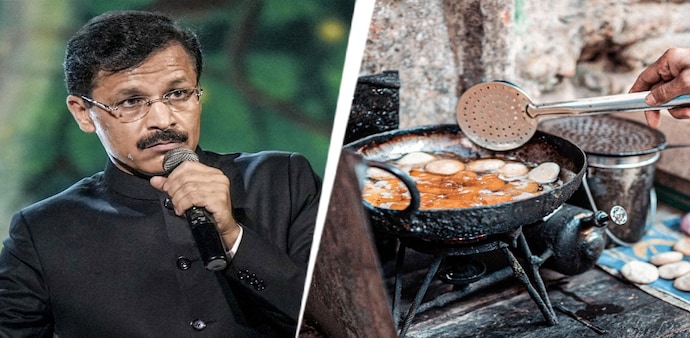
Frying oil will be tested for total polar compounds (TPC), with oil exceeding 25% TPC destroyed. Sweet shops will be checked for unauthorised colours and adulterated silver leaf, while using newspapers or printed paper to wrap food will invite action.
Bakeries, restaurants and quick-commerce warehouses will also be inspected. Food served at mahaprasad, iftar, annachhatra, langar and bhandara will come under surveillance, with organisers advised to use licensed caterers and inform the FDA in advance.
Enforcement drive intensifies
Between June and August 2026, the FDA collected 37,604 samples and tested 32,604, with 15,268 failing prescribed standards. Of the food samples tested, 15,160 were found substandard.
The department said monthly food sample collection rose 340% and testing 435% compared with 2025-26. Overall monthly sample collection reached 12,534 between June and August, versus 3,967 during 2025-26.
With three drug-testing and three food-testing laboratories, plus support from Pune’s State Public Health Laboratory, the FDA has now linked its intensified enforcement drive to a structured, year-round festival plan across Maharashtra.
For food businesses across Maharashtra, festival season will now come with heightened scrutiny. Since Tukaram Mundhe took charge as commissioner of the state Food and Drug Administration (FDA), the regulator has stepped up inspections, violation notices and licence suspensions. It has now introduced a year-round ‘Festival Enforcement Calendar’ to systematically target food adulteration during festivals, fairs, urus and religious events across the state.
The new standing order specifies in advance what will be checked, likely adulterants, sample collection procedures and enforcement action. The move comes amid a sharp increase in FDA testing since Mundhe took charge in May, with monthly sample collection rising threefold and testing increasing fourfold compared with 2025-26.
How the plan will work
The FDA has divided festivals into three tiers based on scale and geographical spread - statewide, regional and local. Enforcement will begin 21 days before a festival and continue for up to 30 days.
"This is the first time in India that such a comprehensive festival enforcement calendar is being implemented for food safety," FDA Commissioner Tukaram Mundhe said. He clarified that the initiative is strictly related to food safety and not linked to any particular community, religion, faith, or religious practices.
Officials will first identify risk areas, gather intelligence, form squads and ensure testing kits, reagents and laboratory capacity are available. Fourteen days before a festival, inspections will cover manufacturing units, mills, markets, cold stores, godowns and wholesale markets, including checks on transportation during night and early-morning hours.
During festivals, teams will conduct market surveillance, inspections and on-the-spot testing. Afterwards, they will follow up on laboratory reports, prosecutions and disposal of seized food.
Foods under the scanner
The FDA has identified 11 high-risk categories: milk and dairy, meat, sweets, fasting foods, edible oil, fruits, dry fruits, gram flour, water and ice, bakery products, e-commerce food and imported food.
Fasting foods such as bhagar, kuttu, singhada flour, sago and rajgira will be tested for mycotoxins. Milk will face early-morning checks, while meat outlets, cold chains and slaughterhouses will receive enhanced scrutiny during Eid.
Frying oil will be tested for total polar compounds (TPC), with oil exceeding 25% TPC destroyed. Sweet shops will be checked for unauthorised colours and adulterated silver leaf, while using newspapers or printed paper to wrap food will invite action.
Bakeries, restaurants and quick-commerce warehouses will also be inspected. Food served at mahaprasad, iftar, annachhatra, langar and bhandara will come under surveillance, with organisers advised to use licensed caterers and inform the FDA in advance.
Enforcement drive intensifies
Between June and August 2026, the FDA collected 37,604 samples and tested 32,604, with 15,268 failing prescribed standards. Of the food samples tested, 15,160 were found substandard.
The department said monthly food sample collection rose 340% and testing 435% compared with 2025-26. Overall monthly sample collection reached 12,534 between June and August, versus 3,967 during 2025-26.
With three drug-testing and three food-testing laboratories, plus support from Pune’s State Public Health Laboratory, the FDA has now linked its intensified enforcement drive to a structured, year-round festival plan across Maharashtra.