
First defence procurement under new military chiefs: Hammer munitions, anti-tank missiles, kamikaze drones expected
The meeting carries additional weight as the first DAC session to be attended by the new military leadership, Chief of Defence Staff General Anil Chauhan, Army Chief General Upendra Dwivedi, Navy Chief Admiral Dinesh K Tripathi and Air Chief Marshal AP Singh
- Jul 3, 2026,
- Updated Jul 3, 2026 8:26 AM IST
India's Defence Acquisition Council is set to clear a significant slate of military procurement proposals on July 3, covering everything from precision air-to-ground munitions and portable anti-tank missiles to advanced air defence systems and high-altitude surveillance platforms.
The meeting carries additional weight as the first DAC session to be attended by the new military leadership, Chief of Defence Staff General Anil Chauhan, Army Chief General Upendra Dwivedi, Navy Chief Admiral Dinesh K Tripathi and Air Chief Marshal AP Singh.
Indigenous anti-tank missiles: Rs 2,600 crore
One of the most significant proposals on the agenda is the induction of the Man-Portable Anti-Tank Guided Missile developed by DRDO for the Indian Army. The procurement covers 100 launchers, 2,300 missiles and five simulators, with manufacturing assigned to Bharat Dynamics Limited. The programme is estimated to cost over Rs 2,600 crore. The Defence Ministry is also expected to explore additional private sector production partners to scale up manufacturing capacity for the indigenously designed system.
Hammer munitions: Rs 2,400 crore
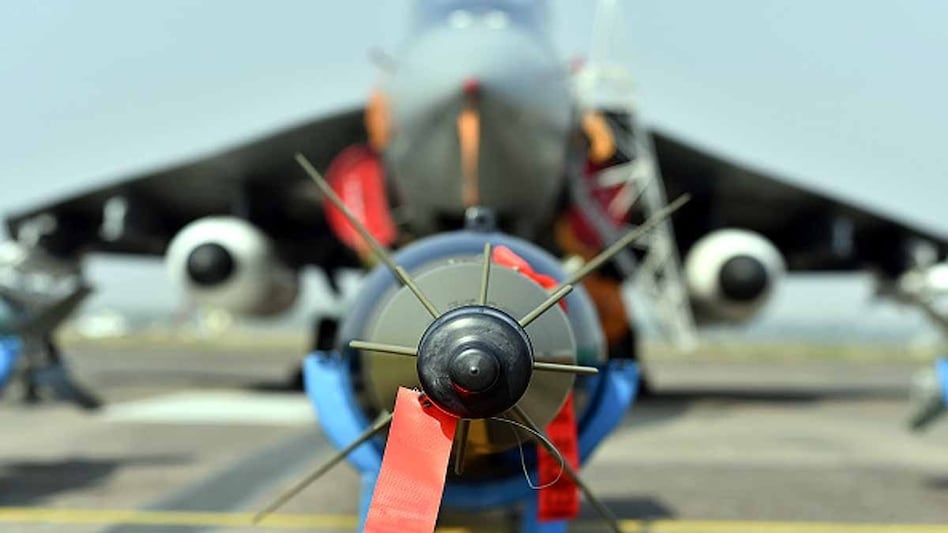
The DAC is likely to approve the acquisition of 600 Hammer, Highly Agile Modular Munition Extended Range, air-to-ground precision-guided munitions, originally developed by France's Safran. The weapons are proposed to be manufactured in India by Bharat Electronics Limited under the Make in India initiative, at an estimated cost of around Rs 2,400 crore.
The Hammer munitions were first brought into Indian service under emergency procurement powers following the 2020 Galwan Valley clash with China. The Indian Air Force plans to deploy them on its Rafale and LCA Tejas fleets, while the Indian Navy intends to equip its Rafale Marine fighter aircraft with the same system.
Verba air defence systems
The Army Air Defence Corps is expected to receive a significant boost through the proposed procurement of Russian-origin Verba Very Short-Range Air Defence Systems. The Verba is considered a more capable successor to the Igla systems currently operated by the Indian Army. Manufacturing is planned to take place in India through Adani Defence and Aerospace.
What else is on the table
Several other proposals are expected to come up for consideration, including fixed-wing pseudo satellites operating at high altitude, naval shipborne aerial systems, software-defined radios, kamikaze drones, drone detection systems and upgrades to the Scorpene-class submarine fleet.
The meeting comes after a gap of several months and is expected to inject fresh momentum into India's military modernisation programme, with a strong emphasis on indigenous manufacturing and multi-domain capability development across all three services.
India's Defence Acquisition Council is set to clear a significant slate of military procurement proposals on July 3, covering everything from precision air-to-ground munitions and portable anti-tank missiles to advanced air defence systems and high-altitude surveillance platforms.
The meeting carries additional weight as the first DAC session to be attended by the new military leadership, Chief of Defence Staff General Anil Chauhan, Army Chief General Upendra Dwivedi, Navy Chief Admiral Dinesh K Tripathi and Air Chief Marshal AP Singh.
Indigenous anti-tank missiles: Rs 2,600 crore
One of the most significant proposals on the agenda is the induction of the Man-Portable Anti-Tank Guided Missile developed by DRDO for the Indian Army. The procurement covers 100 launchers, 2,300 missiles and five simulators, with manufacturing assigned to Bharat Dynamics Limited. The programme is estimated to cost over Rs 2,600 crore. The Defence Ministry is also expected to explore additional private sector production partners to scale up manufacturing capacity for the indigenously designed system.
Hammer munitions: Rs 2,400 crore
The DAC is likely to approve the acquisition of 600 Hammer, Highly Agile Modular Munition Extended Range, air-to-ground precision-guided munitions, originally developed by France's Safran. The weapons are proposed to be manufactured in India by Bharat Electronics Limited under the Make in India initiative, at an estimated cost of around Rs 2,400 crore.
The Hammer munitions were first brought into Indian service under emergency procurement powers following the 2020 Galwan Valley clash with China. The Indian Air Force plans to deploy them on its Rafale and LCA Tejas fleets, while the Indian Navy intends to equip its Rafale Marine fighter aircraft with the same system.
Verba air defence systems
The Army Air Defence Corps is expected to receive a significant boost through the proposed procurement of Russian-origin Verba Very Short-Range Air Defence Systems. The Verba is considered a more capable successor to the Igla systems currently operated by the Indian Army. Manufacturing is planned to take place in India through Adani Defence and Aerospace.
What else is on the table
Several other proposals are expected to come up for consideration, including fixed-wing pseudo satellites operating at high altitude, naval shipborne aerial systems, software-defined radios, kamikaze drones, drone detection systems and upgrades to the Scorpene-class submarine fleet.
The meeting comes after a gap of several months and is expected to inject fresh momentum into India's military modernisation programme, with a strong emphasis on indigenous manufacturing and multi-domain capability development across all three services.