
Fresh low-pressure systems over the Bay of Bengal could revive monsoon activity across east and central India
The first half of September is now expected to be particularly critical for India's overall monsoon performance.
- Aug 30, 2026,
- Updated Aug 30, 2026 4:06 PM IST
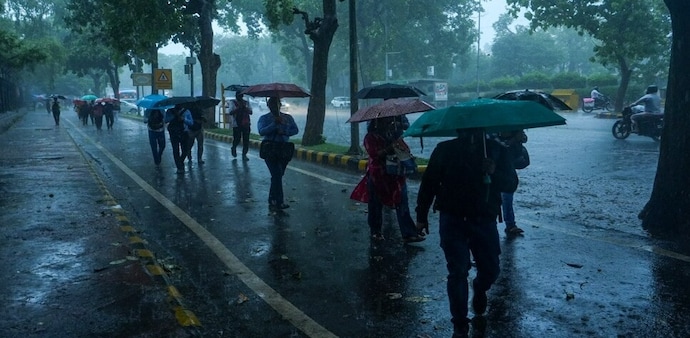
A fresh round of monsoon activity could soon spread across large parts of east and central India as weather systems begin taking shape over the Bay of Bengal.
Forecasters expect the coming seven to 10 days to be an important phase for the Southwest Monsoon, with multiple low-pressure systems likely to develop and move inland, accoding to a report by India Today.
Weather conditions are setting the stage for the next seven to 10 days to become an important period for the Southwest Monsoon. A long zone of atmospheric convergence has formed, stretching from the Bay of Bengal towards the western Pacific.
Such convergence zones act as breeding grounds for organised weather systems, bringing together moisture-laden winds and creating favourable conditions for the development of low-pressure systems.
Low-pressure systems likely to boost rainfall
Several low-pressure systems, or LPSs, are expected to emerge along this zone and move westward towards central India over the next five to seven days.
Don't Miss: Nepal issues fresh flood alert as Bhote Koshi river flow increases further
As these systems travel inland, they could trigger widespread showers across eastern and central parts of the country, potentially providing a much-needed boost to rainfall in regions that have remained deficient during the monsoon season.
Early September could decide monsoon's final outcome
The first half of September is now expected to be particularly critical for India's overall monsoon performance.
Rainfall during this period could significantly influence the final seasonal numbers, with forecasters suggesting that a swing of around 5 per cent, either above or below current levels, remains possible depending on how active the monsoon becomes.
Rainfall remains uneven across the country
So far, the 2026 Southwest Monsoon has produced a highly uneven distribution of rainfall across India.
Ladakh has emerged as the biggest rainfall surplus region, recording 204 per cent above normal rainfall. Dadra and Nagar Haveli and Daman and Diu have recorded a 51 per cent surplus, while Odisha is 25 per cent above normal. Delhi has also received 18 per cent excess rainfall.
However, several states continue to face major seasonal deficits. Meghalaya has recorded the sharpest shortfall at 58 per cent below normal, followed by Manipur at minus 43 per cent and Bihar at minus 42 per cent. Arunachal Pradesh and Andhra Pradesh are both around 40 per cent below normal.
Overall, India has received 587.8 mm of rainfall against a normal of 679.5 mm, leaving the country with a seasonal deficit of 13 per cent.
Despite the shortfall, the monsoon remains within the India Meteorological Department's normal rainfall category.
The developing Bay of Bengal systems and the rainfall expected during early September could now play a decisive role in determining how the 2026 monsoon season eventually ends.
A fresh round of monsoon activity could soon spread across large parts of east and central India as weather systems begin taking shape over the Bay of Bengal.
Forecasters expect the coming seven to 10 days to be an important phase for the Southwest Monsoon, with multiple low-pressure systems likely to develop and move inland, accoding to a report by India Today.
Weather conditions are setting the stage for the next seven to 10 days to become an important period for the Southwest Monsoon. A long zone of atmospheric convergence has formed, stretching from the Bay of Bengal towards the western Pacific.
Such convergence zones act as breeding grounds for organised weather systems, bringing together moisture-laden winds and creating favourable conditions for the development of low-pressure systems.
Low-pressure systems likely to boost rainfall
Several low-pressure systems, or LPSs, are expected to emerge along this zone and move westward towards central India over the next five to seven days.
Don't Miss: Nepal issues fresh flood alert as Bhote Koshi river flow increases further
As these systems travel inland, they could trigger widespread showers across eastern and central parts of the country, potentially providing a much-needed boost to rainfall in regions that have remained deficient during the monsoon season.
Early September could decide monsoon's final outcome
The first half of September is now expected to be particularly critical for India's overall monsoon performance.
Rainfall during this period could significantly influence the final seasonal numbers, with forecasters suggesting that a swing of around 5 per cent, either above or below current levels, remains possible depending on how active the monsoon becomes.
Rainfall remains uneven across the country
So far, the 2026 Southwest Monsoon has produced a highly uneven distribution of rainfall across India.
Ladakh has emerged as the biggest rainfall surplus region, recording 204 per cent above normal rainfall. Dadra and Nagar Haveli and Daman and Diu have recorded a 51 per cent surplus, while Odisha is 25 per cent above normal. Delhi has also received 18 per cent excess rainfall.
However, several states continue to face major seasonal deficits. Meghalaya has recorded the sharpest shortfall at 58 per cent below normal, followed by Manipur at minus 43 per cent and Bihar at minus 42 per cent. Arunachal Pradesh and Andhra Pradesh are both around 40 per cent below normal.
Overall, India has received 587.8 mm of rainfall against a normal of 679.5 mm, leaving the country with a seasonal deficit of 13 per cent.
Despite the shortfall, the monsoon remains within the India Meteorological Department's normal rainfall category.
The developing Bay of Bengal systems and the rainfall expected during early September could now play a decisive role in determining how the 2026 monsoon season eventually ends.