
From Chandigarh to Britain’s skies: Arshdeep Singh Dang becomes first Sikh RAF fighter pilot since WWII
Arshdeep was born in Chandigarh in 1998. His father, Jagdeep Singh Dang, is from Ludhiana, while his mother, Gagandeep Kaur, comes from Amritsar.
- Aug 19, 2026,
- Updated Aug 19, 2026 9:30 AM IST
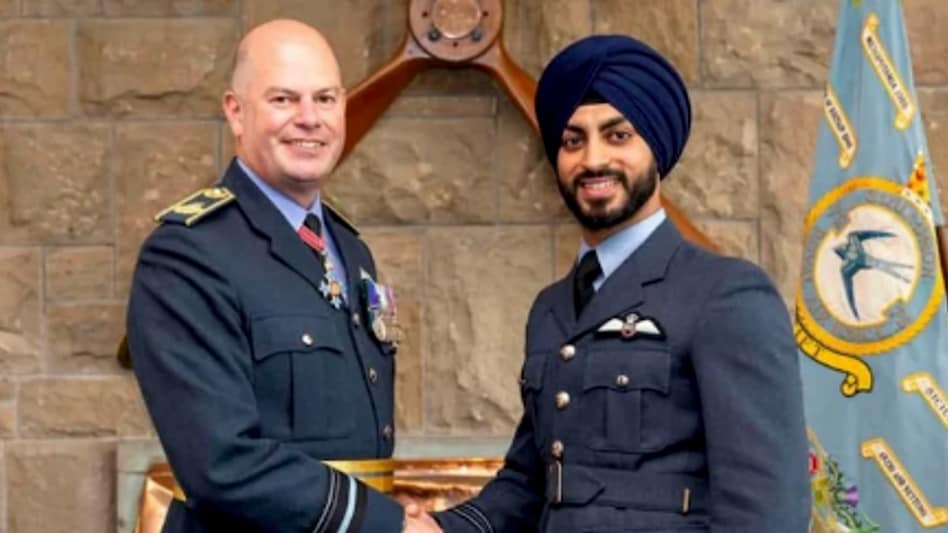
Indian-origin Flight Lieutenant Arshdeep Singh Dang, 28, has become the first Sikh since World War II to graduate as a fighter pilot from Britain’s Royal Air Force. He received his wings at a fast jet pilot graduation ceremony held at RAF Valley in North Wales on Friday, August 14.
The British air force announced his achievement during the ceremony. Dang, whose family has roots in Punjab, was the only pilot of Indian origin in his graduating batch.
yes now give me the whole
Indian-origin Flight Lieutenant Arshdeep Singh Dang, 28, has become the first Sikh since World War II to graduate as a fighter pilot from Britain’s Royal Air Force. He received his wings at a fast jet pilot graduation ceremony held at RAF Valley in North Wales on Friday, August 14.
The British air force announced his achievement during the ceremony. Dang, whose family has roots in Punjab, was the only pilot of Indian origin in his graduating batch.
Speaking to The Indian Express over the phone, Arshdeep said his journey fulfilled a dream his paternal grandfather once had for his father.
“It was my paternal grandfather Sardar Santokh Singh Dang’s dream that my father should be a pilot. But my grandfather died when my father was just 6. So my father never really had those opportunities or resources to fulfil his wish. My parents encouraged me, and I started to believe that I could be a pilot. And it happened.”
Don't Miss: 'We must address friction points. Need predictable taxation': Sergio Gor lays out US asks for India
From Chandigarh to the UK
Arshdeep was born in Chandigarh in 1998. His father, Jagdeep Singh Dang, is from Ludhiana, while his mother, Gagandeep Kaur, comes from Amritsar.
The family moved to the UK when Arshdeep was six years old and now lives in Southall, England. Although he spent only a brief period at a school in Mohali, the family continued to maintain close ties with Punjab.
“I attended a school in Mohali for 2 years or so, but I don’t really remember much. However, we keep visiting Punjab to meet our families. Two years ago, I visited Amritsar and Ludhiana,” Arshdeep said.
He later attended the University of Bristol, where he earned a BSc (Hons) in mathematics and philosophy.
Years of training behind the milestone
Arshdeep completed Officer Training in February 2022 and Elementary Flying Training in 2023. After serving in Cyprus, he was selected for the Fast Jet training stream in 2024.
He began Fast Jet lead-in training in March 2025, followed by Basic Fast Jet training in July that year. He was sent solo to Texas in October 2025 and passed his wings test in July 2026.
Arshdeep will now undergo another year of intensive training before flying fighter jets on the front line.
“I am privileged to represent my community on an international stage. I am the first Sikh to achieve this since World War II, but I don’t want to be the last.”
‘I want my success to inspire others’
Arshdeep said he hoped his achievement would encourage more young people from the Sikh community to pursue similar ambitions.
“Sikhs made a major contribution to the British Indian Army during World War II. Several Sikhs were awarded the Victoria Cross, the highest British gallantry honour. But since then, there haven’t been any notable achievements. I want my success to inspire others. We always have a chance to create history, not just in the UK, but in the entire world,” Arshdeep said.
His Ludhiana-based cousin, Gauravdeep Singh, said, “He has made Ludhiana and Punjab very proud.”
Mother remained the family’s anchor
Although his ambition was connected to his grandfather’s dream, Arshdeep credited his mother with helping the family navigate difficult periods and keeping its Punjabi and Sikh identity alive in the UK.
“Although it was my grandfather’s dream to see my father as a pilot, my pillar of strength has always been my mother. She kept us grounded, humbled and never made us feel low even when we had financial constraints. She anchored our family through the toughest times. She kept those Punjabi roots and Sikh values imbibed in us even after we moved from India.”
Arshdeep said Punjabi remains the only language permitted inside the family home. Visits to the gurdwara and participation in langar also remained a regular part of their lives after moving to Britain.
“There’s a very strict rule in our home. We speak in Punjabi to each other, and no other language is allowed in the house. We always visit the gurdwara, have langar, and keep the core values of Sikhism intact in our hearts. During tough flights, the forever Punjabi spirit of “chardi kalan” (always in high spirits) helped me a lot.”
Sikh pilots who broke barriers before him
Several Indian-origin aviators, including Sikh pilots, served in Britain’s Royal Flying Corps and Royal Air Force during the two World Wars.
Lieutenant Indra Lal Roy served during World War I and became India’s first and only “Flying Ace”, claiming 10 aerial victories with the RFC and RAF in 1918. He was also the first Indian to receive the Distinguished Flying Cross.
Lieutenant Hardit Singh Malik, popularly known as the “Flying Sikh”, was among the pioneering Sikh aviators of World War I. After flying with the French Air Service, he received an honorary commission as a pilot in the British Royal Flying Corps, which later became the RAF, on June 22, 1917.
Malik refused to remove his turban for standard flying headgear, prompting authorities to design a special helmet that could fit over it. He flew Sopwith Camels over the Western Front and survived an October 1917 mission in which his aircraft was hit by more than 450 bullets.
During World War II, Squadron Leader Mohinder Singh Pujji volunteered for the RAF in 1940 and became one of its earliest Indian Sikh fighter pilots. Wearing his turban in combat, he flew Hawker Hurricanes over Britain, North Africa and Burma.
A custom oxygen mask was made to fit over his turban. Pujji survived being shot down twice during the war and received the Distinguished Flying Cross for his bravery.
Indian-origin Flight Lieutenant Arshdeep Singh Dang, 28, has become the first Sikh since World War II to graduate as a fighter pilot from Britain’s Royal Air Force. He received his wings at a fast jet pilot graduation ceremony held at RAF Valley in North Wales on Friday, August 14.
The British air force announced his achievement during the ceremony. Dang, whose family has roots in Punjab, was the only pilot of Indian origin in his graduating batch.
yes now give me the whole
Indian-origin Flight Lieutenant Arshdeep Singh Dang, 28, has become the first Sikh since World War II to graduate as a fighter pilot from Britain’s Royal Air Force. He received his wings at a fast jet pilot graduation ceremony held at RAF Valley in North Wales on Friday, August 14.
The British air force announced his achievement during the ceremony. Dang, whose family has roots in Punjab, was the only pilot of Indian origin in his graduating batch.
Speaking to The Indian Express over the phone, Arshdeep said his journey fulfilled a dream his paternal grandfather once had for his father.
“It was my paternal grandfather Sardar Santokh Singh Dang’s dream that my father should be a pilot. But my grandfather died when my father was just 6. So my father never really had those opportunities or resources to fulfil his wish. My parents encouraged me, and I started to believe that I could be a pilot. And it happened.”
Don't Miss: 'We must address friction points. Need predictable taxation': Sergio Gor lays out US asks for India
From Chandigarh to the UK
Arshdeep was born in Chandigarh in 1998. His father, Jagdeep Singh Dang, is from Ludhiana, while his mother, Gagandeep Kaur, comes from Amritsar.
The family moved to the UK when Arshdeep was six years old and now lives in Southall, England. Although he spent only a brief period at a school in Mohali, the family continued to maintain close ties with Punjab.
“I attended a school in Mohali for 2 years or so, but I don’t really remember much. However, we keep visiting Punjab to meet our families. Two years ago, I visited Amritsar and Ludhiana,” Arshdeep said.
He later attended the University of Bristol, where he earned a BSc (Hons) in mathematics and philosophy.
Years of training behind the milestone
Arshdeep completed Officer Training in February 2022 and Elementary Flying Training in 2023. After serving in Cyprus, he was selected for the Fast Jet training stream in 2024.
He began Fast Jet lead-in training in March 2025, followed by Basic Fast Jet training in July that year. He was sent solo to Texas in October 2025 and passed his wings test in July 2026.
Arshdeep will now undergo another year of intensive training before flying fighter jets on the front line.
“I am privileged to represent my community on an international stage. I am the first Sikh to achieve this since World War II, but I don’t want to be the last.”
‘I want my success to inspire others’
Arshdeep said he hoped his achievement would encourage more young people from the Sikh community to pursue similar ambitions.
“Sikhs made a major contribution to the British Indian Army during World War II. Several Sikhs were awarded the Victoria Cross, the highest British gallantry honour. But since then, there haven’t been any notable achievements. I want my success to inspire others. We always have a chance to create history, not just in the UK, but in the entire world,” Arshdeep said.
His Ludhiana-based cousin, Gauravdeep Singh, said, “He has made Ludhiana and Punjab very proud.”
Mother remained the family’s anchor
Although his ambition was connected to his grandfather’s dream, Arshdeep credited his mother with helping the family navigate difficult periods and keeping its Punjabi and Sikh identity alive in the UK.
“Although it was my grandfather’s dream to see my father as a pilot, my pillar of strength has always been my mother. She kept us grounded, humbled and never made us feel low even when we had financial constraints. She anchored our family through the toughest times. She kept those Punjabi roots and Sikh values imbibed in us even after we moved from India.”
Arshdeep said Punjabi remains the only language permitted inside the family home. Visits to the gurdwara and participation in langar also remained a regular part of their lives after moving to Britain.
“There’s a very strict rule in our home. We speak in Punjabi to each other, and no other language is allowed in the house. We always visit the gurdwara, have langar, and keep the core values of Sikhism intact in our hearts. During tough flights, the forever Punjabi spirit of “chardi kalan” (always in high spirits) helped me a lot.”
Sikh pilots who broke barriers before him
Several Indian-origin aviators, including Sikh pilots, served in Britain’s Royal Flying Corps and Royal Air Force during the two World Wars.
Lieutenant Indra Lal Roy served during World War I and became India’s first and only “Flying Ace”, claiming 10 aerial victories with the RFC and RAF in 1918. He was also the first Indian to receive the Distinguished Flying Cross.
Lieutenant Hardit Singh Malik, popularly known as the “Flying Sikh”, was among the pioneering Sikh aviators of World War I. After flying with the French Air Service, he received an honorary commission as a pilot in the British Royal Flying Corps, which later became the RAF, on June 22, 1917.
Malik refused to remove his turban for standard flying headgear, prompting authorities to design a special helmet that could fit over it. He flew Sopwith Camels over the Western Front and survived an October 1917 mission in which his aircraft was hit by more than 450 bullets.
During World War II, Squadron Leader Mohinder Singh Pujji volunteered for the RAF in 1940 and became one of its earliest Indian Sikh fighter pilots. Wearing his turban in combat, he flew Hawker Hurricanes over Britain, North Africa and Burma.
A custom oxygen mask was made to fit over his turban. Pujji survived being shot down twice during the war and received the Distinguished Flying Cross for his bravery.