
From monsoon risk to income security: How ITC is rewriting the economics of Indian farming
Erratic monsoons and rising climate risks are threatening farm incomes across India. A village-level initiative by ITC in Rajasthan offers insights into how climate-resilient farming and diversified livelihoods can reduce rural households’ financial vulnerability.
- Nov 28, 2026,
- Updated Nov 28, 2026 1:20 PM IST
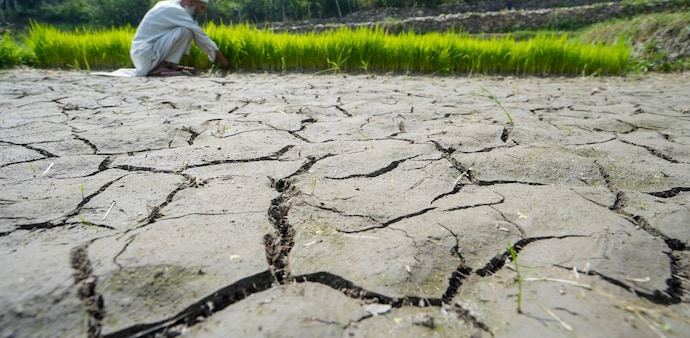
For millions of Indian farmers, an unpredictable monsoon is increasingly becoming a threat to financial security. Delayed rainfall, prolonged dry spells and unseasonal showers can disrupt crop cycles, reduce agricultural productivity and erode household incomes. With climate risks intensifying, the focus is gradually shifting from maximising crop production to building sustainable and diversified rural incomes.
The scale of the challenge is significant. According to the Indian Council of Agricultural Research (ICAR), 310 of India's 651 assessed agricultural districts are vulnerable to climate change, including 109 classified as very highly vulnerable. Small and marginal farmers, with limited financial reserves, remain particularly exposed to these risks.
Against this backdrop, ITC's Climate Smart Village programme, implemented under its Mission Sunehra Kal initiative, offers an example of how agricultural interventions and alternative livelihoods can strengthen rural economic resilience.
Reducing dependence on the monsoon
Gadiya, a village comprising 290 families in Rajasthan's Jhalawar district, joined ITC's programme in 2019, with improvements in climate resilience becoming visible from 2021.
Farmers adopted broad-bed furrow sowing for soybean, zero tillage for wheat, seed testing and treatment, and climate-resilient crop varieties. Farmer Field Schools and on-ground demonstrations facilitated the adoption of these practices.
Water security formed another critical component. Six percolation tanks with a combined storage potential of 41,200 cubic metres were rejuvenated, while micro-irrigation coverage increased from 46% to 95%.
According to ITC's Sustainability Report 2026, annual soybean production increased by 275 metric tonnes, representing an 80% rise, while wheat production increased by 138 metric tonnes. Together, these improvements added nearly Rs 158 lakh to the local economy.
Building multiple income streams
Perhaps the most significant economic outcome has been the diversification of household incomes.
Livestock rearing and horticulture generated an additional Rs 128 lakh, taking the combined reported economic gains from agricultural and livelihood interventions to nearly Rs 2.86 crore.
As many as 278 of the village's 290 families, or nearly 96%, now have multiple income sources.
Diversified earnings can help households absorb agricultural losses, manage recurring expenses, reduce dependence on borrowing and finance investments in subsequent cropping seasons.
The larger business implications
Climate-resilient agriculture also has implications for corporate India. Companies dependent on agricultural commodities face risks arising from fluctuating production, raw material shortages and rising procurement costs.
Investments in sustainable farming practices and resilient agricultural communities could help businesses strengthen supply-chain stability while supporting rural purchasing power.
Government initiatives are also addressing these challenges. The National Innovations in Climate Resilient Agriculture (NICRA) programme has demonstrated location-specific technologies across 448 Climate Resilient Villages in 151 districts.
However, scaling such interventions will require affordable technology, stronger agricultural extension networks and sustained public-private collaboration.
As climate uncertainty increasingly shapes agricultural economics, protecting farm incomes through productivity improvements and diversified livelihoods could become as important as increasing food production itself.