
From pigeons and monkey to ‘world-class’: BWF praises India’s IGI Stadium makeover after India Open woes
The positive assessment marks a sharp contrast with the India Open in January, when the IGI Stadium itself became a major talking point.
- Aug 20, 2026,
- Updated Aug 20, 2026 9:35 PM IST
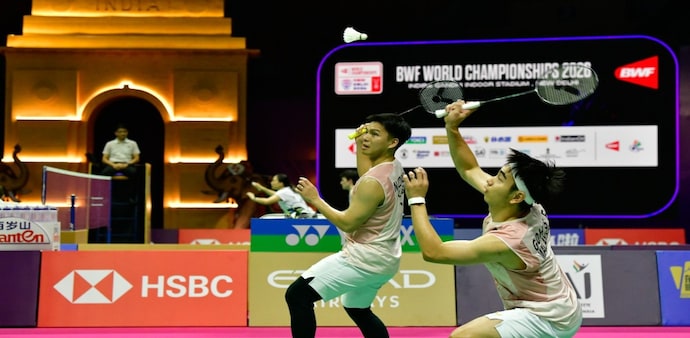
The BWF has praised India for transforming the Indira Gandhi Indoor Stadium into a “world-class” venue for the World Championships, seven months after the same arena faced criticism over cleanliness, playing conditions and repeated disruptions involving a monkey and pigeons during the India Open.
BWF Secretary General Thomas Lund said he was “super impressed” by the changes at the venue, while players have also given positive feedback on the arrangements. The stark turnaround comes after the India Open exposed a series of problems that organisers were tasked with fixing ahead of the World Championships.
BWF lauds venue transformation
“I’m super impressed to see what has been established in this venue. I know there has been some criticism earlier in the year, but the amount of things that have been done in that really, really short time”
Lund said players who had experienced the venue during the India Open had since shared positive feedback.
“And I think Badminton India and all the stakeholders, the government and everybody that has actually been behind this with the venue, with the operational detail that they've been able to get right for this tournament. I've only heard really positive feedback from players and everybody that actually, you know, were here earlier in the year and had different concerns and so on.”
Thailand's second seed Kunlavut Vitidsarn also praised the arrangements.
“Very good. Yes, I am very happy with the arrangements,” he said.
India Open criticism triggered overhaul
The positive assessment marks a sharp contrast with the India Open in January, when the IGI Stadium itself became a major talking point.
A pigeon interrupted HS Prannoy's match against Loh Kean Yew and appeared again, while a monkey was spotted inside the venue. Denmark's Mia Blichfeldt raised concerns about hygiene and playing conditions, and Anders Antonsen withdrew from the tournament citing Delhi's pollution.
Blichfeldt had questioned how the venue could host the World Championships in such a condition.
The India Open had been intentionally held at the stadium as a test event ahead of the World Championships. The problems identified during the tournament subsequently became a checklist for organisers.
“A lot of work has been done in the last six months. India Open at the IGI Stadium was intentional. We wanted to test the venue. That tournament gave a lot of insight on what we needed to do,” Selvamresh Supramaniam, Events Director for Tournament Operations at BWF, told the media on Wednesday.
Pigeons, animals kept out
Following the India Open, BWF returned to Delhi in February and prepared a report that was sent to the Badminton Association of India (BAI), which then forwarded it to the Sports Authority of India (SAI), the venue owner.
The work covered roofing and waterproofing, cleanliness, electrical systems, toilets, fittings and painting of the beams.
Special attention was also given to the bird problem that had become one of the defining images of the India Open.
BAI and SAI introduced an anti-toxic gel system, commonly used at airports, to prevent birds from perching on the beams. A triple-door system was also installed to limit the entry of animals.
“The issue of bird dropping in the India Open — we discussed it with the SAI and BAI. They came up with anti-toxic gel system, which is normally used in airports, so that the birds do not perch on the beams,” Selvamresh said.
Dogs around the stadium compound were also relocated with the help of local agencies.
“A lot has been done. We are very happy with what we have seen. We can’t prevent 100 per cent animals and insects and all that. But it’s about how fast we respond and how well we attend to the problem.”
Selvamresh credited BAI and SAI for acting on the concerns.
“I think for that I have to give high marks to the BAI and the SAI, who embraced this challenge and did whatever we asked. And today, you can see, everything is in place,” he said.
Must Read: The Cheapest AI in the World Is Indian. It Is Also the Weakest
Women players welcome washroom changes
The upgrades have also included facilities specifically aimed at improving the experience for women players.
The washrooms have new fittings and now provide sanitary products, including sanitary pads and pee-safe sprays.
Scotland's Kirsty Gilmour welcomed the move.
“It’s great. We can’t plan for such things all the time. Sometimes, our bodies have different ideas and plans, whether it is stress or different hormones. I think just as we should have toilet rolls, we should have sanitary products as well. I really love to see the update here,” she told The Bridge.
South African shuttler Johanna Scholtz also praised the accessibility of essential products.
“We never struggled to get anything. When you need something, you literally just go and ask for it. It’s very comfortable.”
Selvamresh said the response from female players had been particularly encouraging.
“Players are happy. Female players have expressed satisfaction, saying there are sanitary pads in the washrooms. For me, in my time, this is among the first time we have done this. Congratulations to BAI for this initiative.”
Clean venue changes spectator experience
The improvements have also been noticed by spectators.
Bhupesh Kumar, who attended the World Championships with his son on Wednesday, watched PV Sindhu, Lakshya Sen and Ayush Shetty during the afternoon session. He expected the toilets to be one of the weaker points but found them clean and well maintained.
“The toilets were new and clean even in the evening. I expected it not to be. But to my surprise, they were clean,” he said.
He also praised the seating, food counters and overall atmosphere, with branded stalls and child-friendly kiosks adding to the spectator experience.
Focus finally shifts to badminton
The venue has so far avoided the disruptions that overshadowed the India Open. Volunteers have been regularly cleaning spectator areas, entry gates are clearly marked and animal-control measures have worked.
Seats have been replaced where necessary, transport arrangements have held up despite rain and traffic, and the hotels housing players and officials have been comfortable, according to Selvamresh.
The practice venue has also been refurbished with fresh paint and darker walls to improve shuttle visibility.
There are still some challenges. The air-conditioning and high roof can create drift, requiring players to adjust. But unlike in January, those issues have not dominated the tournament.
For Lund, that shift is exactly what matters.
“I’ll just hope from here on and on to the finals, the focus will be on what happens on that court down there because, frankly, we’ve had fantastic matches,” he said.
Seven months after the India Open made the venue part of the story, the World Championships have so far allowed the badminton to take centre stage.
The BWF has praised India for transforming the Indira Gandhi Indoor Stadium into a “world-class” venue for the World Championships, seven months after the same arena faced criticism over cleanliness, playing conditions and repeated disruptions involving a monkey and pigeons during the India Open.
BWF Secretary General Thomas Lund said he was “super impressed” by the changes at the venue, while players have also given positive feedback on the arrangements. The stark turnaround comes after the India Open exposed a series of problems that organisers were tasked with fixing ahead of the World Championships.
BWF lauds venue transformation
“I’m super impressed to see what has been established in this venue. I know there has been some criticism earlier in the year, but the amount of things that have been done in that really, really short time”
Lund said players who had experienced the venue during the India Open had since shared positive feedback.
“And I think Badminton India and all the stakeholders, the government and everybody that has actually been behind this with the venue, with the operational detail that they've been able to get right for this tournament. I've only heard really positive feedback from players and everybody that actually, you know, were here earlier in the year and had different concerns and so on.”
Thailand's second seed Kunlavut Vitidsarn also praised the arrangements.
“Very good. Yes, I am very happy with the arrangements,” he said.
India Open criticism triggered overhaul
The positive assessment marks a sharp contrast with the India Open in January, when the IGI Stadium itself became a major talking point.
A pigeon interrupted HS Prannoy's match against Loh Kean Yew and appeared again, while a monkey was spotted inside the venue. Denmark's Mia Blichfeldt raised concerns about hygiene and playing conditions, and Anders Antonsen withdrew from the tournament citing Delhi's pollution.
Blichfeldt had questioned how the venue could host the World Championships in such a condition.
The India Open had been intentionally held at the stadium as a test event ahead of the World Championships. The problems identified during the tournament subsequently became a checklist for organisers.
“A lot of work has been done in the last six months. India Open at the IGI Stadium was intentional. We wanted to test the venue. That tournament gave a lot of insight on what we needed to do,” Selvamresh Supramaniam, Events Director for Tournament Operations at BWF, told the media on Wednesday.
Pigeons, animals kept out
Following the India Open, BWF returned to Delhi in February and prepared a report that was sent to the Badminton Association of India (BAI), which then forwarded it to the Sports Authority of India (SAI), the venue owner.
The work covered roofing and waterproofing, cleanliness, electrical systems, toilets, fittings and painting of the beams.
Special attention was also given to the bird problem that had become one of the defining images of the India Open.
BAI and SAI introduced an anti-toxic gel system, commonly used at airports, to prevent birds from perching on the beams. A triple-door system was also installed to limit the entry of animals.
“The issue of bird dropping in the India Open — we discussed it with the SAI and BAI. They came up with anti-toxic gel system, which is normally used in airports, so that the birds do not perch on the beams,” Selvamresh said.
Dogs around the stadium compound were also relocated with the help of local agencies.
“A lot has been done. We are very happy with what we have seen. We can’t prevent 100 per cent animals and insects and all that. But it’s about how fast we respond and how well we attend to the problem.”
Selvamresh credited BAI and SAI for acting on the concerns.
“I think for that I have to give high marks to the BAI and the SAI, who embraced this challenge and did whatever we asked. And today, you can see, everything is in place,” he said.
Must Read: The Cheapest AI in the World Is Indian. It Is Also the Weakest
Women players welcome washroom changes
The upgrades have also included facilities specifically aimed at improving the experience for women players.
The washrooms have new fittings and now provide sanitary products, including sanitary pads and pee-safe sprays.
Scotland's Kirsty Gilmour welcomed the move.
“It’s great. We can’t plan for such things all the time. Sometimes, our bodies have different ideas and plans, whether it is stress or different hormones. I think just as we should have toilet rolls, we should have sanitary products as well. I really love to see the update here,” she told The Bridge.
South African shuttler Johanna Scholtz also praised the accessibility of essential products.
“We never struggled to get anything. When you need something, you literally just go and ask for it. It’s very comfortable.”
Selvamresh said the response from female players had been particularly encouraging.
“Players are happy. Female players have expressed satisfaction, saying there are sanitary pads in the washrooms. For me, in my time, this is among the first time we have done this. Congratulations to BAI for this initiative.”
Clean venue changes spectator experience
The improvements have also been noticed by spectators.
Bhupesh Kumar, who attended the World Championships with his son on Wednesday, watched PV Sindhu, Lakshya Sen and Ayush Shetty during the afternoon session. He expected the toilets to be one of the weaker points but found them clean and well maintained.
“The toilets were new and clean even in the evening. I expected it not to be. But to my surprise, they were clean,” he said.
He also praised the seating, food counters and overall atmosphere, with branded stalls and child-friendly kiosks adding to the spectator experience.
Focus finally shifts to badminton
The venue has so far avoided the disruptions that overshadowed the India Open. Volunteers have been regularly cleaning spectator areas, entry gates are clearly marked and animal-control measures have worked.
Seats have been replaced where necessary, transport arrangements have held up despite rain and traffic, and the hotels housing players and officials have been comfortable, according to Selvamresh.
The practice venue has also been refurbished with fresh paint and darker walls to improve shuttle visibility.
There are still some challenges. The air-conditioning and high roof can create drift, requiring players to adjust. But unlike in January, those issues have not dominated the tournament.
For Lund, that shift is exactly what matters.
“I’ll just hope from here on and on to the finals, the focus will be on what happens on that court down there because, frankly, we’ve had fantastic matches,” he said.
Seven months after the India Open made the venue part of the story, the World Championships have so far allowed the badminton to take centre stage.