
Gandhi Jayanti 2026: How 'Bapu' reshaped global resistance from South Africa to Rajghat
From his humble beginnings on October 2, 1869, in Porbandar, Gujarat, Gandhi’s journey transformed not only the Indian subcontinent but also the worldwide mechanics of civil resistance.
- Oct 2, 2026,
- Updated Oct 2, 2026 8:26 AM IST
On October 2, 2026, the quiet, manicured lawns of Rajghat in New Delhi woke to the rhythmic cadence of devotional hymns as India commemorated the 157th birth anniversary of Mohandas Karamchand Gandhi.
Wreaths were laid, bhajans echoed across prayer meetings, and dignitaries paid floral tributes to the man affectionately remembered as Bapu — the Father of the Nation. Far beyond India’s borders, the observance resonated globally as the United Nations marked the International Day of Non-Violence, reinforcing the timeless relevance of a philosophy forged in the heat of colonial oppression.
From his humble beginnings on October 2, 1869, in Porbandar, Gujarat, Gandhi’s journey transformed not only the Indian subcontinent but also the worldwide mechanics of civil resistance. His formative decades as a lawyer in South Africa exposed him to institutionalized racism, prompting him to develop Satyagraha — the pursuit of truth through non-violent resistance.
When Gandhi returned to India, he translated personal conviction into a mass movement. His early interventions — most notably the Champaran Satyagraha — championed oppressed indigo farmers, proving that moral courage could challenge entrenched colonial economic structures.
Over the decades that followed, campaigns like the Non-Cooperation Movement, the 1930 Salt March (Dandi March), and the Quit India Movement of 1942 mobilized millions from every stratum of society.
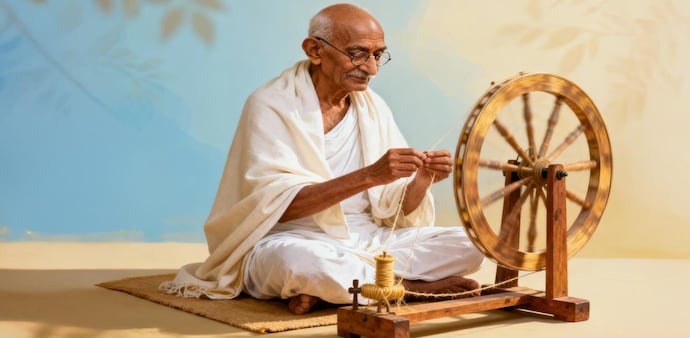
Centering his movement on Ahimsa (non-violence) and Swadeshi (self-reliance), Gandhi elevated the spinning wheel (charkha) from a humble tool of daily labor to a potent national symbol of economic independence and human dignity. By rejecting imported British textiles in favor of home-spun khadi, he struck directly at the economic engine of imperial control.
The global impact of Gandhi's political method remains undeniable. His non-violent strategy provided a template for world-changing civil rights movements, directly inspiring leaders like Martin Luther King Jr. in the United States and Nelson Mandela in South Africa.
On this Gandhi Jayanti, institutions, schools, and civic organizations across the country engaged in commemorative events, community service drives, and seminars reflecting on environmental sustainability, peaceful conflict resolution, and social equality.
In an era marked by rapid technological change and geopolitical tension, the core tenets of Gandhi’s philosophy — simplicity, integrity, and absolute refusal to meet violence with violence — continue to serve as a vital moral compass.
On October 2, 2026, the quiet, manicured lawns of Rajghat in New Delhi woke to the rhythmic cadence of devotional hymns as India commemorated the 157th birth anniversary of Mohandas Karamchand Gandhi.
Wreaths were laid, bhajans echoed across prayer meetings, and dignitaries paid floral tributes to the man affectionately remembered as Bapu — the Father of the Nation. Far beyond India’s borders, the observance resonated globally as the United Nations marked the International Day of Non-Violence, reinforcing the timeless relevance of a philosophy forged in the heat of colonial oppression.
From his humble beginnings on October 2, 1869, in Porbandar, Gujarat, Gandhi’s journey transformed not only the Indian subcontinent but also the worldwide mechanics of civil resistance. His formative decades as a lawyer in South Africa exposed him to institutionalized racism, prompting him to develop Satyagraha — the pursuit of truth through non-violent resistance.
When Gandhi returned to India, he translated personal conviction into a mass movement. His early interventions — most notably the Champaran Satyagraha — championed oppressed indigo farmers, proving that moral courage could challenge entrenched colonial economic structures.
Over the decades that followed, campaigns like the Non-Cooperation Movement, the 1930 Salt March (Dandi March), and the Quit India Movement of 1942 mobilized millions from every stratum of society.
Centering his movement on Ahimsa (non-violence) and Swadeshi (self-reliance), Gandhi elevated the spinning wheel (charkha) from a humble tool of daily labor to a potent national symbol of economic independence and human dignity. By rejecting imported British textiles in favor of home-spun khadi, he struck directly at the economic engine of imperial control.
The global impact of Gandhi's political method remains undeniable. His non-violent strategy provided a template for world-changing civil rights movements, directly inspiring leaders like Martin Luther King Jr. in the United States and Nelson Mandela in South Africa.
On this Gandhi Jayanti, institutions, schools, and civic organizations across the country engaged in commemorative events, community service drives, and seminars reflecting on environmental sustainability, peaceful conflict resolution, and social equality.
In an era marked by rapid technological change and geopolitical tension, the core tenets of Gandhi’s philosophy — simplicity, integrity, and absolute refusal to meet violence with violence — continue to serve as a vital moral compass.