
Gatimaan Express, Vande Bharat may soon return to 160 kmph on Delhi–Agra route after Kavach trials
Kavach is India’s indigenous automatic train protection system, designed to prevent train collisions by automatically applying brakes when a driver misses a danger signal or exceeds the permitted speed.
- Nov 12, 2026,
- Updated Nov 12, 2026 5:11 PM IST
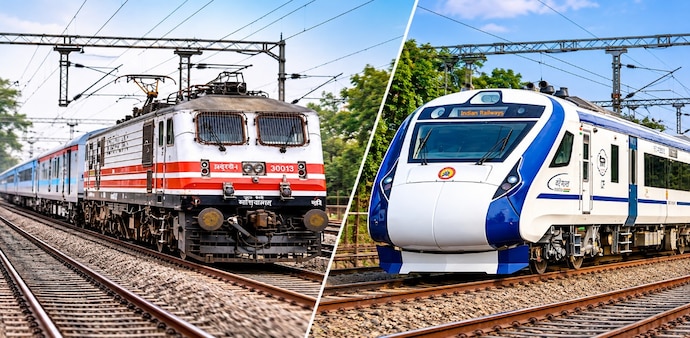
The Gatimaan Express and Vande Bharat services on the Delhi–Agra route are likely to regain their original maximum speed of 160 kmph after the completion of Kavach Automatic Train Protection (ATP) installation and successful safety trials, according to railway officials. The trains are currently restricted to 130 kmph.
Indian Railways has completed installation of the indigenous Kavach ATP system on the Delhi–Agra section, a key step toward restoring the higher operating speed. Agra Division Divisional Railway Manager Gagan Goyal said trials are now being conducted by the Research Designs and Standards Organisation (RDSO) to verify the system’s performance.
“Trains are currently running at a maximum speed of 130 kmph. As far as the question of increasing the speed of trains to 160 kmph between Agra and Delhi, the process is to first conduct the trials and then make any decisions,” Goyal told The Times of India.
MUST READ: Kavach 4.0: How Indian Railways is re-engineering train safety across its busiest routes
What changes for passengers
If RDSO clears the trials, Gatimaan Express and two Vande Bharat services are expected to return to 160 kmph on the corridor. The New Delhi–Rani Kamalapati Shatabdi Express is proposed to operate at up to 150 kmph under the same plan.
The higher speed would reduce journey times and improve the competitiveness of rail travel between the National Capital Region and Agra, home to the Taj Mahal. Eight trains currently operate at the restricted 130 kmph speed on the route.
Why speeds were cut
The 130 kmph restriction was imposed in June 2024 by the Railway Board following the Kanchanjunga Express accident in West Bengal. The limit has remained in place for more than two years while safety measures were strengthened across affected sections.
The Delhi–Agra corridor includes a 125-km stretch across three sections where trains are permitted to run at 160 kmph, making it the only such stretch in the country.
Kavach rollout
Kavach is India’s indigenous automatic train protection system, designed to prevent train collisions by automatically applying brakes when a driver misses a danger signal or exceeds the permitted speed. Its installation is central to the Railways’ case for restoring higher speeds on the busy route.
Kavach 4.0 was commissioned on the 35-km Tughlakabad Junction Cabin–Palwal section in January 2026, while the Agra Cantt–Dholpur section received the system in September.
DON'T MISS: India's first LNG-powered train is here: Amit Shah flags it off in Ahmedabad
Next step: trial clearance
Railway authorities have said that a final decision on restoring 160 kmph will depend on the outcome of the RDSO trials. The Delhi Division has also proposed to Northern Railway headquarters that original speed limits be restored after trials on the Hazrat Nizamuddin–Palwal section.
For passengers, the proposed change would mark a return to the original operating profile of the Gatimaan Express, which was introduced in April 2016 as India’s first semi-high-speed train, connecting Hazrat Nizamuddin in Delhi with Agra Cantt in 100 minutes at 160 kmph.