
Good news for Delhi-NCR! ₹19,390 crore Namo Bharat project may change how you travel forever
Instead of depending on crowded roads or taking long Metro routes through Delhi, commuters could eventually get a much faster alternative.
- Jun 30, 2026,
- Updated Jun 30, 2026 4:02 PM IST
If you regularly travel between Gurugram, Noida or Faridabad, this is one infrastructure project worth keeping an eye on.
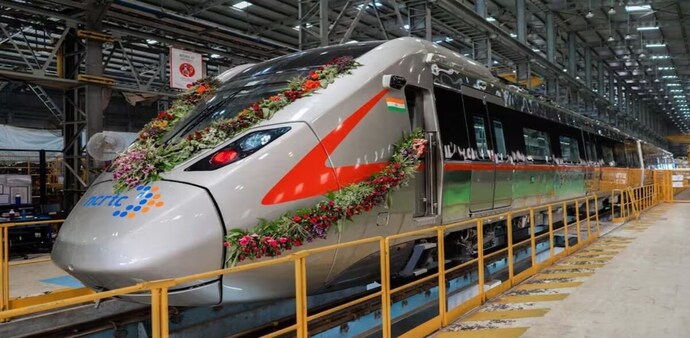
A proposed ₹19,390 crore Namo Bharat corridor aims to make cross-NCR travel much easier by creating a direct rail link between Gurugram and Greater Noida. Instead of depending on crowded roads or taking long Metro routes through Delhi, commuters could eventually get a much faster alternative.
The Detailed Project Report has now been submitted, marking an important milestone before government approvals. The proposal doesn't just include high-speed Namo Bharat trains—it also plans several new Metro stations that could improve connectivity within Gurugram, Faridabad and Noida.
While the project is still awaiting the green signal, here's a quick breakdown of what has been proposed and how it could affect your daily commute.
Route and length
The total length of the corridor is around 63 km — 50 km in Haryana and 13 km in Uttar Pradesh. The corridor will bypass central Delhi and provide a direct east-west connection across NCR.
Funding
As per the proposal, the project will be financed using soft loans worth around ₹10,102 crore. Besides this, the Haryana and Uttar Pradesh governments will infuse ₹4,555 crore and ₹1,364 crore, respectively. The Centre is likely to put in ₹3,367 crore for the project.
Top benefits for commuters
If the corridor gets built, there will be direct connectivity between Gurugram, Faridabad, and Noida without travelling through Delhi, ensuring faster access to major commercial and residential hubs.
For daily commuters, this translates into improved connectivity across NCR due to better integration with existing Metro and Namo Bharat networks. The corridor will also reduce dependence on road transport and lower congestion on NCR expressways.
These expressways include Delhi-Mumbai Expressway (especially the Gurugram and Faridabad stretches), Noida-Greater Noida Expressway, Yamuna Expressway, and completed sections of the Faridabad-Noida-Ghaziabad Expressway.
Besides this, the project is also likely to reduce congestion on major arterial roads such as Delhi-Gurugram Expressway and Mathura Road (NH-19) through Faridabad, and Noida-Greater Noida Link Road.
Proposed Namo Bharat stations
The DPR submitted by the National Capital Region Transport Corporation (NCRTC) to the Haryana Mass Rapid Transport Corporation (HMRTC) has proposed 7 Namo Bharat Stations across the corridor.
- Gurugram: IFFCO Chowk (interchange/starting station), Sector 61, and Gwal Pahari
- Faridabad: Sainik Colony, Bata Chowk, Sector 87-88 Junction
- Noida/Greater Noida: Noida Sector 142, Surajpur
New metro stations in Noida/Greater Noida, Gurugram, Faridabad
Besides the RRTS line, the DPR has also proposed 15 new metro stations to improve last-mile connectivity and reduce congestion on major expressways and arterial roads. These are as follows:
- Gurugram (5 stations): Sector 29, Millennium City Centre, Sector 52/52A, Wazirabad and Sector 57
- Faridabad (7 stations): NIT-3, NIT-1, Sector 12/13/14/15 Junction, Sector 80, Sector 81/82 Junction, Sector 85/86 Junction, Badshahpur
- Noida/Greater Noida (3 stations): Sector 135, Sector 141, Suthiyana
If you regularly travel between Gurugram, Noida or Faridabad, this is one infrastructure project worth keeping an eye on.
A proposed ₹19,390 crore Namo Bharat corridor aims to make cross-NCR travel much easier by creating a direct rail link between Gurugram and Greater Noida. Instead of depending on crowded roads or taking long Metro routes through Delhi, commuters could eventually get a much faster alternative.
The Detailed Project Report has now been submitted, marking an important milestone before government approvals. The proposal doesn't just include high-speed Namo Bharat trains—it also plans several new Metro stations that could improve connectivity within Gurugram, Faridabad and Noida.
While the project is still awaiting the green signal, here's a quick breakdown of what has been proposed and how it could affect your daily commute.
Route and length
The total length of the corridor is around 63 km — 50 km in Haryana and 13 km in Uttar Pradesh. The corridor will bypass central Delhi and provide a direct east-west connection across NCR.
Funding
As per the proposal, the project will be financed using soft loans worth around ₹10,102 crore. Besides this, the Haryana and Uttar Pradesh governments will infuse ₹4,555 crore and ₹1,364 crore, respectively. The Centre is likely to put in ₹3,367 crore for the project.
Top benefits for commuters
If the corridor gets built, there will be direct connectivity between Gurugram, Faridabad, and Noida without travelling through Delhi, ensuring faster access to major commercial and residential hubs.
For daily commuters, this translates into improved connectivity across NCR due to better integration with existing Metro and Namo Bharat networks. The corridor will also reduce dependence on road transport and lower congestion on NCR expressways.
These expressways include Delhi-Mumbai Expressway (especially the Gurugram and Faridabad stretches), Noida-Greater Noida Expressway, Yamuna Expressway, and completed sections of the Faridabad-Noida-Ghaziabad Expressway.
Besides this, the project is also likely to reduce congestion on major arterial roads such as Delhi-Gurugram Expressway and Mathura Road (NH-19) through Faridabad, and Noida-Greater Noida Link Road.
Proposed Namo Bharat stations
The DPR submitted by the National Capital Region Transport Corporation (NCRTC) to the Haryana Mass Rapid Transport Corporation (HMRTC) has proposed 7 Namo Bharat Stations across the corridor.
- Gurugram: IFFCO Chowk (interchange/starting station), Sector 61, and Gwal Pahari
- Faridabad: Sainik Colony, Bata Chowk, Sector 87-88 Junction
- Noida/Greater Noida: Noida Sector 142, Surajpur
New metro stations in Noida/Greater Noida, Gurugram, Faridabad
Besides the RRTS line, the DPR has also proposed 15 new metro stations to improve last-mile connectivity and reduce congestion on major expressways and arterial roads. These are as follows:
- Gurugram (5 stations): Sector 29, Millennium City Centre, Sector 52/52A, Wazirabad and Sector 57
- Faridabad (7 stations): NIT-3, NIT-1, Sector 12/13/14/15 Junction, Sector 80, Sector 81/82 Junction, Sector 85/86 Junction, Badshahpur
- Noida/Greater Noida (3 stations): Sector 135, Sector 141, Suthiyana